by
by RockyMountainNavy, 27 April 2026
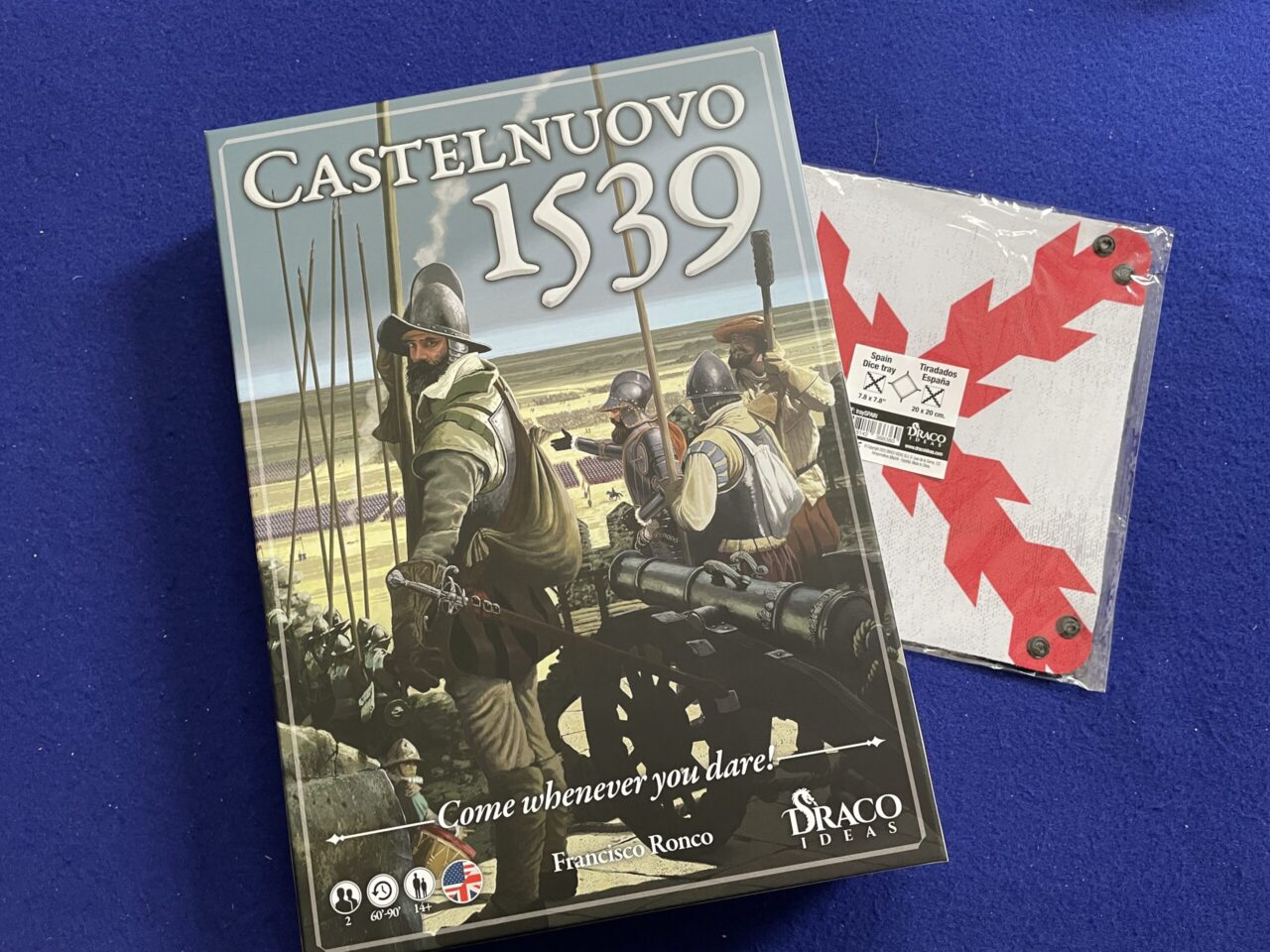
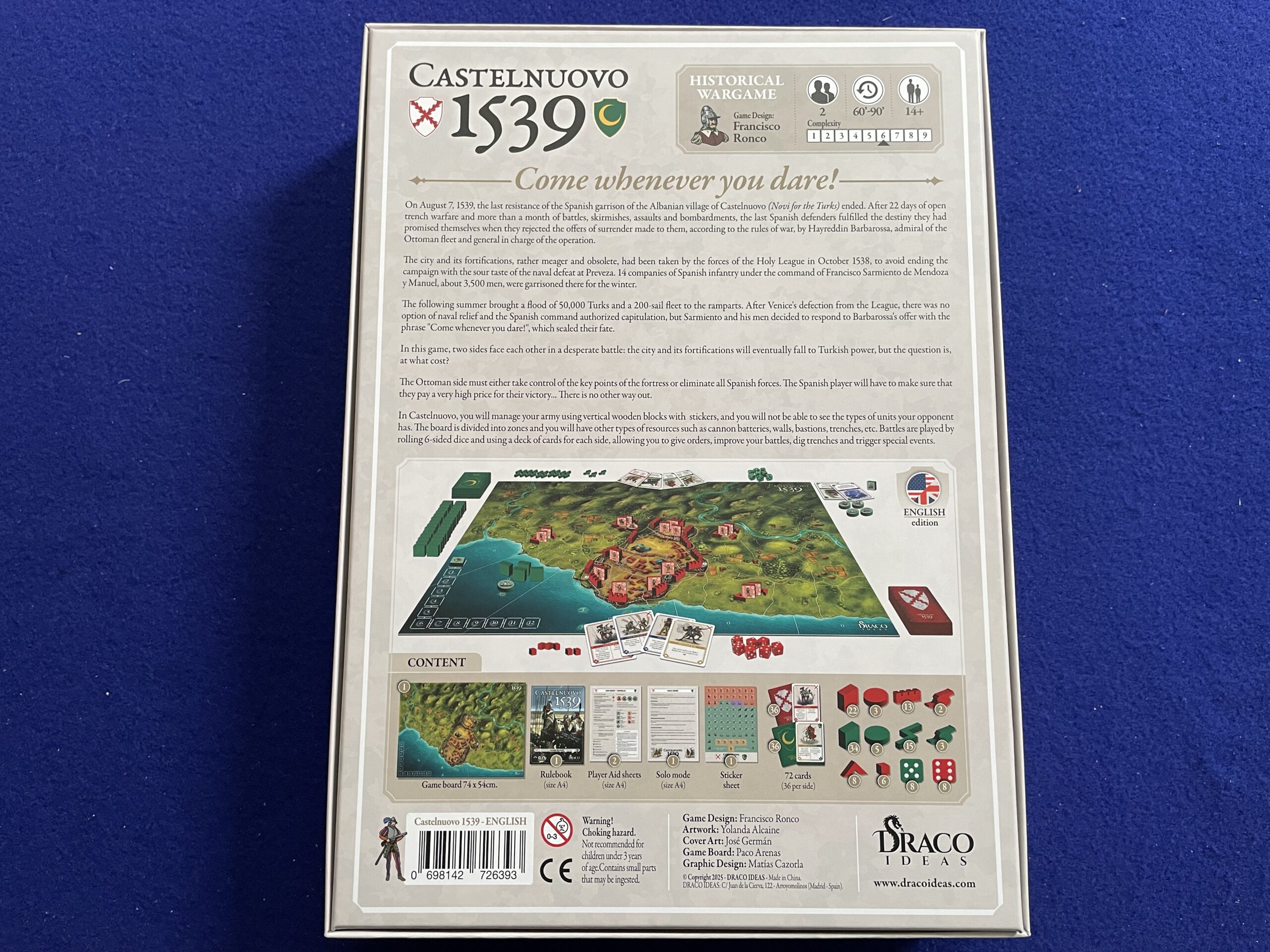
Thanks to the generosity of Spanish boardgame publisher Draco Ideas, on behalf of The Armchair Dragoons I got the opportunity to review a courtesy copy of Castelnuovo 1539: Come whenever you dare! designed by Francisco Ronco. The game recreates a siege where a small group of Spanish defenders in an obsolete fortress held off an Ottoman attack for as long as they could. That hopeless situation is the heart of Castelnuovo 1539 both thematically and—more importantly for gamers—literally as the game mechanisms are a hybrid game design blending wargames and Eurogames.
Castelnuovo 1539 is very up-front about the hopeless game situation: “The Spanish, besieged at Castelnuovo, had no chance of winning without the outside support of the Christian fleet.” Even when given the option of surrendering, the Spanish answer was, “Let them come whenever they want”, alternatively reported as, “Come whenever you dare!” (3. Goal of the Game). Castelnuovo 1539 gives players the opportunity to play out this hopeless situation in a gorgeous looking and engaging-to-play hybrid game that is not your usual wargaming fare.
The description of Castelnuovo 1539 taken from Draco Idea’s ‘Kick & Go’ campaign website explains the game thusly:
Castelnuovo 1539 depicts that desperate defense of a city with an obsolete fortress, in which a handful of indomitable soldiers try to inflict so many casualties on the enemy that their certain death was worth it.
A game for 2 players with solo mode, with asymmetrical sides, both in units and victory conditions: The Spanish are conducting a desperate defense. Their only hope is to inflict so many casualties on the Ottoman army that it stops their campaign and makes the capture of the city costly.
The Ottomans will have to take the city, causing irreplaceable casualties to the Spanish Tercio, while suffering camisado attacks and sudden strikes from the besieged.
Two sides face each other in a desperate battle: the town and its fortifications will eventually yield to Turkish power, but the question is, at what cost?
The Ottoman side must take control of the key points of the fortress or eliminate all Spanish forces.
The Spanish player will have to make him pay a very high price for his victory… There is no other way out.
Eurogame bling
Castelnuovo 1539 is beautiful on the gaming table in large part due to an obvious component design influence taken from Eurogames:
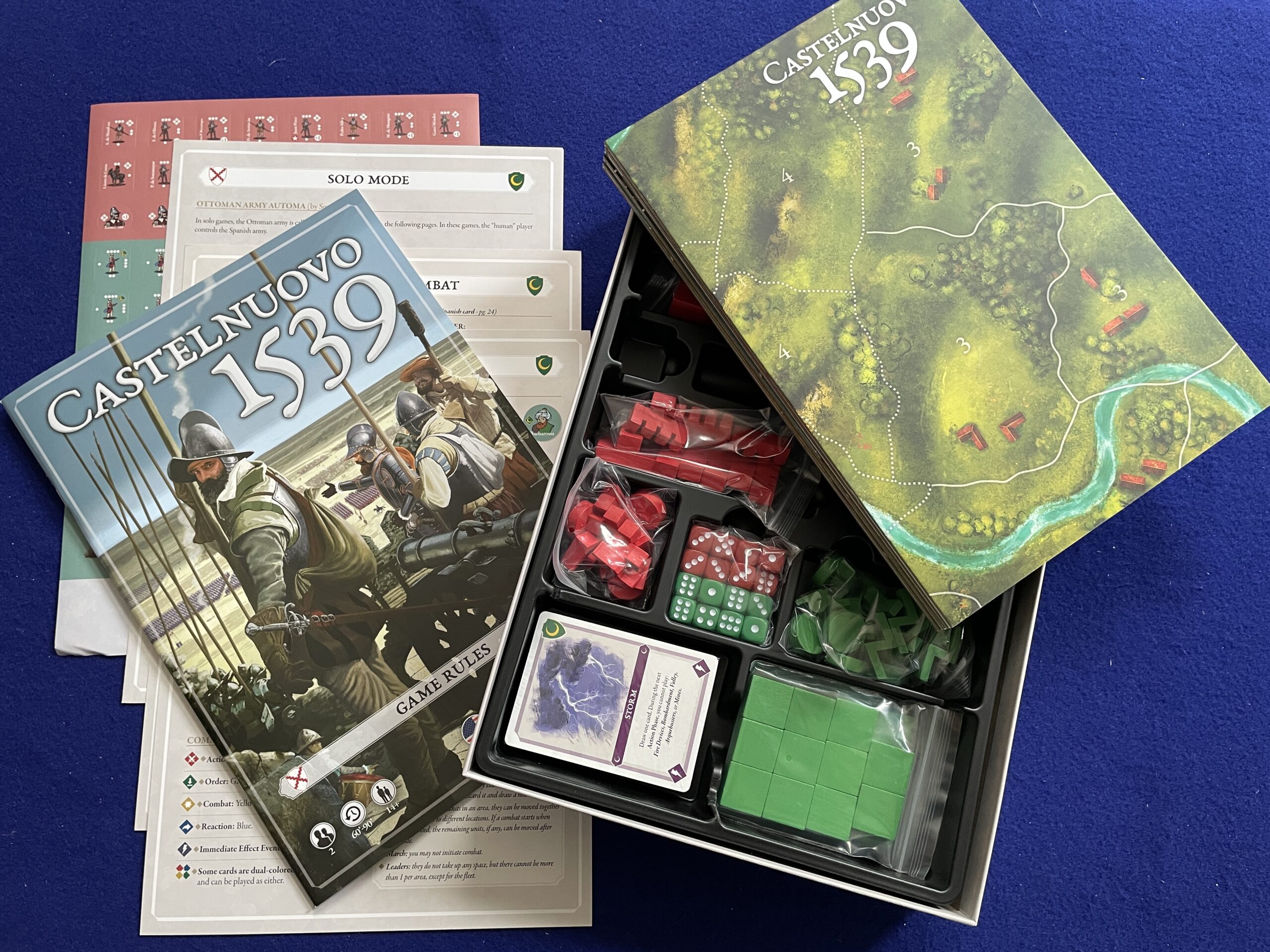
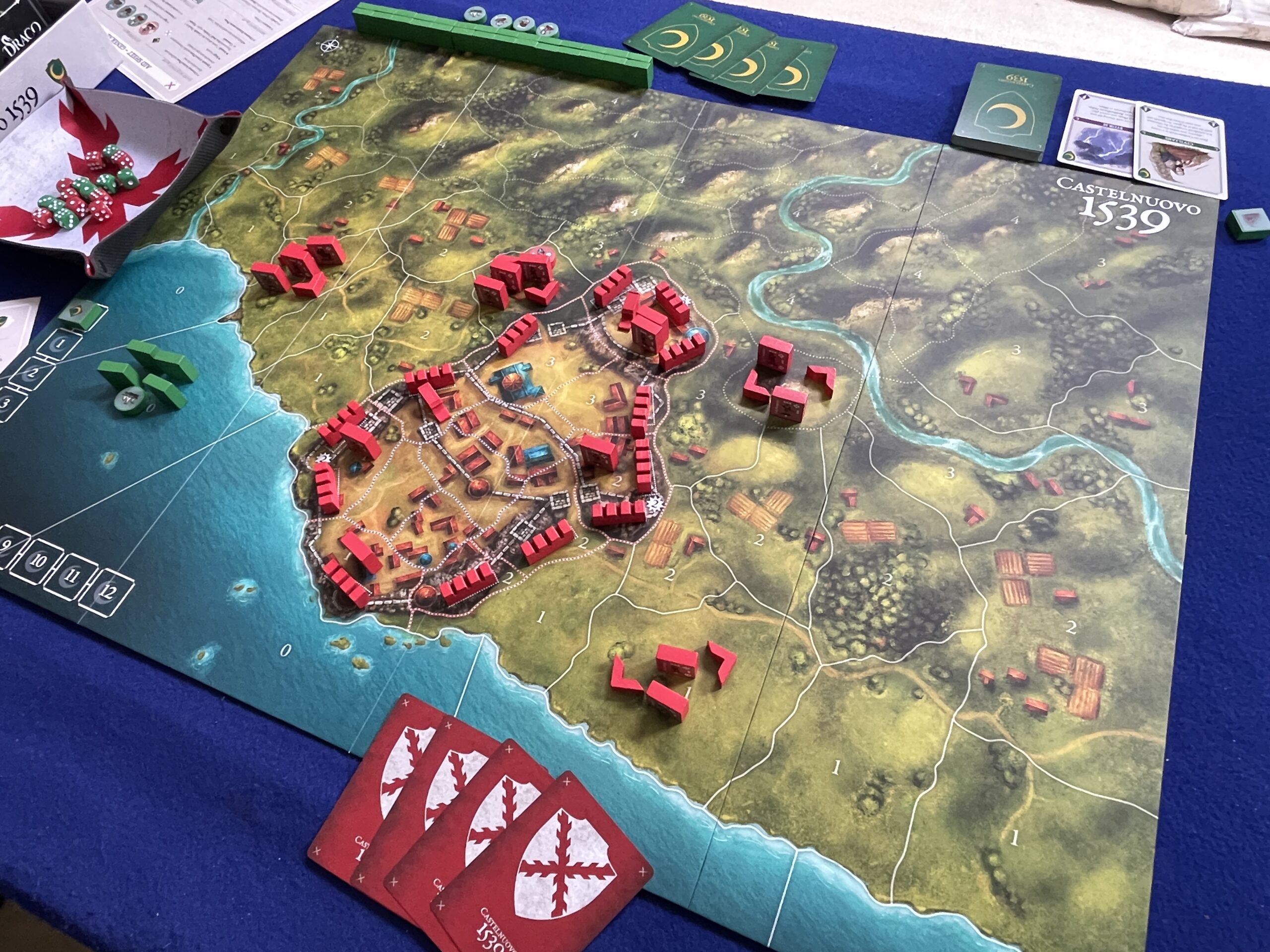
- Game Board: The ~29” x 21.25” game board is a gorgeously colorful representation of the fortified city of Castelnuovo and its surroundings.
- Rulebook: The 44-page full color, well illustrated, glossy pages rulebook contains not only the rules but Designer Notes, Play Notes for both players, as well as a detailed Historical Note.
- Player Aid Sheets: Two Player Aids printed on slightly heavier cardstock assist players with rules essentials.
- Cards: There are also 72 Command cards (36 per side) that are fully explained in the rulebook.
- Wooden Pieces with Sticker Sheet: Players fight across the board using wooden square block for units (red for Spaniards, Green for Turks) and other wooden pieces representing Fleets and Leaders as well as walls, Resistance points, cannons, Chevaux-de-Frise, and trenches; the Sticker Sheet is not glossy but a slightly subdued palette that nonetheless looks appropriately matched to the sides and the board.
- Solo Mode: This four-page rules booklet explains how to use the Ottoman Army Automa (Bot); the major change to the game mechanisms is the use of the Ottoman Casualty Track as a countdown timer giving the game a 12-round limit.
- Dice: 16 dice (8 per side in appropriate colors) are included.
I must also thank Draco Ideas for including a Spanish neoprene dice tray that almost certainly will get use beyond Castelnuovo 1539.
Hybrid wargame
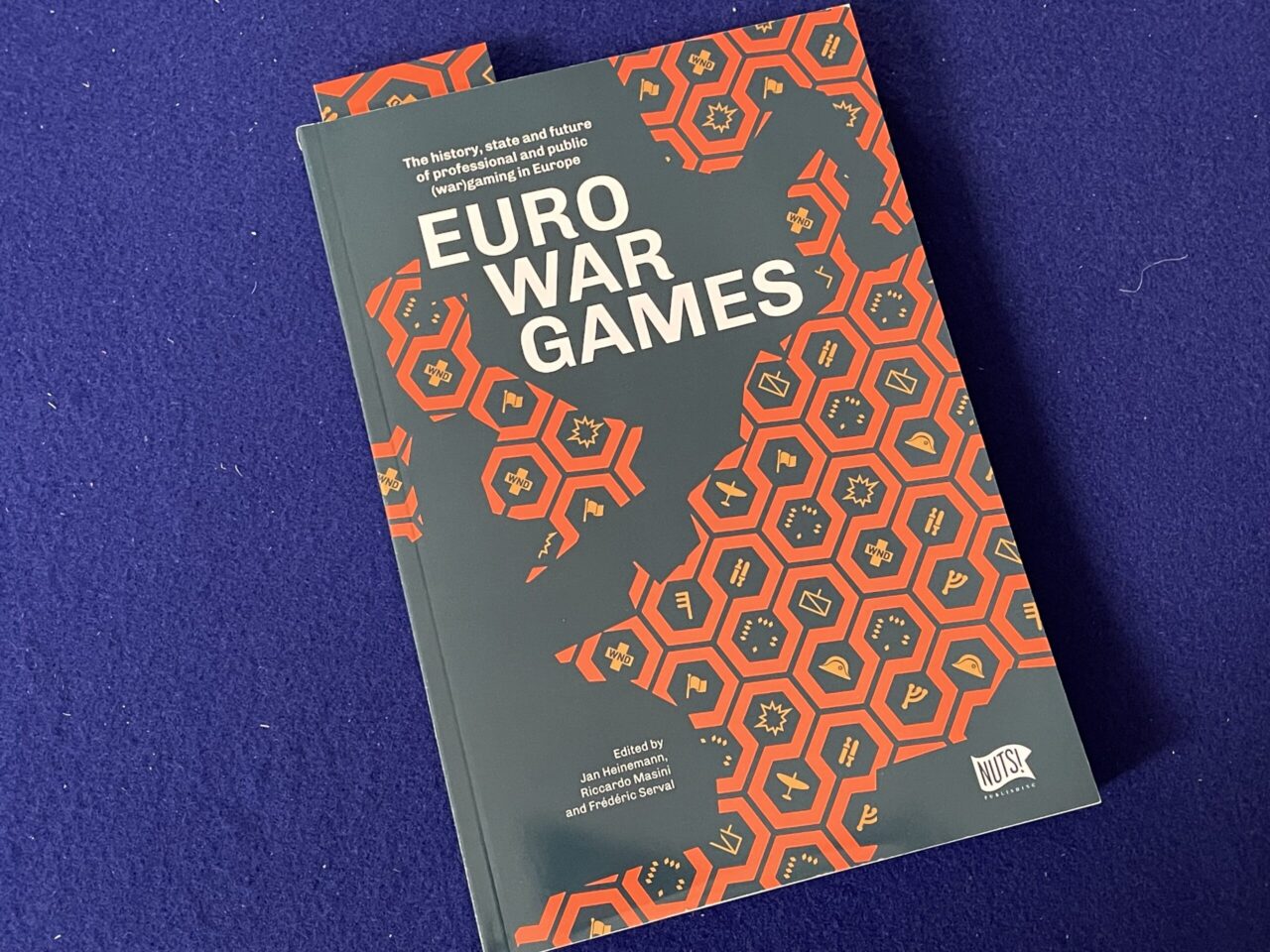
Castelnuovo 1539 is not a traditional wargame. Instead, I see Castelnuovo 1539 as a hybrid game; that is, a game using game mechanisms from both wargames and Eurogames. I draw the definition of a hybrid game from Riccordo Masini in his chapter, “Attack of the Hybrids! Wargames and Eurogames-derived mechanics” found in the Euro War Games anthology edited by fellow Dragoon Jan Heinemann, Riccordo Masini, and Fred Serval from NUTS! Publishing in 2024 (previously reviewed on The Armchair Dragoons).
Masini introduces hybrid games by explaining:
The quantitative and qualitative rise in Eurogames titles – i.e. games with precise combinatory mechanics, enhanced components and more pronounced accessibility to the general public – has become the dominant trend in the current gaming hobby environment… Today, even wargaming publishers and designers are more and more leaning towards integrating Eurogame-like mechanics and components in their newest titles. This trend, starting with simulation sub-genres like card-driven games and light wargames, is becoming increasingly becoming evident so much that many of the new titles published can be described as “hybrids”: simulation games closer to Eurogames than to traditional forms of the genre. (Heinemann, et al., p. 27)
Cards
To Masini, “one of the most recognizable “telltale signs” of a hybrid game” is cards of which Castelnuovo 1539 has 72 (see Heinemann, et al., p. 28 for discussion of cards in hybrid games). As the ad copy for Castelnuovo 1539 promises:
Dynamic card-driven system: the card engine drives every turn, creating constant tactical decisions and maintaining tension until the very end.
The description continues:
Cards are the engine of the game: they activate units to move and attack and enable special actions such as the feared encamisadas of the Spanish player. There is no fixed number of turns; the Ottoman player has time to prepare the siege, while Sarmiento’s Tercio works tirelessly to disrupt those plans.
As related in the rulebook, Command cards are the heart of the Castelnuovo 1539 game design: “The core of the game lies in the use of these cards, as the game is focused on combat, and other elements, such as logistics or command, are incorporated and abstracted into the system” (2.2 Command Cards).
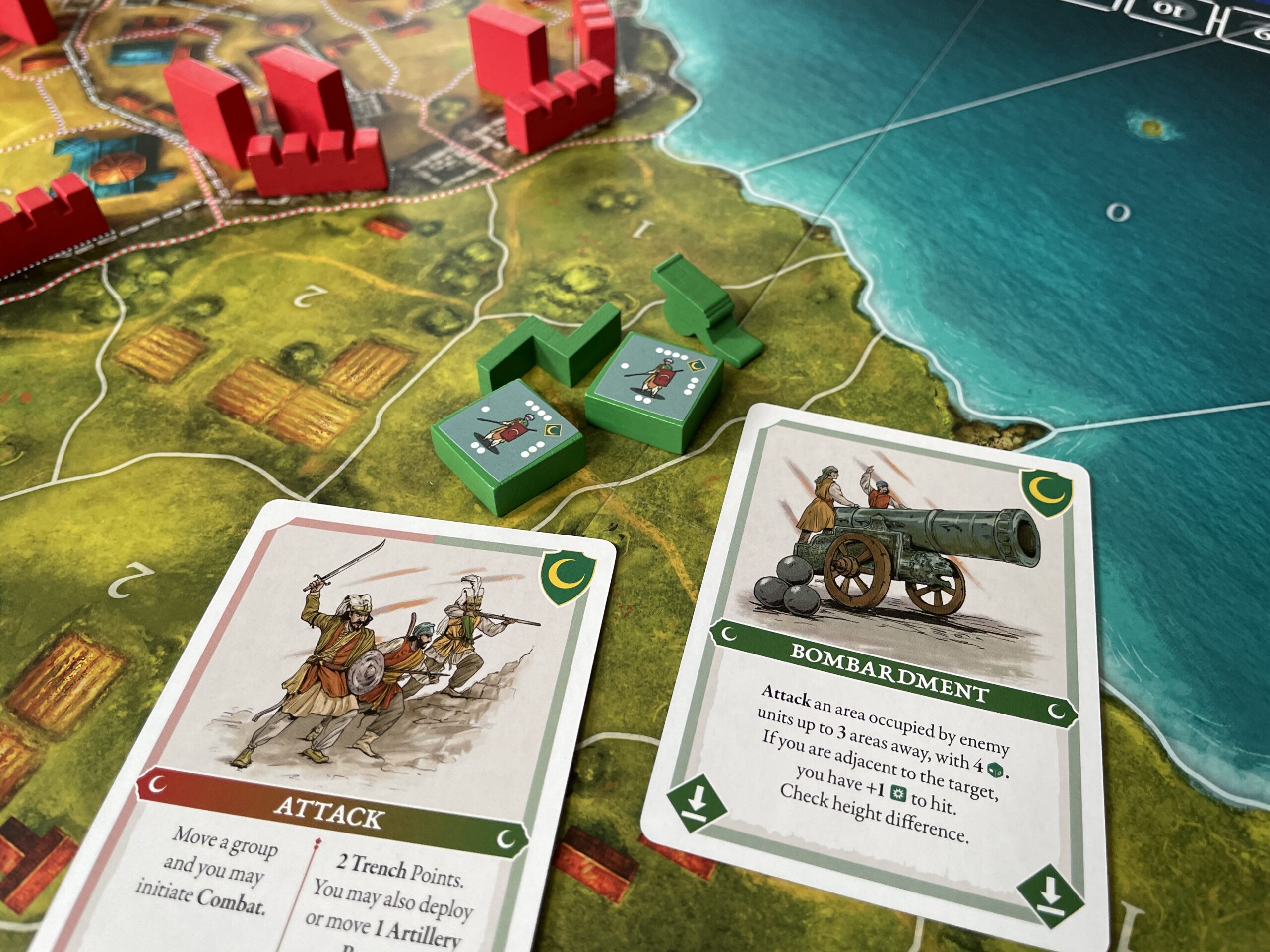
Command cards are based on—and essential to recreating—the theme of Castelnuovo 1539. As designer Francisco Ronco comments in the Designer Notes:
Coordination is impossible in this game because the means of communication of the time did not allow it beyond having a plan for a given turn (hand of cards) and executing it as best you can (or as well as the opponent allows). (10.3 Designer Notes)
Wood
Masini asserts that, “In general, hybrid simulation games use wooden generic pieces alone or in conjunction with more traditional cardboard counters for very specific historical and narrative purposes” (Heinemann, et al., p. 35). The over 100 wooden pieces in Castelnuovo 1539 represent the different units, leaders, walls, Resistance points, cannons, trenches, or the Chevaux-de-Frise. Not only are the pieces colorful and immediately recognizable but the upright blocks for units introduce the “fog of war” as the identity of the block is only revealed in certain conditions.
[In what is almost certainly a nod towards making Castelnuovo 1539, “more accessible to the general public,” the rulebook also includes a one-page Appendix on “How to Apply the Stickers to the Blocks.”]
Map
As Castelnuovo 1539 is a hybrid game focused on control of the city and not so much on kinetic combat, the map does not use hexes but instead is divided into areas that regulate the movement and positioning of the blocks (see Heinemann, et al., p. 36 for discussion of area maps). The use of an area map is fitting to the theme of Castelnuovo 1539; movement is not regulated in small units of measurements and combat is not dependent on specific engagement ranges or from what front of a unit an attack comes from. The more important aspect of movement and combat is where it takes place and getting to/from that area. Control of areas also relies on what Masini flags as, “a very common Eurogame mechanic: area majority” (Heinemann, et al., p. 36). For those reasons the use of an area map in this hybrid game is most appropriate. It also doesn’t hurt that the map itself is beautifully rendered and ideally sized for a smaller gaming table with two players.
Dice
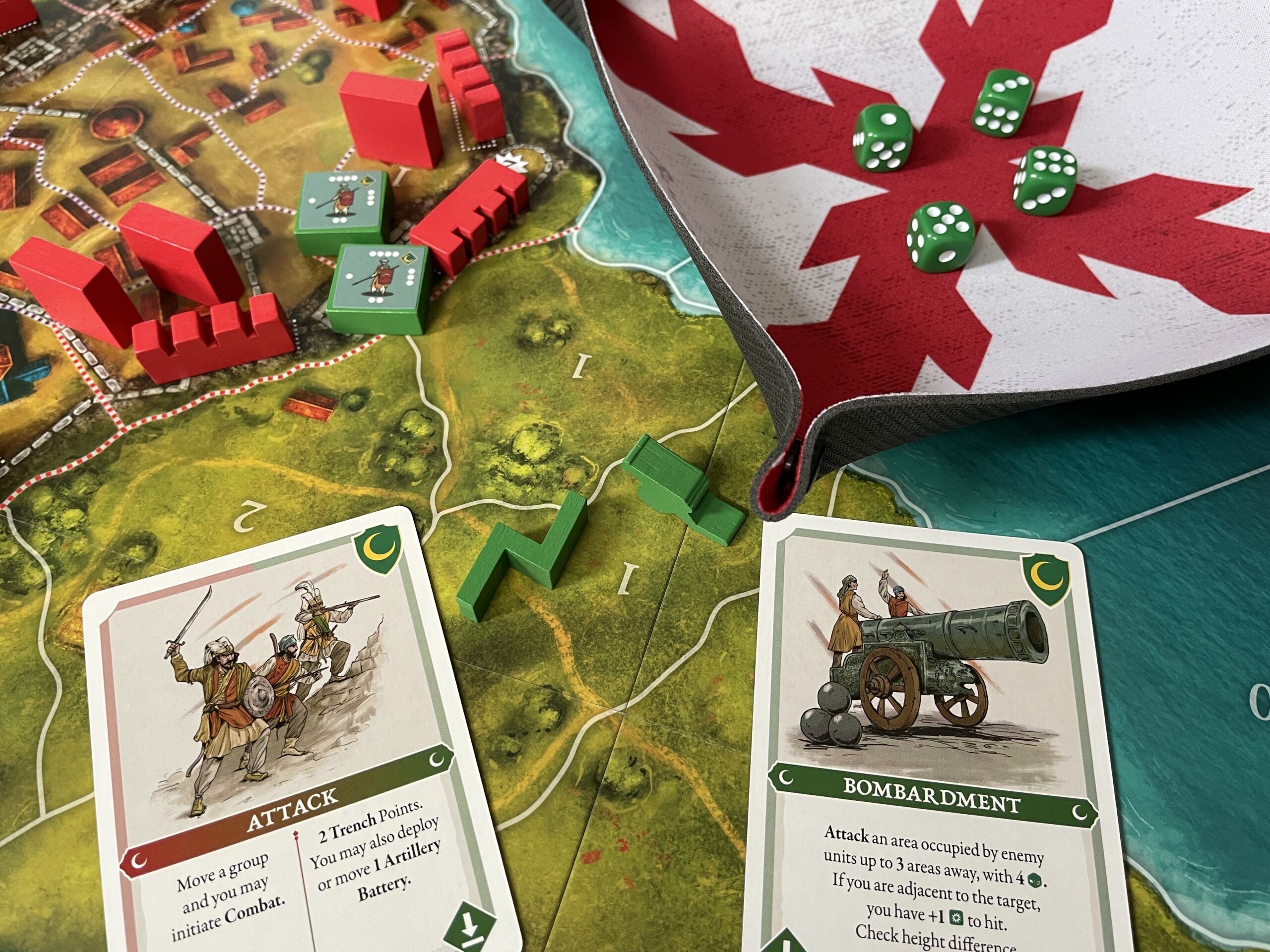
While Castelnuovo 1539 uses dice in combat resolution (see 7.3 Combat Resolution Priority) it does so using Eurogames-inspired combinatorial dynamics; i.e. players can immediately realize the result of die rolls, “without forcing them to constantly look for results inside complex and unintuitive tables” (Heinemann, et al., p. 37). Like a good hybrid game in Castelnuovo 1539 die rolls resulting in a [5] or [6] are hits—no need to consult a Combat Results Table (CRT).
Gaming Dynamics
Castelnuovo 1539 also fits Masini’s definition of a hybrid game as it leans into the use of general gaming dynamics:
As a final point, the hybridization process between Eurogames and wargames can operate on general gaming dynamics, not directly tied to a specific rule. Very frequently, for example, new wargames give a predefined set of possible actions to the players, instead of leaving them with just a map, a handful of counters, and a CRT to find out what they must do to conquer Russia or rout the British at Waterloo… In this way, the players remain focused on the actual historical situation described by the game and the dynamics behind it. (Heinemann, et al., pp. 37-38)
As the introduction to Castelnuovo 1539 states:
In this game, two sides face each other in a desperate battle: the city and its fortifications will eventually fall to Turkish strength, but the question is, at what cost?
The Ottoman side must either take control of the key points of the fortress or eliminate all Spanish forces. The Spanish player will have to make sure that they pay a very high price for their victory… There is no other way out.(I. Introduction).
The website description of Castelnuovo 1539 points to the game design’s asymmetry and replayability:
Full asymmetry: each side has different objectives, forces, and playstyles. The Spanish must make every card and movement count, while the Ottomans enjoy numerical superiority but must carefully manage their losses.
High replayability: the combination of cards and maneuvers ensures that no two games are the same.
One example of a tight coupling of game mechanisms to theme in Castelnuovo 1539 is the selection of Round type. The thematic difference is time represented while the mechanical difference is hand size and the number of Actions possible in the round:
Siege Rounds represent 3 or 4 days of real time, and both players refill their hand with 4 cards at the end of each player’s Action Phase. …
Assault Rounds represent only 1 day of combat, and each player will have a 7-card hand in each Action Phase. Each time the Ottoman player declares an Assault Round, the marker on the Ottoman Casualty Track advances one square. (Emphasis in original, 5. Game Sequence)
Unlike many wargames, in Castelnuovo 1539 the victory conditions are based on a game condition rather than an accumulation or loss of victory points. The Goal of the Game (i.e. victory conditions) for the Main Scenario in Castelnuovo 1539 are:
Main Scenario: depicts the siege of the Spanish garrison by the Turkish forces. In this scenario, the goal of the Turkish player is to eliminate ALL Spanish blocks or to occupy the three areas with Resistance 2 and 3 in the Fortress, marked with a white star, at the end of the round. The Spanish player wins if the Ottoman Casualty Track reaches space 12.
There can be no ties in this game; there is only one winner in each game. (3. Goal of the Game)
The Ottoman Casualty Track in Castelnuovo 1539 is perhaps the most important part of the game board for it creates a kind of countdown timer. As the Spanish player watches their pieces die off they (hopefully) are also watching the Casualty Track approaching the 12 space:
The Casualty Track advances one space for each Ottoman block that loses all its Strength and is removed from the board, for each eliminated Leader, and for each Assault Round declared by the Ottoman player. (Emphasis in original; 3. Goal of the Game).
As the website description for Castelnuovo 1539 explains: “The Ottoman player controls the pace of the game, but each Assault turn increases their casualty track, adding pressure and limiting their operational capacity.”
In the Designer Notes for Castelnuovo 1539, Ronco comments on the linkage of theme and game mechanisms:
…this is why the battle is set up as a countdown, the Turkish player must occupy the fortress before the Spanish inflict enough casualties to make it a Pyrrhic victory. We will never truly know the reality of Turkish casualties. Doria, in his letter to Charles V, put the number of casualties at 3,000-4,000, while the survivors and the chronicles spoke of tens of thousands of Turkish dead. And this is the desperate nature of it: the Spaniards cannot win. Their victory consists of killing and killing a lot. The Turks have an inexhaustible number of troops, on the scale of the game, and all the time in the world. The siege will be a success, but at what cost? (10.3 Designer Notes)
[Cooperative Play]
[Masini also comments that cooperative play is another aspect of many hybrid games. Castelnuovo 1539 is certainly not a cooperative design; as a matter of fact, at two players the game is very un-Eurogames-like in that regard—but I still consider it a hybrid game.]
Accessibility
The use of Eurogame mechanisms as well as a general publishing approach drawn from Eurogames makes Castelnuevo 1539 very approachable even for a non-grognard or otherwise common boardgamer. Starting with tastefully colorful components, a rulebook not written in SPI Case format that goes to pains to explain every component and Action (for example, every Command card is explained in the rulebook), and an introductory scenario and Play Notes for players, Castelnuevo 1539 is designed for nearly any boardgamer to easily pick up and play.
Hopelessly fun
My somewhat recent play of Italy ’43 (Mark Simonitch, GMT Games, 2026) reminded me that I want to play wargames as much for learning about the history as for fun:
To be honest, Italy ’43 does a little too good of a job replicating history. Like the historical campaign the turns tend to plod along with “feel good” moments few and very far between. While I play wargames in great part to learn about battles and campaigns, I still want to enjoy playing it at least a little bit (and yes, defeat can be enjoyable as long as one is still learning). Italy ’43, however, gives me little excitement. (“Little Wargame with Italy ’43”, The Armchair Dragoons, 20 April 2026).
While the situation in Castelnuovo 1539 sounds hopeless the game is far from boring. As a hybrid game that brings Eurogame-like game mechanisms to a siege wargame, Castelnuovo 1539 is very fun to play. As I am not deeply steeped in Early Renaissance warfare, I found the comments of designer Francisco Ronco in the Designer Notes most intriguing and whetting my appetite to play Castelnuovo 1539:
The 16th century siege warfare has its peculiarities and these have been modeled in the game through the distinction between ‘Siege’ and ‘Assault’ rounds, the presence of artillery batteries, the obsolete medieval fortifications of the city and the modern earthen fortifications built by the Spanish to reinforce them, the construction of siege trenches and their usefulness in reducing the casualties of the besiegers… A well-played and balanced game will leave a spectacle of siege lines forming a tight belt and getting closer and closer to the city, bastions and walls demolished by the Ottoman batteries, and breaches where the close-range clashes that will ultimately decide the outcome are concentrated. We also include the famous Spanish ‘camisado’ attacks (encamisadas in Spanish), and once you master the rules, you will see that fortresses were not defended passively, but rather part of the secret of their resistance was in an active defense that made sorties, hindered the work of the attackers, destroyed some artillery batteries and did not give them rest or tranquility. (10.3 Designer Notes).
I am happy to report that Ronco’s description of playing Castelnuovo 1539 is accurate. If anything, Ronco actually undersells the tension the game creates.
With a play-time of 60-90 minutes, Castelnuovo 1539 also does not overstay its welcome on the gaming table. For this review I played the game three times: the Introductory Scenario once, the solo game once, and against RMN T for the third time. The intro scenario is a good learning game that familiarizes you with the game mechanisms. The solo game is good at helping the player to explore the Spanish strategy demands. The Main Scenario is a tense showdown as the Ottoman units keep coming and the Spanish bleed white, all while both players warily eye the Ottoman Casualty Track.
A common criticism of Eurogames is that the games are often shiny game mechanisms with a theme haphazardly slapped on as if it was an afterthought. As Ronco relates in the Designer Notes, the game mechanism first-theme second design approach was the development legacy of Castelnuovo 1539 (10.3 Designers Notes). In the case of Castelnuovo 1539, however, the results are extremely positive. As a hybrid game, Castelnuovo 1539 on the table is a tight design with a tense and challenging decision space for players presented in a visually appealing package. All of which makes Castelnuovo 1539 a hybrid (war)game that both grognards and common boardgamers can equally enjoy.
Castelnuovo 1539—Play if you dare!
You can chat about this game in the Age of Gunpowder section of our discussion forums
Thank you for visiting the Regiment of Strategy Gaming and riding with The Armchair Dragoons.
Rather than list a bunch of social media links, the easiest thing to do is to check out our LinkTree, which connects you to all of our various locales around the web.
You can also support The Armchair Dragoons through our Patreon, and find us at a variety of conventions and other events.
Feel free to talk back to us either in our discussion forum, or in the comments below.