by
by RockyMountainNavy, 22 January 2026
At a time when Russia is bogged down in Ukraine, some wargamers likely view Russia invading elsewhere, like that portrayed in Littoral Commander: The Baltic (Sebastian Bae & Nick Wernert, The Dietz Foundation, 2025), as irrelevant and much less insightful for the conflict it portrays. I know that I spent most of 2025 putting off digging deep into Littoral Commander: The Baltic because I thought it was too difficult to “connect” with the topic of game which I thought was moving from a plausible alternate future into the realm of true science-fiction. After all, the Russian war machine is essentially fighting a positional conflict in Ukraine not unlike World War I which is as far from modern—and future—warfare as can be imagined. Reviewing research over the past year on a reconstituting Russian military opened my mind to the range of possibilities that Littoral Commander: The Baltic can teach—through the medium of play—about those potential futures.
Baltic unicorn
The “setting” for Littoral Commander: The Baltic sounds not much different than a “future-history” wargame from the golden age of SPI:
Littoral Commander: Baltic (LC) is a 2- to 6-player wargame exploring future tactical concepts, emerging technologies, and all-domain warfare. The wargame is designed to be accessible to both professional military and hobbyists. Extensive wargaming experience is not necessary. LC offers fast-paced and flexible game play meant to be fun and competitive, while also serving as an “intellectual sandbox” on “what-if” conflicts that could arise in the Baltic region. LC: Baltic explores hypothetical scenarios of conflict between the U.S. Marine Corps (USMC), U.S. Navy (USN), and U.S. Army confronting Russia’s Naval Infantry (RUNI) and the Russian Baltic Fleet (RUBF) in the year 2030 and beyond. (1.0 INTRODUCTION, p. 3)

In Littoral Commander: The Baltic to fight, “in the year 2030 and beyond” presumes that you have forces to fight with. Given the years of conflict in Ukraine and costs which are measured not just in terms of time but national treasure, equipment, and (most importantly) people, what will the Russian Bear look like? The design of Littoral Commander: The Baltic actually is ready to address that question with an answer that is, “all in the cards.”
Deck of…fate?
A defining component of Littoral Commander: The Baltic—and indeed any Littoral Commander series wargame—are the Joint Capability Cards (JCC). “Joint Capability Cards (JCCs) represent the support of higher command and adjacent friendly forces and their respective capabilities” (9.0 JOINT CAPABILITY CARDS (JCCS), p. 45). During the Actions stage of a turn in Littoral Commander: The Baltic a player can, “play a JCC to trigger its effect” ([9.03], p. 46).
In Littoral Commander: The Baltic, JCCs are color-coded by the type of function they support:
- RED = Fires
- GREEN = Maneuver
- PURPLE = Interception
- BLUE = Information Operations
- YELLOW = Command, Control, Communications, Computers, Cyber, Intelligence, Surveillance, and Reconnaissance (C5ISR)
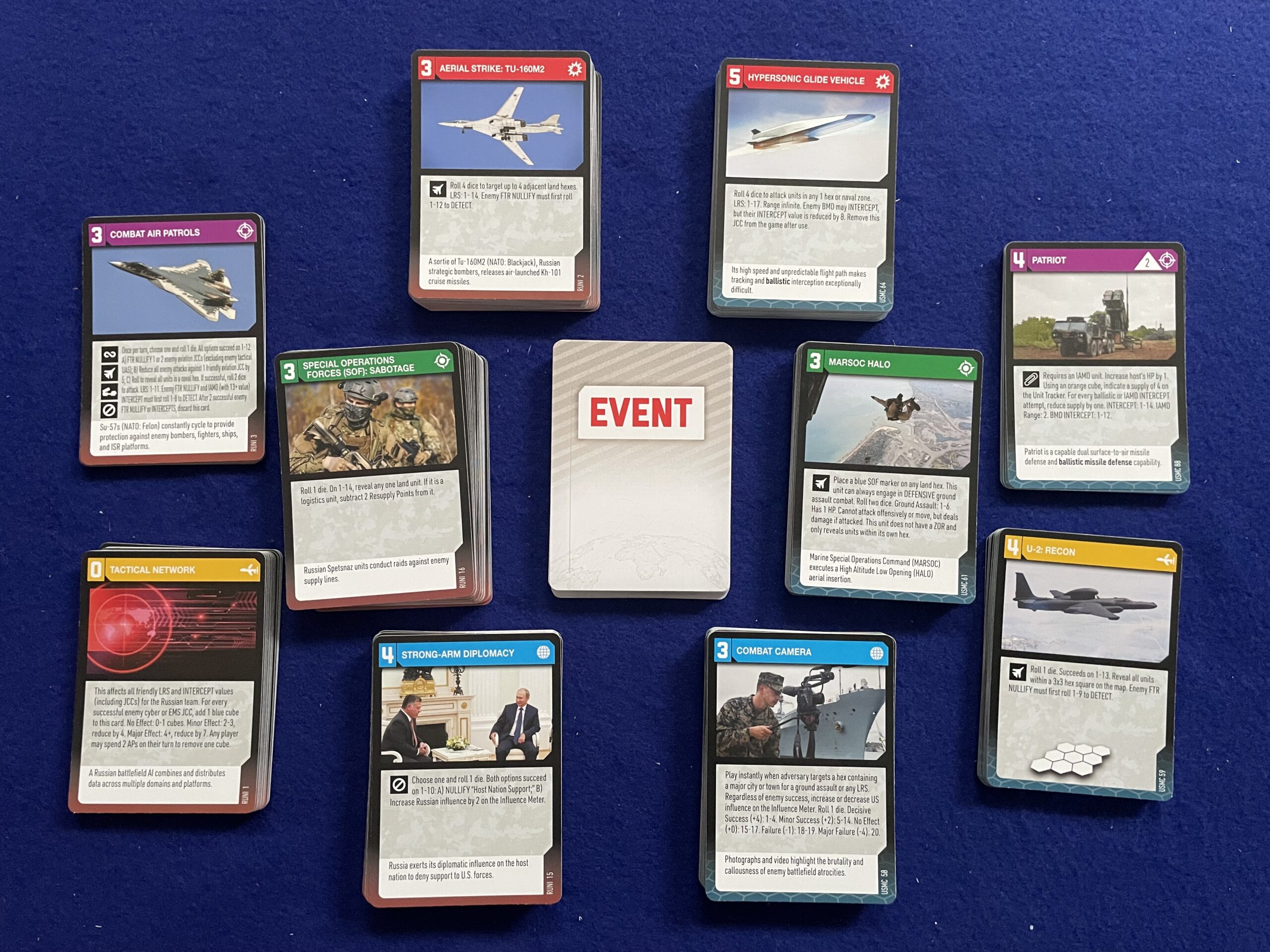
JCCs are used in Littoral Commander: The Baltic to represent just about anything beyond the standard attack/defense/movement factor of a unit. In a scenario, players purchase JCCs using Command Points (CP). Each JCC ranges in cost from 0-5 CP. Most scenarios start with a CP allotment of around 15 points and the ability to buy more cards in later turns.
The fact Littoral Commander: The Baltic comes with so many JCCs (126 for each player) is actually a point of (polite) dispute between players and the lead designer. Each scenario allocates a starting budget for players to use for purchasing JCCs ([3.12], p. 11); only the Tactical Network JCC is pre-assigned ([3.2] DEPLOYMENT STAGE, p. 12). Lead designer Sebastian Bae is often asked to update the rules with a “recommended” starting selection of JCC—a move Sebastian resists for reasons explained in an extended Designer Note:
Player selection of JCCs can prove fatal or the key to victory – with small margins for error at times. For non-military professionals, this feature in the game may seem brutal and unfair, especially for first time players. However, LC is an educational game designed to allow players to explore hard problems – not to provide specific answers. Similarly, players may want a list of recommended JCCs for each SCENARIO to help ease the learning curve. This was specifically excluded to avoid bias in JCC selection. Suggestions from the designers inherently imply a specific paradigm to look at a SCENARIO or implies there is a singular solution set. This goes against the very spirit of this game and its educational purpose. Moreover, we wanted to encourage players to find and explore different tactics and approaches – even ones we never thought of. Players should attempt various combinations of JCCs and tactics in the pursuit of victory. At times, it will work brilliantly; other times, you will lose spectacularly. This process of learning capabilities, forming theories of victory, and adapting previous approaches is part of the learning process – a campaign of learning. Embrace it! (DESIGNER NOTE, p. 45)
[That said, in September 2025 Bae posted a file named “JCC Packages” to BoardGameGeek where he writes: “There is no perfect set of JCCs to select for any SCENARIO in the Littoral Commander series. Each situation, context, and opponent has its own set of requirements and challenges. However, in hope to help players – especially beginners – to begin exploring the Littoral Commander system, we have assembled “packages” of cards designed to have a particular kind of advantage, effect, or tactic. The packages are crowd sourced from the design team and veteran players. None are perfect nor definitive. They are just the beginning points for your experimentation. Enjoy!”]
Joint Capability Cards in Littoral Commander: The Baltic are truly the heart of the access, engage, and adapt design philosophy underpinning the game. Through the many JCC, players easily can access different kit and engage with the tactical and strategic implications of adding it to their force. The fact the game ships with 126 JCC per player is not a limit; an entire subculture of Littoral Commander supporters lives on adapting new weapons systems or concepts into a JCC. Some go so far as to adapt the game to create an entire new force of units with unique JCC…and even entirely new game versions.

Bear 2030-ish
In January 2025, the RAND Corporation published their report, Russia’s Military After Ukraine: Potential Pathways for the Postwar Reconstitution of the Russian Armed Forces. The report opens by stating:
As of the writing of this report, the ultimate resolution of the Russia-Ukraine war is likely far off. Many questions remain, such as how the conflict will ultimately end, what the status of Russian and Ukrainian forces will be at the conclusion, and the lessons that Russia, Ukraine, and the West will learn from the years of fighting. What is clear, however, is that afterward, Russia will face the challenges of regenerating specific capabilities and systems and rethinking the role of its armed forces in countering perceived threats and achieving its strategic objectives. (RAND, p. 1)
The conclusions of the RAND study include two warnings that are signals for wargamers (especially wargame practitioners):
- Although U.S. allies are closely tracking Russia’s reconstitution efforts, their focus is on the speed of reconstitution rather than the nature of the reconstituted Russian military.
- A partially reconstituted Russian military will still pose a significant threat to U.S. and Western interests in the European theater. (RAND, p. vii)
The RAND report outlines four possible pathways to Russian reconstitution as laid out in Table 1.1 below:

In October 2025 Mason Clark, writing for the Institute for the Study of War (ISW), wrote The Russian Military: Forecasting the Threat where he also studied the issue of the reconstitution of the Russian military in the near term:
The Russian military’s reconstitution efforts will draw on elements of three pathways, each focused on an intended primary method of conventional warfighting.
- Attempting to restore mechanized maneuver through a combination of restoring the Russian military’s pre-2022 capabilities and structure; revisiting Soviet concepts of mass mechanized formations; and developing new adaptations to make armor survivable on the modern battlefield.
- Investing further in the capabilities and tactical techniques that the Russian military developed in Ukraine to enable offensive operations in a positional war, such as dismounted infantry tactics and precision tactical fires using drones — many of which will be part of efforts to restore mechanized maneuver in a modern, rather than a pre-2022, framework.
- Revisiting the Russian military’s aspirational efforts to field advanced and operationally significant precision strike capabilities, which the Russian military pursued (in order to conduct “non-contact war”) but did not fully develop and field prior to 2022.
The Russian military will not pursue any one of these reconstitution pathways to the exclusion of the others, nor will it attempt to rebuild its pre- 2022 force structure, and forecasts of Russian military reconstitution should concentrate on assessing what balance among these three pathways the Russian military will pursue in the medium term. (Clark, pp. 11-12)
Clark continues on the potential trajectory of Russian military reconstitution in the wake the Ukraine War with the following bold assertion:
The Russian military will most likely attempt to reconstitute a force capable of mechanized maneuver by rebuilding large mechanized formations and providing them with counter-drone capabilities, investing in operationally significant precision strike capabilities, and integrating some of its adaptations in Ukraine into future capabilities. (Clark, p.14)
Clark, however, adds this warning:
The Russian military will draw on multiple possible reconstitution pathways, will experiment with new technologies and operational concepts, and will conduct a partially incoherent reconstitution effort — increasing the difficulty of forecasting Russian capabilities and the Russian threat to Europe. (Clark, p. 15)
At the same time the Russian military is reconstituting, modern military forces worldwide also must consider how they adapt to the future battlefield. John Antal in his book, Next War: Reimagining How We Fight (Casemate Publishers, 2023) calls on the U.S. military to adapt its strategies in response to evolving warfare dynamics highlighted by recent conflicts, including the Second Nagorno-Karabakh War, the Israel-Hamas War, and the Russia-Ukraine War. In Next War, Anatal identifies nine key disrupters that are transforming modern combat.
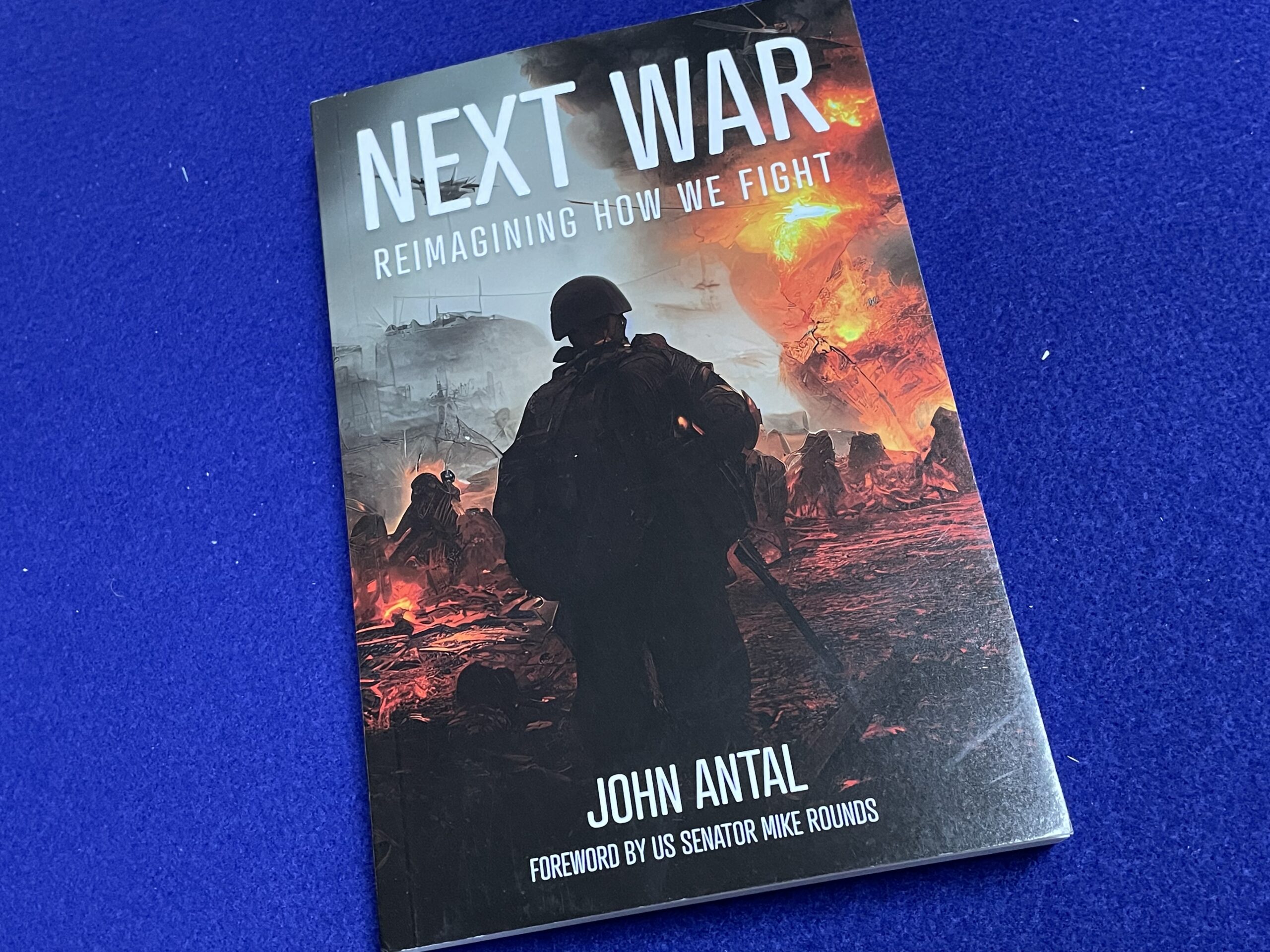
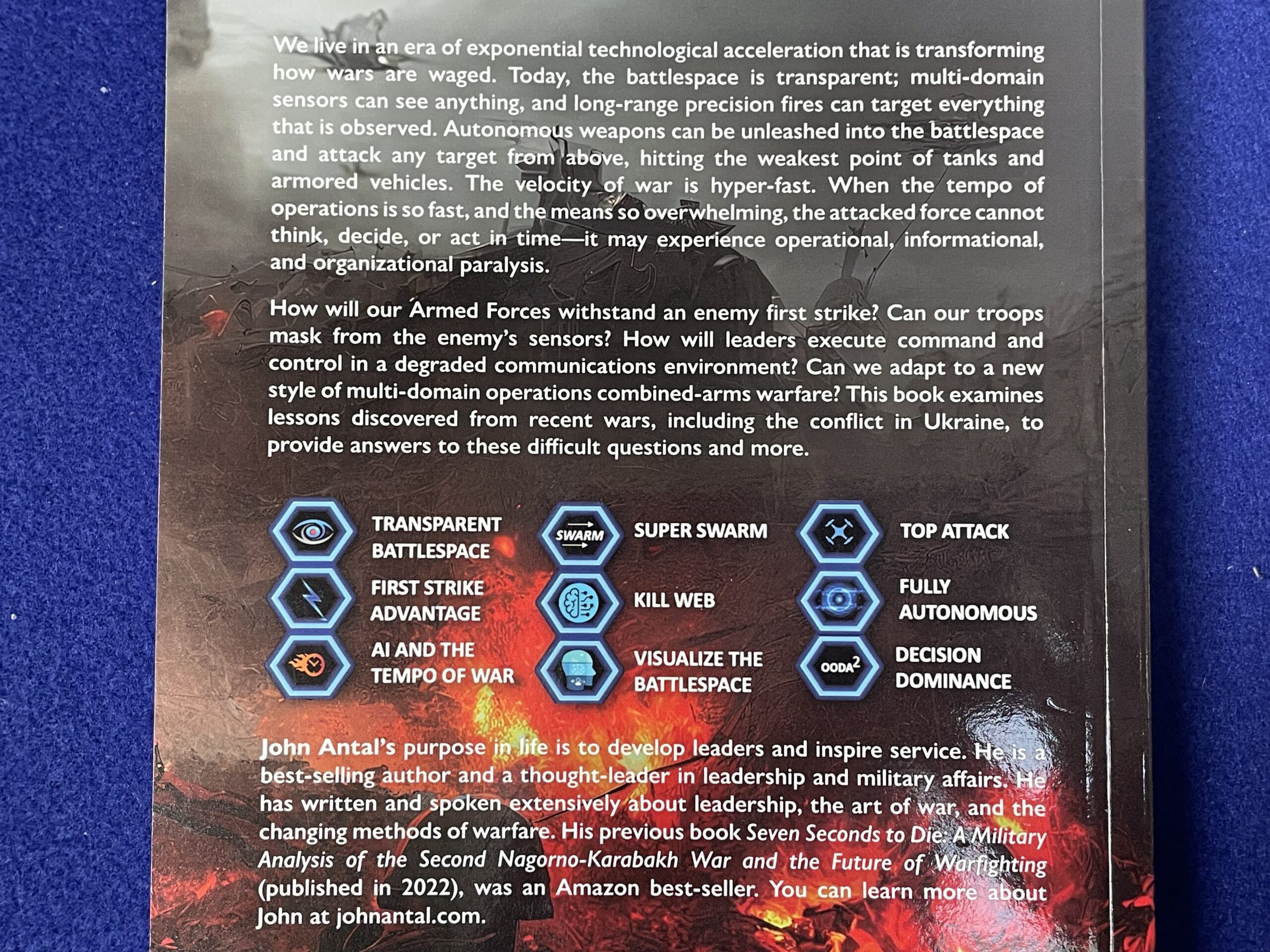
In Littoral Commander: The Baltic, each of Antal’s nine disruptors can be simulated using a single or set of JCC; few house rules are needed or necessary. In Next War, Antal argues that technological advancements demand a rethinking of military operations and strategies, noting that failure to innovate risks catastrophic outcomes against increasingly capable adversaries. A part of his recommended solution called for shifts in military education. Littoral Commander: The Baltic—which call itself, “A Grand Tactical Educational Wargame” on the box cover—is an ideal medium to provide the needed education for both military and civilian audiences.
Baltic Ukraine
Littoral Commander: The Baltic is the ideal medium for wargame practitioners and hobby wargamers alike to explore potential future conflict in the Baltics, especially in the wake of the Ukraine War. The core design elements of Littoral Commander: The Baltic, specifically the easy adaptability of the game through Joint Capability Cards (JCC), mean the game actually is easier to update in order to keep it relevant. Which RAND reconstitution paradigm will your Russian force be designed to? With “The Shoigu Plan” you will have lots of armor. A “New, New Look” could see you leaning into drones and precision strike to get after Russian concepts of “non-contact” warfare. If you go all out with “A New Operational Model” then perhaps a JCC selection based on the Chinese in Littoral Commander: Indo-Pacific is in order.
Players of Littoral Commander: The Baltic, however, must not get carried away as this is a Grand Tactical-scale wargame. The game is not designed to portray the entire conflict but a small slice of it. Take for example the final scenario, “Crossroads of Kaliningrad.” That scenario is for 2-4 players (handling up to six with a Variant) where, “US forces must blunt or turn back the Russian offensive from Kaliningrad” (Scenario Book, p. 26). At seven turns this scenario represents—at most—the first 24 hours of the conflict. “Crossroads of Kaliningrad” is in many ways comparable to The Battle of Hostomel Airport in the opening hours of Russia’s invasion of Ukraine. Which way will “Crossroads of the Kaliningrad” go? A quick Russian victory or a US one?
The battle for Hostomel Airport was more than a tactical victory for Ukraine. It disrupted a critical element of Russia’s initial invasion strategy, preventing a rapid deployment of reinforcements into Kyiv. The delay allowed Ukrainian forces to regroup and fortify the capital, contributing to the ultimate failure of Russia’s attempt to capture Kyiv in the war’s early weeks.
The battle underscored the changing nature of modern warfare, where drones, air assaults, and rapid mobilization play pivotal roles. For Ukraine, the defense of Hostomel became a symbol of national resilience. For Russia, it highlighted the limitations of even its most elite forces when faced with determined resistance. (Malyasov, Dylan. “Russia’s Failed Air Assault at Hostomel: What Went Wrong?” Defense Blog, January 25, 2025.)

Littoral Commander: The Baltic challenges players to win tactical victories and not necessarily the entire campaign or war. Those tactical challenges are served up to players in an accessible, adaptable, and engaging package.
Baltic blabs
Lead designer Sebastian Bae summarizes the goals of the Littoral Commander series in a far better way than I can:
In the end, Littoral Commander is not your typical game night wargame; it is an educational tool that enables players to explore the future of warfare and the Marine Corps’ role in it and the wider Joint Force. While the game does not offer a comprehensive or definitive vision of future warfare, it provides an intellectual sandbox for players to engage with complex problems and devise their own solutions. The game mechanisms were designed to be intuitive and easy to learn, while also providing enough complexity to enable players to explore the nuances of modern warfare. My hope is that you will give it a chance and maybe it will teach you something new. Designer Diary – Littoral Commander: Indo-Pacific
For wargame practitioners, Littoral Commander: The Baltic is yet another in a very successful series of wargames that are useful for “seriously” educating military and government officials on the complexity of modern warfare. This is evident by the many cases it is used across the globe. For hobby wargamers, however, Littoral Commander: The Baltic may be a more difficult game to experience. While one certainly can play Littoral Commander: The Baltic with two players, the Littoral Commander series game shines with a group of players. Most scenarios are optimized for multiple players per side which allows each to control a part of the overall force. Playing Littoral Commander: The Baltic with multiple players makes planning time not only essential but a valuable element of the play experience. As befits an “educational wargame” the more people playing in a game the greater the learning for each individual.
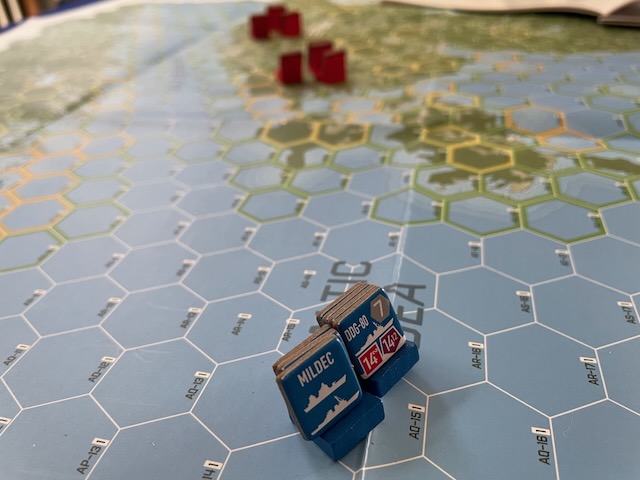

The multi-player aspect of Littoral Commander: The Baltic not only makes the game ideal for teaching a group but also for convention play. In a three- or four-hour block, as many as six players, guided by a facilitator. This is my personally preferred way of playing as it not only engages players with the game design but also leads to discussion of plans, the rules, the different Joint Capability Cards. Even if your intention is just “to play” the game in a group setting one cannot avoid “learning” about military planning and the different capabilities that are used to address challenges on the modern battlefield.
So the next time somebody at a convention or game night asks, “Shall we play a game?”, just remember the wargame to ask for is Littoral Commander—soon available in four flavors (Indo-Pacific, The Baltic, Australia, and Space Force (!)).
You can chat about this game in the Modern World section of our discussion forums
Thank you for visiting the Regiment of Strategy Gaming and riding with The Armchair Dragoons.
Rather than list a bunch of social media links, the easiest thing to do is to check out our LinkTree, which connects you to all of our various locales around the web.
You can also support The Armchair Dragoons through our Patreon, and find us at a variety of conventions and other events.
Feel free to talk back to us either in our discussion forum, or in the comments below.