
 by
by RockyMountainNavy, 9 February 2026
Say you are an Air Force mission planner (I am an Air Force mission planner) and want to teach new Airmen or even the general public about how the Air Force strikes against adversaries. You have a choice between the very informal “dogfight against a watch,” a video using AI slop, or a small wargame. If you want your learning time to be the most effective I strongly recommend choosing the wargame. In particular, IADS: The Game by Rick Rubulanan from LoRokka Games out of Mililani, Hawaii.
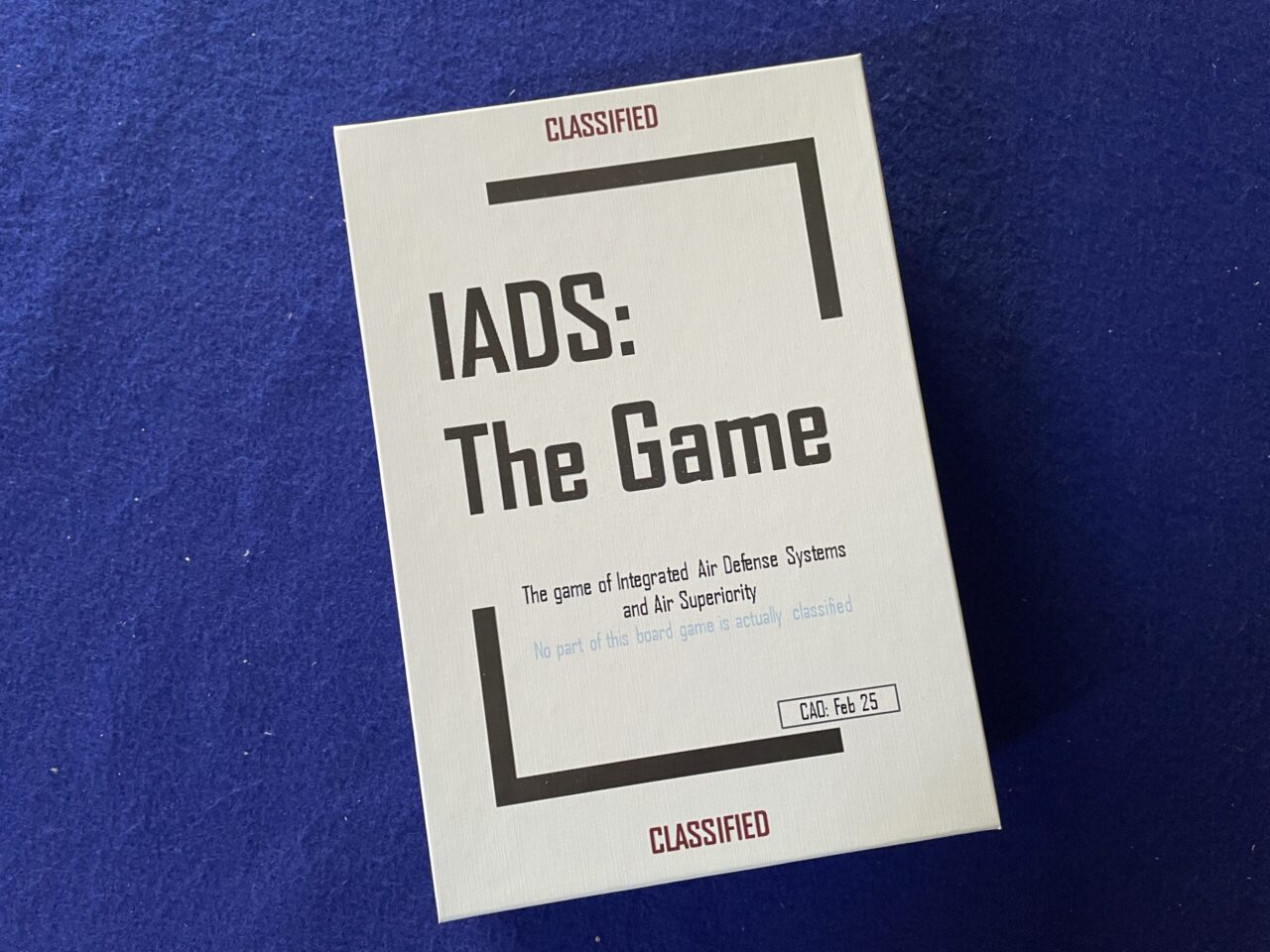
“IADS” stands for, “Integrated Air Defense System.” I asked duck.ai for a definition of an IADS:
What is an Integrated Air Defense System (IADS)?
An Integrated Air Defense System (IADS) refers to a coordinated network of sensors, weapons, and commands designed to detect, track, and engage aerial threats such as aircraft, missiles, and drones. This sophisticated system allows for collaborative defense capabilities among various military assets and platforms.
—
Key Components of an IADS
1. Sensors:
– Radar systems: These are crucial for detecting and tracking aerial targets. They can be ground-based, airborne, or naval.
– Early Warning Systems: These provide advanced notice of incoming threats, allowing for faster reaction times.
2. Command and Control (C2):
– Centralized decision-making capabilities allow for real-time analysis and response coordination across various assets.
3. Engagement Systems:
– Surface-to-Air Missiles (SAMs): These are launched from the ground and are crucial for engaging enemy aircraft and missiles.
– Intercepting Aircraft* Fighter jets can be deployed to engage threats detected by the radar systems.
4. Communication Networks:
– Secure and robust communication channels are necessary for the seamless transfer of information and coordination among all IADS components.
—
Functions of IADS
– Detection and Tracking: Continuous monitoring of airspace to identify potential threats.
– Response Coordination: The ability to make strategic decisions quickly to mitigate threats.
– Multi-Layer Defense: Employing various defense layers to engage different types of threats at different altitudes and ranges.
IADS can significantly enhance a nation’s defense capabilities by integrating various assets into a single operational framework, providing a unified approach to air defense. (duck.ai prompt “What is an Integrated Air Defense System (IADS)?” executed on 1 February 2026)
IADS: The Game is a quick-to-learn, table-top air war card game playable in under 30 minutes. In IADS: The Game players first DRAFT weapon system unit cards to build their force, next DEPLOY their attack and defenses across the table, and then engage in COMBAT to defend their airspace and destroy the enemy IADS.
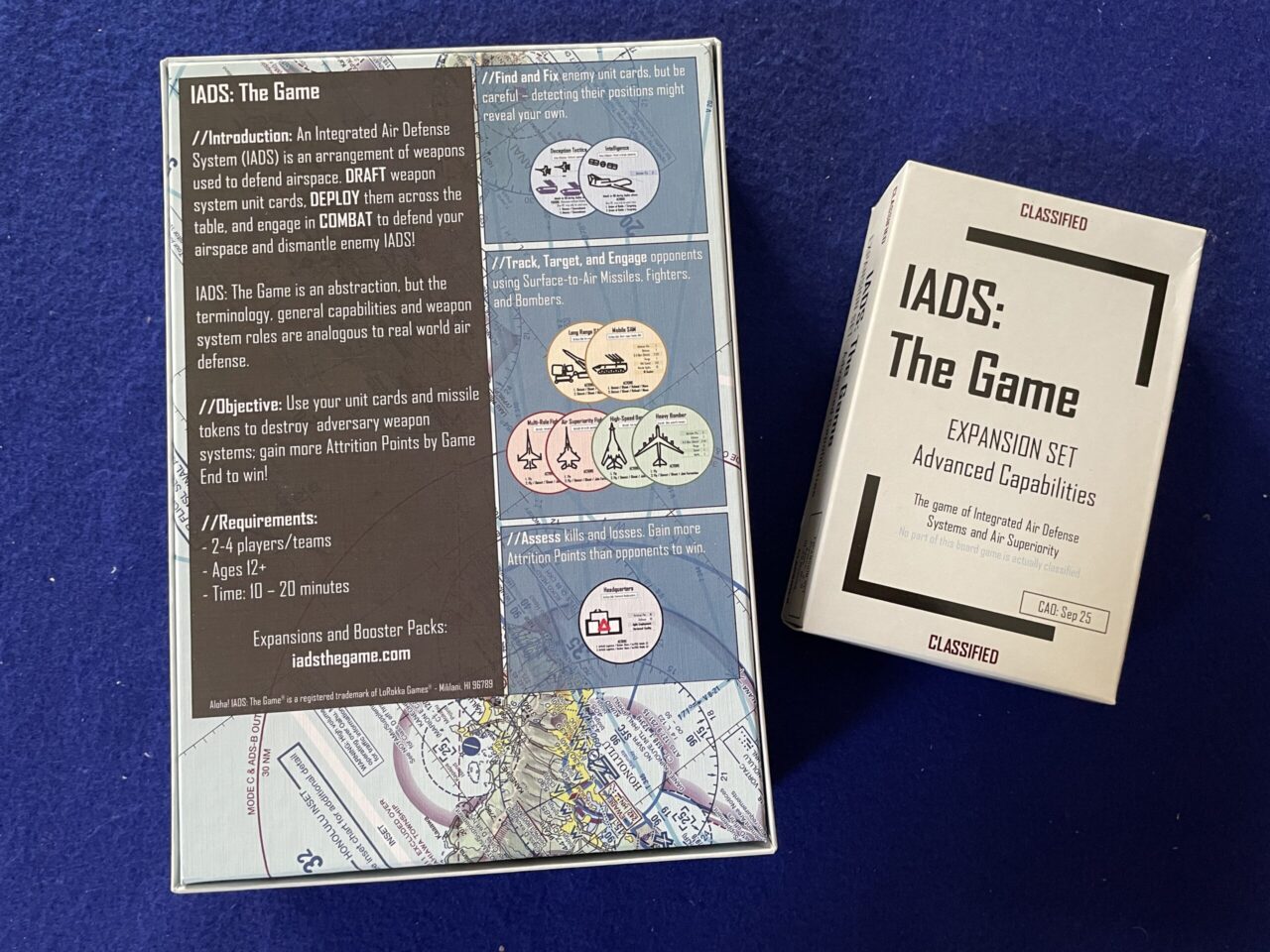
IADS: The Game comes in a small 6.5”x 9”x2” box. Inside are components for game between 2 to 4 players/teams. The core game has 32 Unit Cards, wooden bits for Team and Missile tokens, and six d6 dice. I also acquired the Advanced Capabilities Expansion Set that adds 80 new Unit Cards and some other rules—and more dice. The game is played on any flat surface; I used a 4’x5’ table.
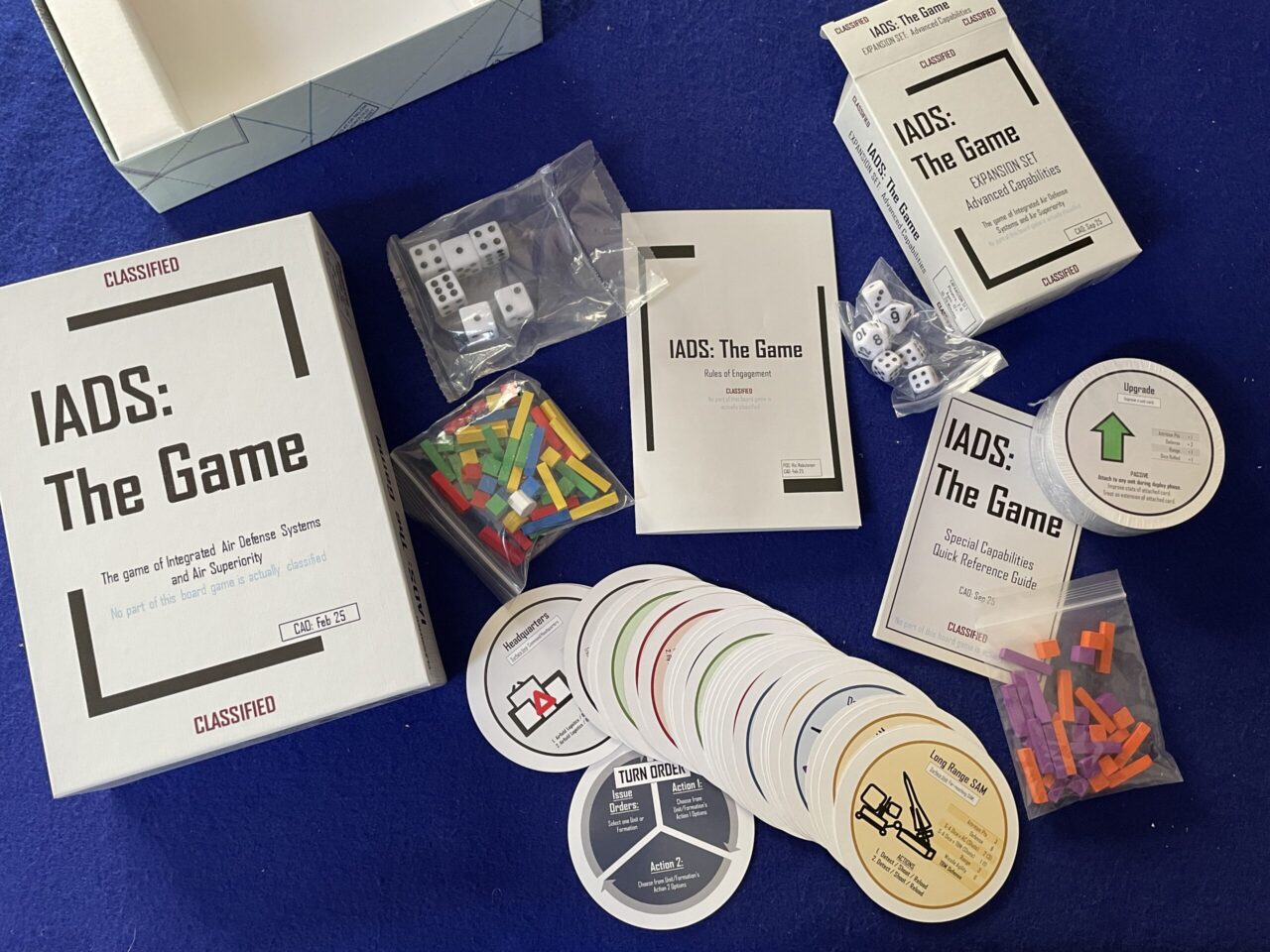
The designer of IADS: The Game recommends playing several rounds of the game assembled like an Air Tasking Order into a short campaign where every battle is called a “VUL” for “Vulnerability Window; pilot speak for time in training when the fight is on.
Every game of IADS: The Game starts with each player taking their Headquarters card and being dealt a hand of five Unit Cards. Players draft a single card and pass the deck. The selection-passing process continues until all cards are drafted—that is your force package for this VUL.
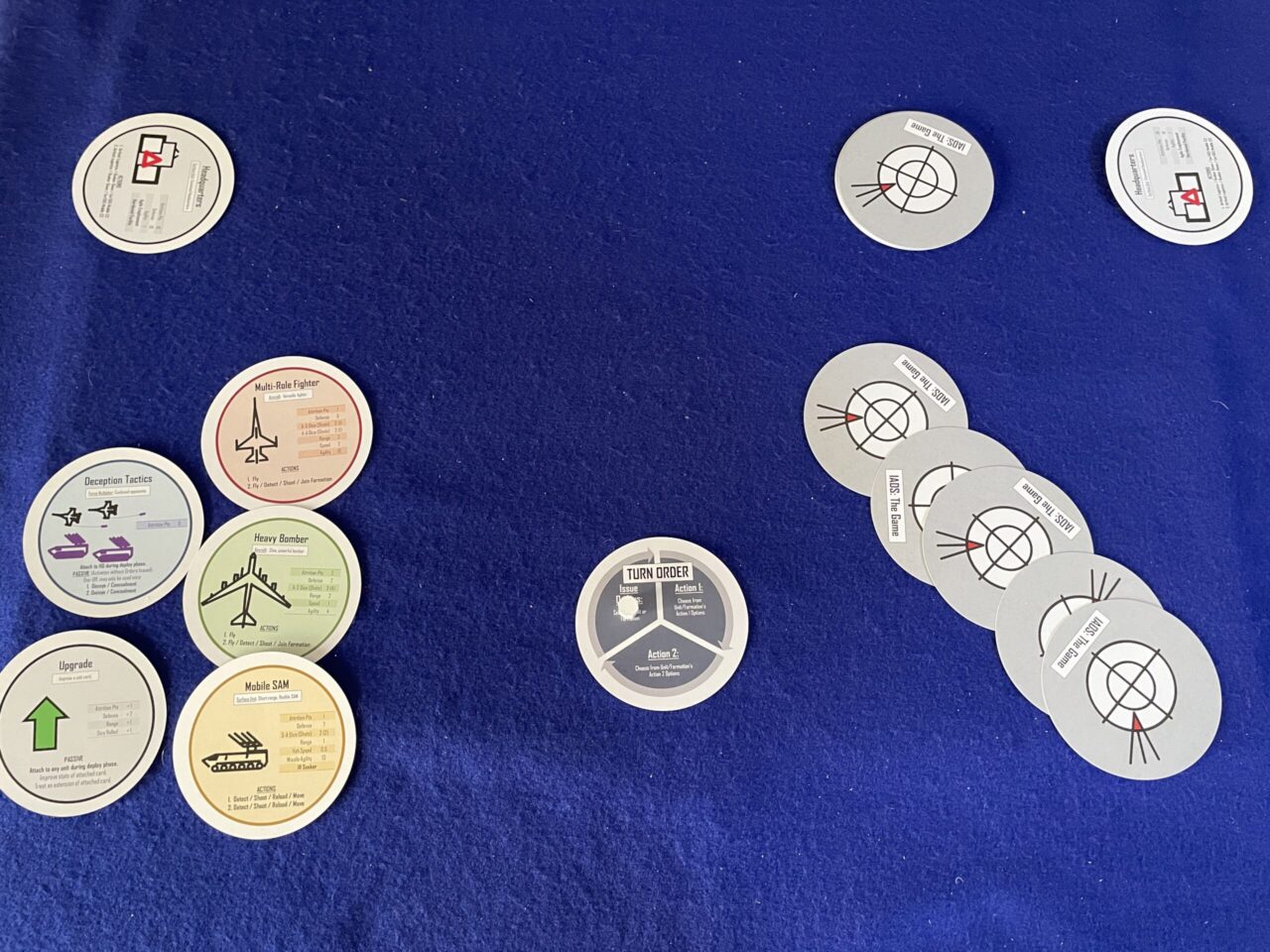
IADS: The Game comes with three “scenarios.” The most ambitious scenario is “Air War” which is a small campaign played out over the course of three VULs where damage carries over between each. The “Air Border Skirmish” is a single VUL. Finally, in “Draft Only” mode there is no play but instead players discuss the cards.
Within each VUL of IADS: The Game players first pick a Unit Card or Formation to activate and then carry out two Actions. The Unit Cards are usually face down so to Shoot (i.e. Attack”) the player must reveal the card, check the range (measured in card diameters), and if within range take a shot. Two six-sided die are cast in an attack with the to-hit roll being greater-than-or-equal to the target’s Defense number to remove the card. The VUL ends when the players decides it ends. The main objective in each campaign is to attack and destroy the enemy Headquarters. This means you need to defend your own HQ while at the same time defeating the enemies IADS to strike the target. According to the box, IADS: The Game takes 20-30 minutes to play. My game experience showed similar times.
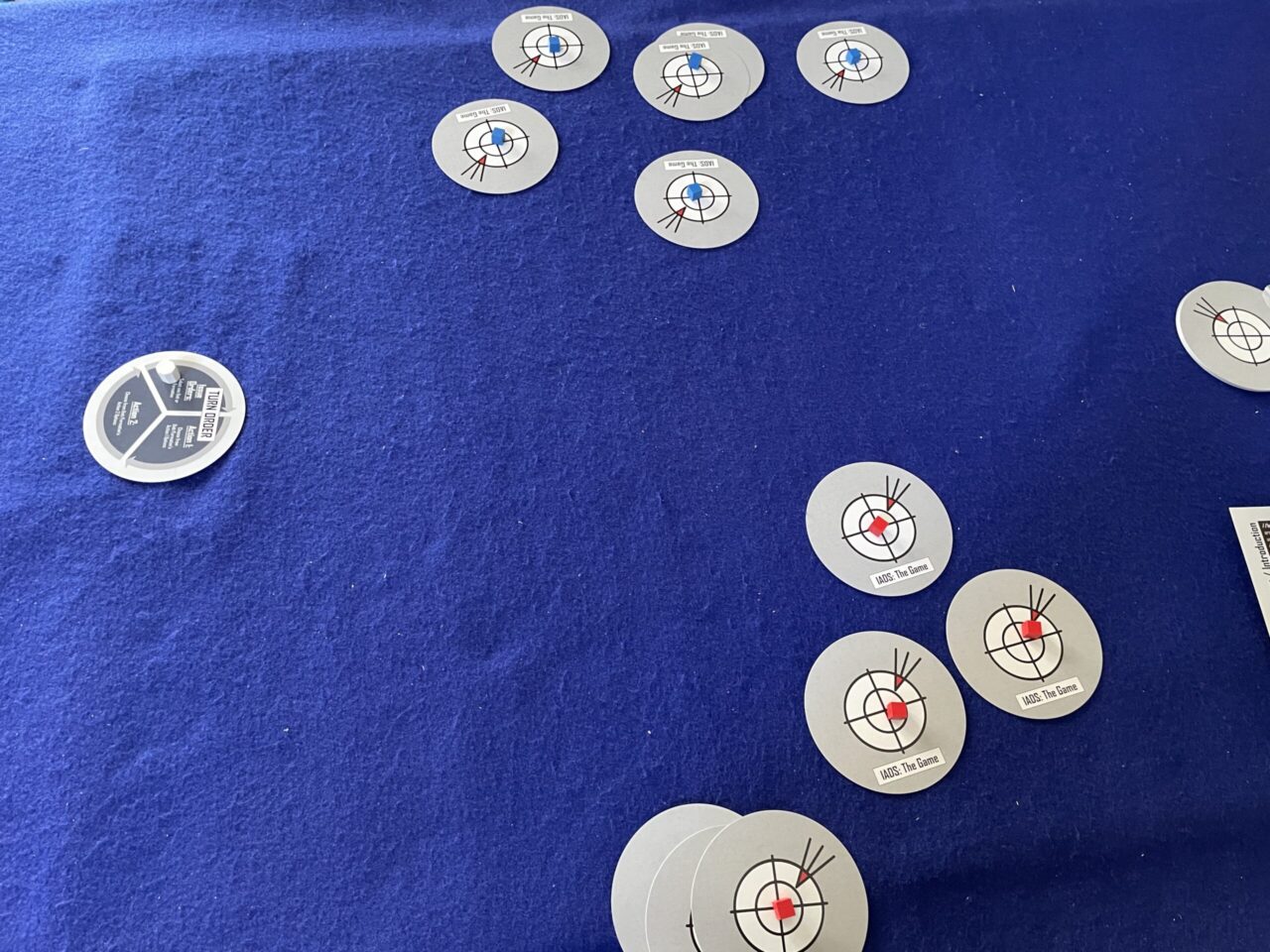
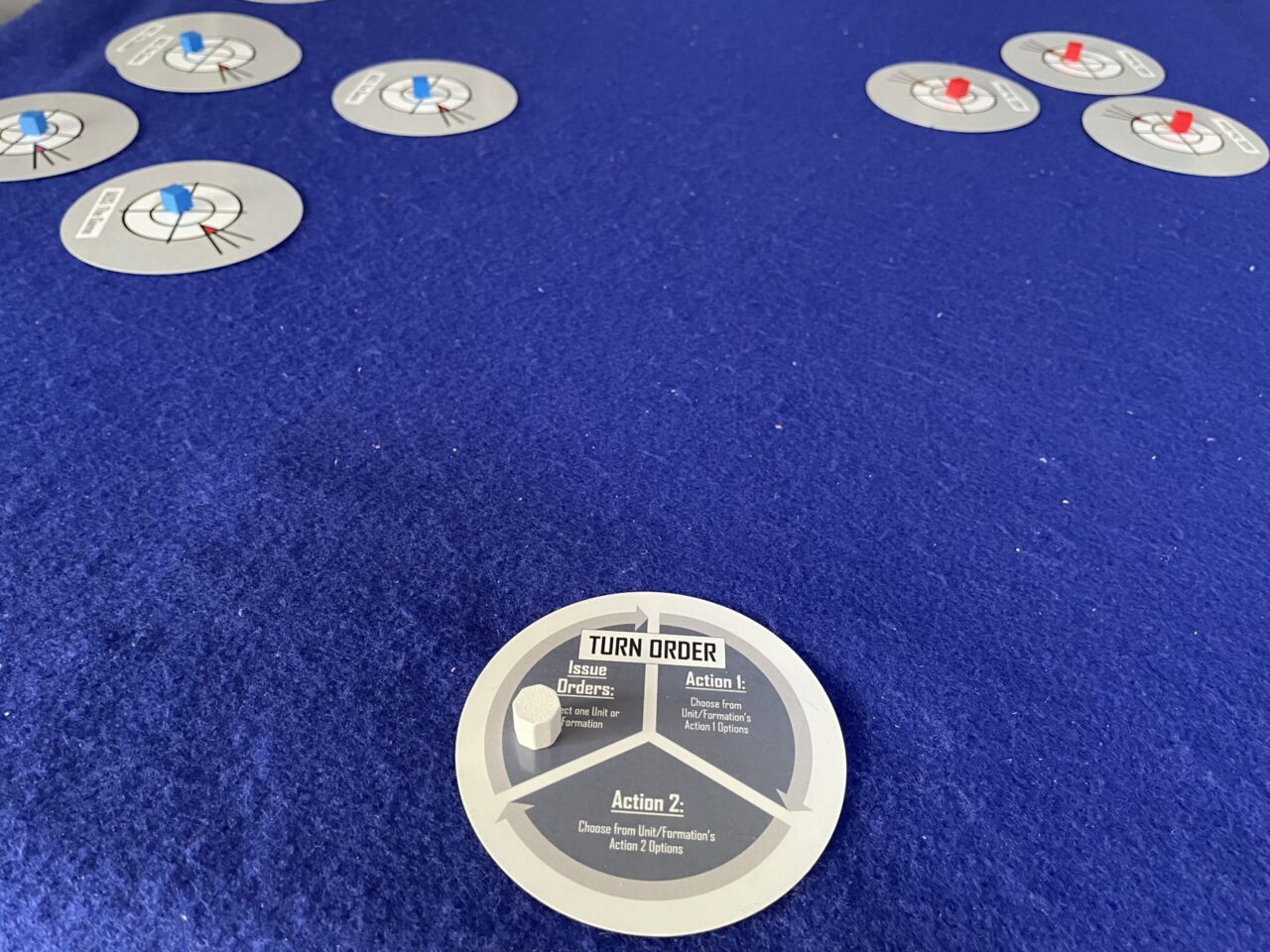
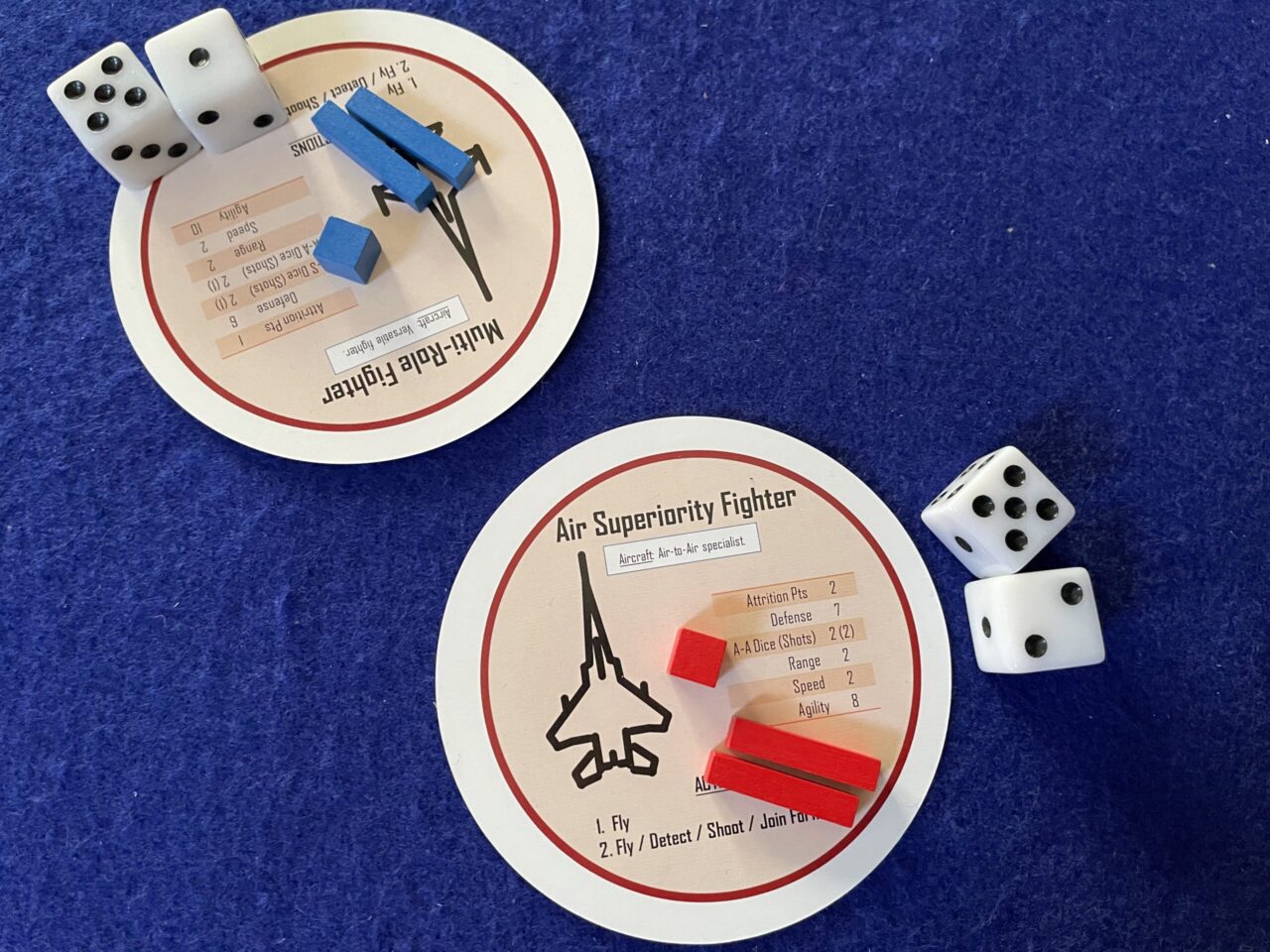
When it comes right down to it, IADS: The Game is a very simple…game. It is genuinely fun with hidden movement and die rolling wrapped in a set of very simple rules. In terms of your home boardgame collection, IADS: The Game is a decent (if not a bit pricy) “filler game.” So why buy?
The home consumer hobby boardgame market is not the target of IADS: The Game. The game is clearly intended to educate the audience on the basics of an Integrated Air Defense System. As one reviewer on the LoRokka website notes:
This is a great game. It challenges players to choose the best assets for their strategy, then use those assets to tactically defeat their enemy.
Moreover, it actually teaches some basic understanding of integrated air defense systems (a super important part of national defense), using real military equipment with realistic attributes that tie into the mechanics of the game brilliantly.
I recommend this game for military and non-military alike! – NineLine
While the core game of IADS: The Game has (barely) enough Unit Cards for a 4-player/team game, the Advanced Capabilities Expansion adds 80 more Unit Cards. In fact, there are eight other booster packs available from The Game Crafter to add a multitude of different forces and capabilities:
- Advanced Fighter Booster Packs
- Air Superiority Fighter Booster Packs
- Bomber Booster Packs
- Dispersed Ground Based Air Defense Booster Packs
- Force Multiplier Booster Packs
- Maritime Capabilities Booster Packs
- Multi-Role Fighter Booster Packs
- Next Generation Booster Packs
- Surface Threats Booster Packs
If there is a drawback to IADS: The Game it is, perhaps, the price. LoRokka is a small independent publisher using The Game Crafter with availability online or through a (very) few retail locations. The core game retails for $35 and the Advanced Capabilities Expansion sells for $30. I was fortunate enough to buy mine through one of the retail locations and each was discounted by $5. Booster packs are $9.99 meaning you likely need a small “House” appropriations bill to get the entire set. If you are, like I try to be, part of the wargame practitioner world then IADS: The Game is worth the investment as it certainly acquaints players with the fundamentals of creating and taking down an IADS.
Although the home hobby gamer is not the intended target of IADS: The Game, getting caught in the frag pattern does not result in collateral damage (ok, maybe some financial damage) but instead great collateral enjoyment. This easy-to-learn and play game landed on my weekend gaming table with the boys and was well-enjoyed. I see on the LoRokka site how some people play IADS: The Game on a large map to give the game a more realistic feel. I also see in their blog how new technologies are constantly incorporated into the game. My point is IADS: The Game is really a stealthy wargame; behind the obvious fun it teaches.> It iterates teaching you with every integrated system you draft and attack.
Thank you for visiting the Regiment of Strategy Gaming and riding with The Armchair Dragoons.
Rather than list a bunch of social media links, the easiest thing to do is to check out our LinkTree, which connects you to all of our various locales around the web.
You can also support The Armchair Dragoons through our Patreon, and find us at a variety of conventions and other events.
Feel free to talk back to us either in our discussion forum, or in the comments below.


Those “cards” look like beer mats! Are they about that size? Interesting mechanic of measuring with diameters, like that old collectible fighting sail game.
Cards are coaster size or 3.5 inches diameter. Bit thin for a real coaster but makes an easy measuring tool!
Are the Game Crafter booster packs print and play?