
 by
by Bill Simoni, 17 December 2025
The Steam implementation of GMT’s Saratoga from the Battles of the American Revolution (BoAR) series, designed by Mark Miklos, has been in the wild for a couple of weeks at this point. I’ve played the short Freeman’s Farm scenario four times and the full campaign three times. It also includes a solo bot (hereafter AI) to play against, which is how all seven of those games were played. Is the AI any good or is it only a curiosity?
GMT and Hexes of War provided a Steam key to the Armchair Dragoons as a review copy.
User Interface
Before looking closer at the AI experience, I wanted to add to the initial thoughts on the implementation and interface. Some things can feel odd, especially for those of us that have used Vassal for years and become instinctually habituated to that interface.
Stacks in a hex are not viewed by hovering the mouse over it. Instead you click the small gray box on the upper-left corner of the units and a box explodes for you to view. You can also use this method to choose units for movement or attacks.
You can also cycle through the units by hovering the mouse over the stack and pressing <Tab>. This is most useful for movement, rifle fire, or artillery. You can do this for close combat, but it’s been more efficient for me to use the gray box (see the rifle fire examples below – both are shown).
Choosing rifle or artillery fire is pretty simple – just click the attacking and defending units.
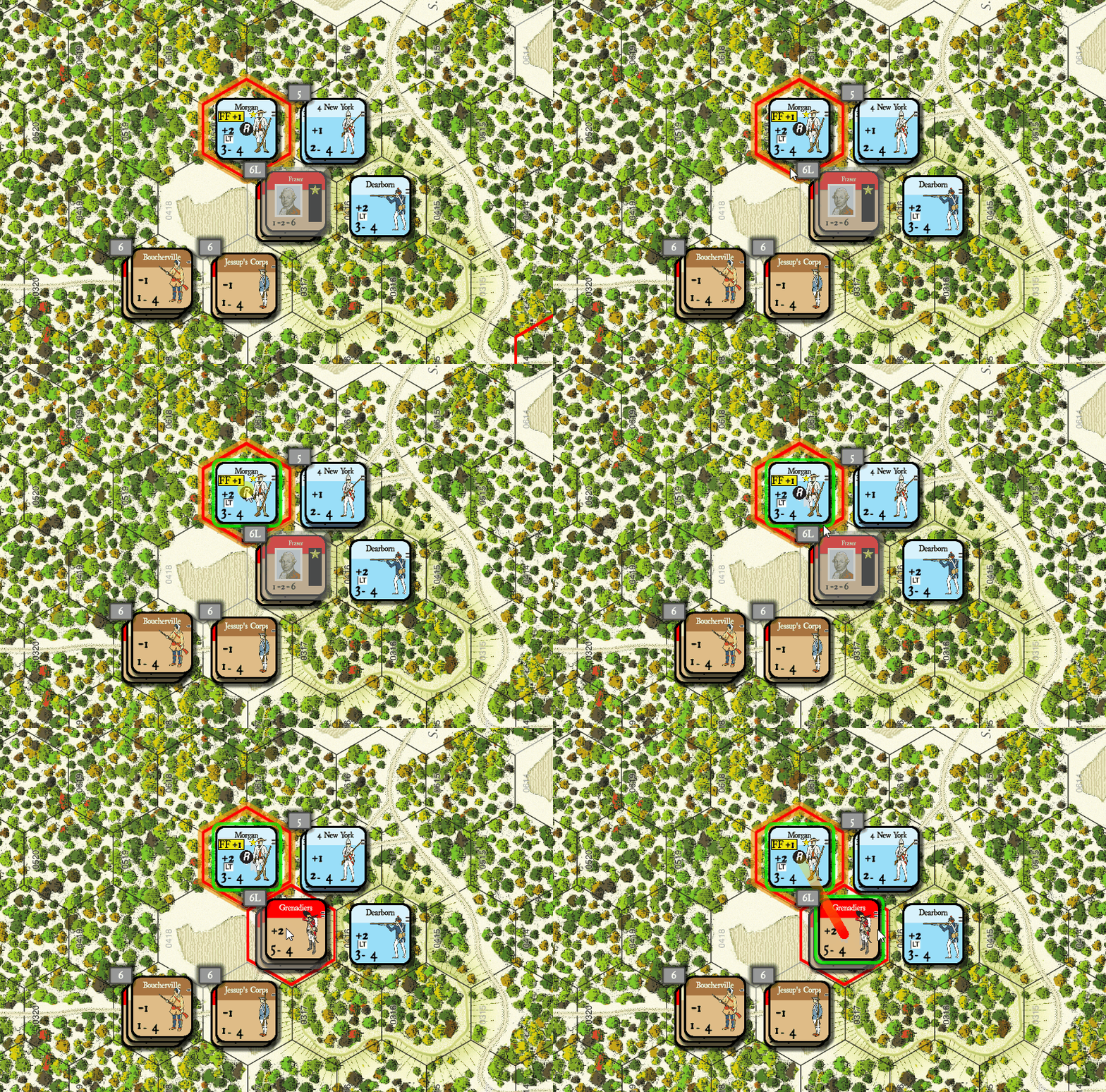
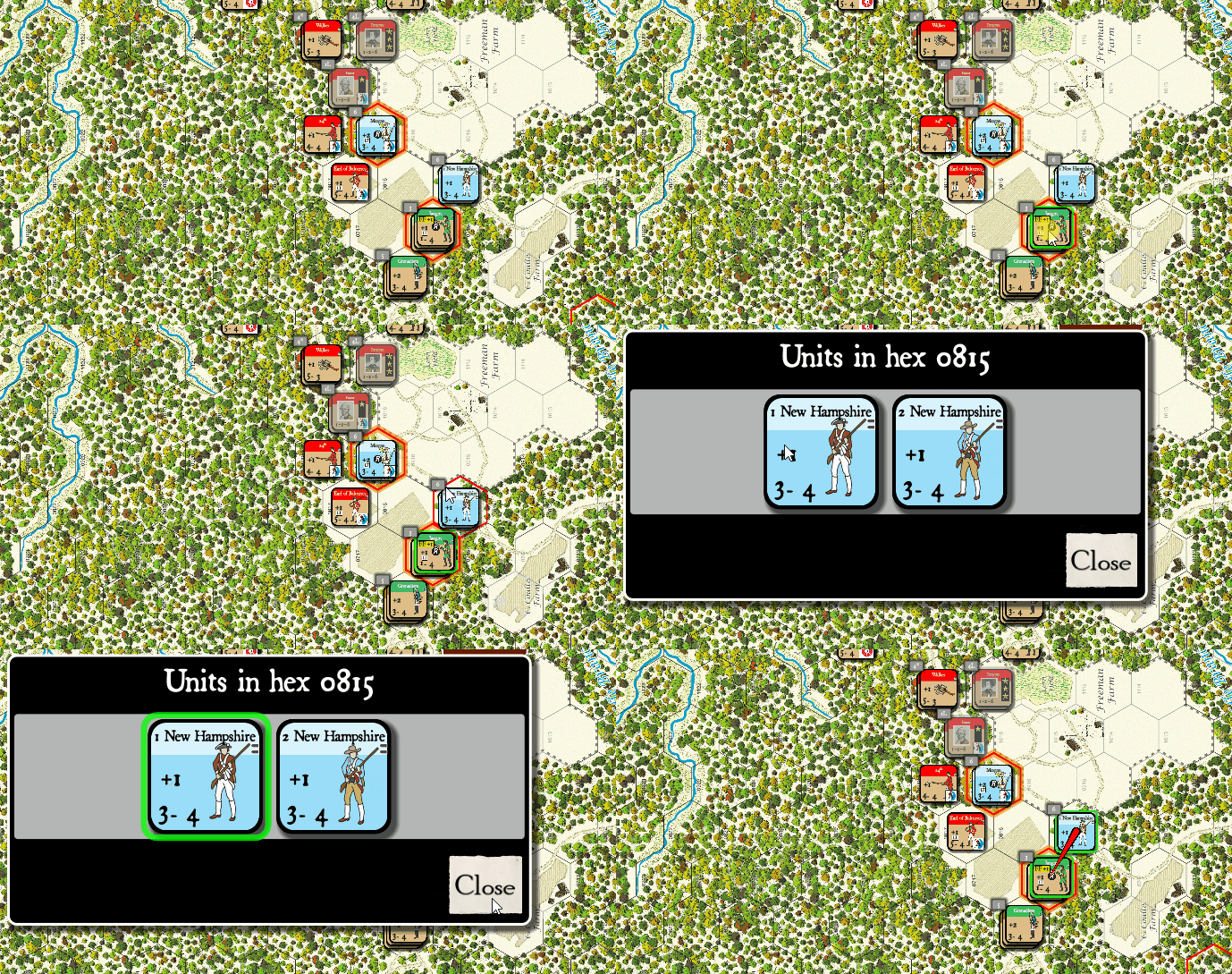
click images to enlarge
The more I play the game, the more I appreciate how the close combat attack allocations are handled. If there are no choices to be made about attackers or defenders, the game allocates as many attacks as it can for you.

Any time there is ambiguity, the interface is clear on which attacks have already been allocated and which units must attack or be attacked. As you declare new attacks, the screen updates for you. Multi-hex attacks can be more difficult to assign attackers, but once you get used to the interface (hint: assign one attacker and one defending unit then use the gray box method for selecting other units in hexes with multiple units.)


Solo Experience
The AI experience itself is smooth. Gameplay is not slowed down while the AI opponent makes moves and attacks. My latest plays of Freeman’s Farm and the Campaign Game took me 19 and 40 minutes respectively. The latter ended on turn seven (of 12). The game does have you acknowledge progress at certain points, but the cadence and choices for those interruptions are in the right places.
Here’s an example of the AI handling Patriot movement. Note what you see and what you don’t.

This brings us to how good of an opponent the AI is. In my games I noticed that at some point the AI stops moving units until you push your own plan along. If you stay put, so will the AI. In the above animated movement example, you can see that most of the units did not move. I didn’t notice that at first, but the next turn it became obvious. As I was already winning the game, I stopped all movement to see if the AI would kick in that it needed to do something. Unfortunately it didn’t move until the game ended about four turns later, content to stay in this position.

Another issue I found in multiple plays was sloppy protection of artillery. One game I was able to capture three British artillery units in one turn. This example came to be by advancing after a combat.

To be fair to the AI, in the game I played immediately before writing the above, I lost an artillery unit to it. The main difference was it occurred by the AI having back-to-back turns thanks to an unlucky initiative roll for me. But the cause was the same – advancing after successful close combat (for those unaware – the attacker’s artillery does not participate in close combat so it can’t advance.)
The final main issue with the AI is its propensity for not moving units away when allowed and therefore being forced into making terrible attacks. This is not a one-off issue. Here is a good example of the issue, but not even the worst I experienced.

Final Thoughts
Will the AI give a seasoned player a challenging game? Unfortunately, not yet. That being said, people on the Steam discussion boards have said the AI beat them. The developer has already made some updates to the AI and I expect there will be a few more. However, I also anticipate the AI will be of more use for the newer player getting comfortable with system or if you just want to spend an hour or less satisfying an itch to play. I will certainly still play it, probably to try out crazy strategies. If the AI can punish me, then I know my plans aren’t ready for prime time. But, for a game that costs $10, I’m not sure we really could realistically expect much more.
You can chat about this game in the Age of Gunpowder section of our discussion forums
Battles of the American Revolution Series
Mentioned in Dispatches Episode ~ Series Intro ~ Saratoga ~ Brandywine ~ Guilford Courthouse ~ Eutaw Springs ~ Savannah ~ Monmouth ~ Pensacola ~ Germantown
Camden Event Podcast Episode
Saratoga Digital ~ First Impressions ~ Gaming vs The AI
Thank you for visiting the Regiment of Strategy Gaming and riding with The Armchair Dragoons.
Rather than list a bunch of social media links, the easiest thing to do is to check out our LinkTree, which connects you to all of our various locales around the web.
You can also support The Armchair Dragoons through our Patreon, and find us at a variety of conventions and other events.
Feel free to talk back to us either in our discussion forum, or in the comments below.


