
 by
by RockyMountainNavy, 25 August 2025
For students of World War II in the Pacific, the month of August is always a time for reflection. The question on most historians minds this month is the termination of the war, especially the question over the use of atomic bombs. This month I also encountered a new NHK documentary that challenges us to consider the question of “professional wargaming” in pre-war Japan. The Total War Research Institute (TWRI) was a group of researchers that conducted wargames in the summer before Japan went to war. Famously, the TWRI wargame showed that in a war between Japan and the United States the Japanese would face an inevitable defeat. For multiple reasons the findings of the TWRI were ignored. There are lessons to be learned for today’s wargame practitioners from the events in Japan during the summer of 1941.
As I follow many Japanese wargamers on X, my feed this month delivered a post announcing a NHK documentary titled Simulation: Defeat in 1941 regarding an Imperial Japanese organization called the Total War Research Institute (TWRI) that predicted a defeat for Japan even before the attack on Pearl Harbor.

Intrigued by what appeared to be a reference to wargaming I went in search of more. A bit to my surprise, I discovered that I actually downloaded an academic article a few months back that included a discussion of TWRI. I now recall that I downloaded the article thinking, “This will make for a good article on wargame practitioners in Japan.” And so today I will discuss the…
Total War Research Institute
In the article “Institutionalisation and Consequences of Wargaming in the Imperial Japanese Armed Forces and Government, 1868-1945” from War in History, researcher Hiroyasu Akutsu of the Rabdan Academy in the UAE writes:
While Western literature on wargaming has focused mainly on Japanese wargames conducted during the Second World War, comprehensive research on the evolution of wargaming in the Imperial Japanese Armed Forces and governmental educational institutions has been limited. This article addresses this gap by tracing the institutionalisation and consequences of Japanese wargaming. This article argues that although pre-war Japan practiced wargaming well as a military educational tool, it failed to sustain its strategic and tactical rigour in wargaming owing to political intervention to favour pre-determined decisions just before and during the Second World War. Three case studies represent the failure. (Akutsu, Abstract)
While mentioning the famous (infamous?) Midway Campaign wargame of early 1942 that is often related in non-Japanese language accounts of that battle, the first case study Akutsu discusses instead is the Operation Hawaii wargame. Operation Hawaii was an Imperial Japanese Navy operational wargame conducted at their Naval War College from 11 to 20 September 1941 to examine the Navy’s war plan with a special additional wargame studying an attack on Pearl Harbor. The third case study Atsuku discusses:
…examines IJA’s [Imperial Japanese Army’s] wargame in Rangoon in terms of its operation against the British and Indian forces in Burma in 1943 in preparation for IJA’s U Go Sakusen (U Go Offensive) in the northeastern region of India. IJA conducted a few operational wargames regarding its operations in the region, but this article discusses the most documented one: the wargame on advancing to Imphal and Kohima that was executed from 24th to 27th June that year. (Akutsu, p. 5)
It is Akutsu’s second case study, covering the Total War Research Institute, that is perhaps the most fascinating:
A second case is the first-ever national strategic-level or pol–mil wargame at a Total War Research Institute (TWRI) in July–August 1941 to prepare for the Allied Power before it broke out in December that year. The institute was established by the Japanese Cabinet Office, not by the Ministry of the Army or of the Navy, and the wargame was sponsored by the office. Given that the wargame was conducted at the highest level of national decision making, the results of the wargame had more immediate influence on the Cabinet’s decisions about the upcoming war with the United States and the other Allied Powers than IJA and IJN wargames. (Akutsu, pp. 4-5)
Pol-Mil at TWRI
Akutsu describes the Total War Research Institute in some detail:
TWRI was established in September 1940 by the Cabinet Office as an educational and research institute for senior officials, military officers, and selected elite employees of leading companies in Japan. The institute was modelled on several war colleges, and military and strategic institutions in the West, including The British Imperial Defence College, The United States Army Industrial College, German National Defence University, The Nazi Party Senior Leadership Training School, The French Institute for Advanced National Defence, and The United States Naval War College, to comprehensively study total war and educate elite leaders in its preparation. The institute was formally established on 30 September 1940 by the Cabinet Office for education, training, and research on total war, and was obliged to report to the Prime Minister. It was abolished with the defeat of Japan in August 1945. There were 35 students in the first batch, including Prince Kanin Sumihito, Japanese Imperial Army Lieutenant Colonel and Professor at AWC [Army War College], in 1941. The courses covered religion, ideology, history, leadership, and military systems. Martial arts were also taught as part of physical training and education. Research activities included group studies, tabletop exercises, problem investigation and research (trade situation, industrial planning, resource situation, etc.), defence trends of great powers, long-term war research, and the history of construction after the administration of occupied territories. (Akutsu, p. 15)
Eri Hotta, in her book Japan 1941, alternatively describes the TWRI in a less-than-flattering manner:
It [TWRI] was meant to be an elite educational institution that would prepare Japan’s future leaders, both military and civilian, for greatness.
The high aspirations of its founders were never realized. Each ministry sent its top candidate, so the students were the crème de la crème of Japan’s midcareer civil servants. But despite the institute’s prime location in central Tokyo, the building itself was enough to make the hearts of the newly arriving students sink. It was a two-story shanty that looked especially incongruous surrounded by the imposing red brick buildings of the government district. Many recruits felt they had been dragged down to a lowly student existence.
…
…most students were dissatisfied with the life that had been suddenly forced upon them. They had expected to do high-level research but were instead reduced to attending basic physical education classes and other unoriginal and often ill-prepared classes. (Hotta, pp. 164-165)
Yet, the TWRI somehow came into its own. Hotta relates a story where in June 1941 TWRI visited Admiral Yamamoto’s flagship, Nagato, to observe maneuvers. When asked what they had observed, a TWRI member told Yamamoto, “I was impressed with your defense system against submarines, sir. The same goes for your bombing strategies. But I sensed a certain vulnerability to aerial attacks.” Hotta observes that Yamamoto was “pleased” that someone, “had looked beyond the obvious and spoken frankly, something he [Yamamoto] felt Japan’s elites were generally incapable of” (Hotta, p. 165).
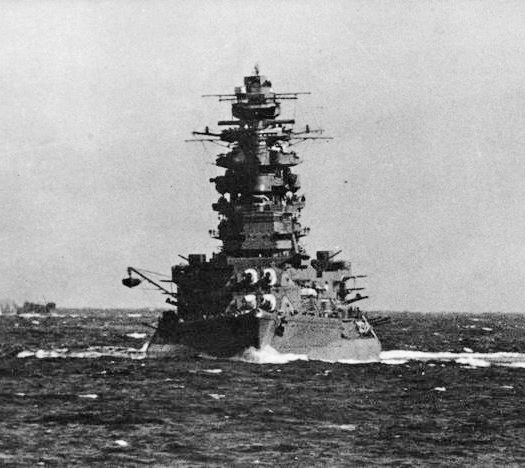
The creation of the TWRI could not have come at a better time for the Japanese. Mid-1941, especially July, saw the relationship between Japan and the United States reach a crisis:
Action came on July 25, when, after an ultimatum to the Vichy Government, Japanese troops, in defiance of American opposition, moved into southern Indochina. Although the French, with prompting from Hitler, acquiesced in this raid on their empire, neither the United States nor Great Britain was as obliging. The former broke off the negotiations then in progress in Washington, and on July 26 President Roosevelt, against the advice of his military and naval chiefs, issued an order freezing Japanese assets in the United States. Since Japan no longer had the dollars with which to purchase the urgently needed materials of war, the effect of this measure—which the British and Dutch supported—was to create an economic blockade of Japan. So seriously did Admiral Harold R. Stark regard this move that he warned his Far East Commander, Admiral Thomas C. Hart, Commander of the Asiatic Fleet, to take precautions for any eventuality, although he did not expect the Japanese to open hostilities immediately. (Morton)
It was in this environment of crisis that the first tabletop exercise at TWRI was executed. Those tabletop exercises, Akutsu notes, “..were not recognised as wargames. However, from the contemporary professional wargaming perspective, they can be seen as the first ever political–military wargames” (Akutsu, fn 76):
The first ‘total war’ game was conducted and played by the students of the Class of 1941, from June to August. This first tabletop exercise is the most famous, probably because it was conducted only a few months before Japan’s attack on Pearl Harbor and the institute’s official report on the exercise was submitted to the General Headquarters, Supreme Commander for the Allied Powers [i.e. IJA and IJN]. However, the objective of the exercise was not focused exclusively on Operation Hawaii as the Operation Hawaii Wargame at NWC was. The objective of the exercise was broader, as it was a political–military tabletop exercise, not a tactical or operational wargame. The wargame results were reported to Prime Minister Fumimaro Konoe at the Prime Minister’s Official Residence between 27th to 28th August. (Akutsu, p. 16)

This first TWRI tabletop exercise, conducted in nine-phases, called for the TWRI researchers to assume the roles of cabinet members. Akutsu describes the four major decisions from the Japan Team this way:
- The Minister of the Army (IJA Group): As Japan’s operations against Holland and India are in good shape, and war with the United States is almost inevitable, Japan’s domestic and surrounding situations require attacking the United States in mid-December. First, it is necessary to attack the Philippine Islands.
- The Minister of the Navy (IJN Group): A war of attrition with the United States would be protracted, and given Japan’s (inferior) national power resources, it would inevitably be defeated.
- Other cabinet members (from the Cabinet Planning Board, Ministry of Colonial Affairs, Ministry of Commerce and Industry, Ministry of Agriculture, and Ministry of Justice) agreed with the Minister of the Navy.
- The Prime Minister: Japan should increase efforts to sufficiently prepare for war with the United States and the United Kingdom and smoothly gain Holland and India. (Akutsu, p. 17)
Akutsu notes that the IJN Group’s assessment eventually became the majority position of the entire Japan Team. The Control Group, however, often intervened which led to many sharp discussions over the question of going to war with the United States. Still, the TWRI researchers did not yield.
Hotta reduces the TWRI conclusions to more layman terms:
The researchers were uneasy with the premise provided by their instructors. They felt going into Southeast Asia—most likely the Dutch East Indies—made war with the West inevitable, without giving diplomacy a chance to prevent it. Most cabinet members [researchers] projected that the country probably would be able to secure the Indonesian oil fields but that the enemy fleet stationed in the Philippines would soon launch an all-out attack on Japanese ships, making the transport of resources impossible and defeating the whole purpose of accessing Indonesian oil. As a result, Japan would be provoked into a larger-scale war with the United States, which the country could ill-afford. Most ministers had determined even before the simulation started that such a war would be unwinnable and should not be waged. (Hotta, pp. 166-167)

When Prime Minister Konoe took the TWRI final report at his Official Residence in late August another important guest was also briefed:
Hideki Tojo, the Imperial Army Minister, was also present. He commented on the report saying, ‘I acknowledge your efforts in this exercise, but it is only an academic exercise. I want you to pay special attention to the fact that it is completely different from actual operations.’ (Akutsu, p. 17)
Hotta again provides a much more dramatic, but nonetheless fascinating, recounting of Tojo’s dissent. As dramatic as this sounds, how many wargame practitioners of today have had a similar experience? Hotta writes:
As the researchers presented their report on the simulation exercise to Konoe’s cabinet, Tojo, like the earnest student he once must have been, never stopped taking notes. When the report came to its unequivocal conclusion that the war was unwinnable, Tojo grew noticeably pale, as though his worst fears had been confirmed.
…
At the end of the two-day presentation, Tojo would not succumb to the gloom. He commended the team’s excellent efforts but noted that the research had one fatal flaw. “This is, after all, a desktop exercise,” he said. “Actual wars do not go as you fellows imagine. We did not go to war with Russia thinking that we would win, but we did win.” At pains to gloss over the harsh realities that had just been presented to him, he added, “Your work doesn’t include elements of unpredictability, although I wouldn’t go so far as to say it’s an empty theory.” He concluded his remarks by saying firmly that the researchers were to keep their opinions to themselves. (Hotta, p. 167)
While Tojo seemingly did not listen, the staff planning process nonetheless kicked off. As Louis Morton relates in a 1954 article ”The Japanese Decision for War” in Proceedings magazine from the US Naval Institute:
These studies, as well as others, were discussed heatedly by the Army and Navy staffs during the tense days that followed. From these discussions emerged four alternative lines of strategy. The first was similar to that advocated by the Total War Research Institute and called for the seizure initially of the Netherlands Indies, followed by attack on the Philippines and Malaya. The second line of action envisaged a step-by-step progressive advance in a clockwise direction from the Philippines to Borneo, Java, Sumatra, and finally to Malaya. The reverse, counterclockwise, from Malaya through the Indies to the Philippines constituted the third course considered by the planners. Finally, it was proposed that Malaya and the Philippines be attacked simultaneously, after which the Netherlands Indies would be assaulted from north and east. Admiral Yamamoto’s plan for a surprise attack against Pearl Harbor did not enter into the calculations of the planners at this time. (Morton)
Interestingly, the discussions over which strategy to adopt eventually led to the Operation Hawaii wargame—Akutsu’s first case study—that delivered in mid-September 1941:
Between 10–13 September, “table-top” maneuvers were held at the Tokyo Naval War College. When the session ended, there was agreement on the operation schedules for the seizure of the Philippines, Malaya, the Netherland Indies, Burma, and islands in the South Pacific. The question of the Pearl Harbor attack, however, was still unresolved. The exercise had demonstrated that a Pearl Harbor strike was practicable but many felt that it was too risky, that the U.S. Pacific Fleet might not be in port on the day of the attack, and that the danger of discovery during the long voyage to Hawaii was too great. (Morton)
Calling the Pearl Harbor raid “practicable” is perhaps a bit of a stretch. Akutsu describes the outcome of the Operation Hawaii and Pearl Harbor special wargame this way:
A general and a special wargame were conducted at NWC from 11 to 20 September in 1941. The wargame on the attack on Pearl Harbor was conducted as a special wargame on 16 September. The general wargame, controlled by Yamamoto, aimed to test Japan’s air power in controlling the Western Pacific area. The major results of this wargame were that until a naval air squadron finished its mission
from leaving its base to operate on the Java line, ‘160 percent of the fighter planes Zero were lost and 40 percent of ground offensive capabilities were lost’; therefore, there was no way reinforcement was achievable in the Western Pacific operations, and that the Blue Team players [Japan] saw the need to include an additional operational plan to prevent major U.S. fleets from joining the counterattack against Japan in the original Operation Hawaii.
Regarding the special wargame, which specifically aimed to test the plan to attack Pearl Harbor, the major participants were commanders and staff members from the Naval Combined Fleet and the First Air Fleet Command and the observers were the directors and members of the Naval General Staff. The game showed that the Red Team (the United States) had four main battleships sunk and one battleship seriously damaged, lost the aircraft carries Lexington and Yorktown, and had Saratoga seriously damaged, lost its three cruisers, with one cruiser was significantly weakened, and lost 180 fighter planes in total. On the Japanese side, two aircraft carriers sunk, another two were lightly damaged, and 127 planes were lost. However, on the second day wargame, the adjudication was modified for the Blue Team [Japan] to lose one aircraft carrier, have one aircraft carrier significantly damaged, and so on. (Akutsu, pp. 13-14)
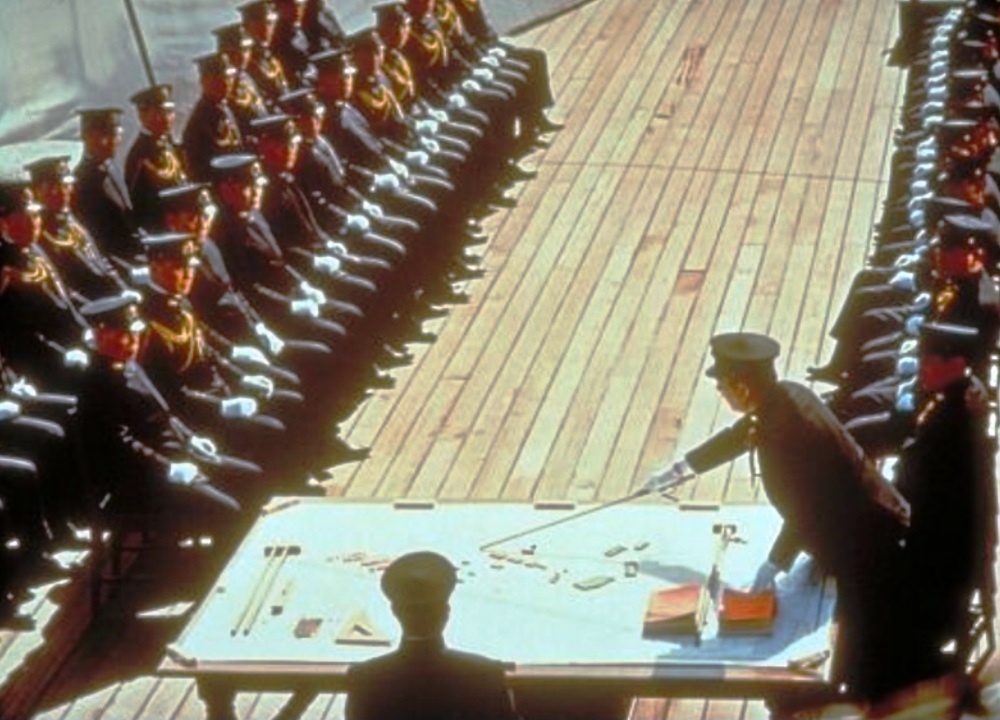
Despite the negative outlook, Yamamoto was insistent on the Pearl Harbor raid. Akutsu takes him to task for that attitude and along the way illustrates the power—and peril—of wargaming:
…the participating naval officers, including Yamamoto, were graduates of the college and should have known that wargames must be conducted objectively, especially if they were to be used as a test or simulation of a conceptual plan. However, in the after-action review of the wargames and follow-up discussions conducted in the planning room of the Naval General Staff on 24 September, Yamamoto was especially concerned about the lack of fighters, slow production pace, and other problems, including those that emerged more clearly in the Operation Hawaii wargame. However, he only reiterated his strong determination to implement the initial plan to attack Pearl Harbor, despite the negative results of the wargames and opposition to the plan from most of the participants. (Akutsu, p. 15)
Impactful gaming…not
One must wonder if Yamamoto’s bull-headed insistence on pushing ahead with Operation Hawaii and an attack on Pearl Harbor despite the odds was a fatalistic position brought on by a decision made by the Emperor earlier in the month. In late July, Navy Chief of Staff Nagano told Hirohito that the war was unwinnable and accepted that a diplomatic solution should be sought. Five weeks later, in early September, Nagano stood before Hirohito who asked:
“Will we win? Can you say we will definitely win?” To this Nagano replied, “I cannot say ‘definitely’ because it depends not just on manpower but on divine power too.” He insisted that war was not the high command’s preference, but that it felt compelled to prepare Japan for war in the face of the present crisis. “If there is even a remote chance of [war] working out, we must do it,” he said. (Hotta, p. 175)
It was at an Imperial Conference on 6 September that Hirohito approved (or more precisely, did not disapprove) the military’s war plan, setting in motion events that culminated with start of the war in December 1941.
——
“If we miss the present opportunity to go to war, we will have to submit to American dictation. Therefore, I recognize that is it inevitable that we must decide to start a war against the United States.”
Hara Yoshimichi, President of the Privy Council, 5 November 1941
——
Considering Tojo’s reaction to the TWRI presentation, Akutsu notes that there are two interpretations of events after the report regarding how it affected—or did not—the thoughts and decisions of Tojo. On one hand, some believe Tojo did nothing more than dismiss the report out of hand with comments like, “not confirmed”, “almost just on paper”, and “not proved until we actually fight”. Others believe:
…the wargame revealed many difficulties and vulnerabilities that Japan would face in promoting total war in Asia and against the United States and United Kingdom, and this might have provided Tojo some hints or ideas for Japan’s future war plan against the Allied Power. (Akutsu, p. 17)
I personally find the later interpretation a bit suspect given another event concerning Tojo and wargaming (or, more precisely, an early Japanese version of operations research):
Additionally, in 1943, the Cabinet’s Senryoku Keisan Shitsu (War Capability Estimation Office) was established in secret to conduct detailed quantitative analyses on Japan’s sustainability of industrial production and war-fighting in the ongoing war with the Allied Powers. In early 1944, when Prime Minister Tojo visited the office and was briefed on the result of the analysis that forecasted Japan’s major defeat in the war, he was enraged, and the office was immediately closed down. (Akutsu, p. 18)
When the sponsor does not listen
Akutsu believes Japanese wargaming before World War II failed first because the sponsors learned some wrong lessons:
Why did this tendency toward excessive top-down intervention in wargaming persist, especially during the Second World War? It has often been suggested, in general terms, that Meckel’s lesson on dokudan senko (independent decisions and their implementation in battlefields, even when they contradict orders from superior military officers) was learnt in the wrong way, especially among teaching staff, and made army decisionmaking unnecessarily inflexible. (Akutsu, p. 21)
The simultaneous success (predicting defeat) and failure (message ignored) of the TWRI wargame in particular fully illustrates Akutsu’s points on the success of wargaming in Japan while also exposing the roots of its failure. To quote Akutsu at length:
Institutionalisation is defined as establishing a method, tool, or practice as a convention or norm in an organisation or culture. Political intervention often diminished the players’ serious play, objective analyses, and conclusions which are essential to strategic rigour. In wargaming ethics, any political intervention to manipulate and distort the process and outcome of wargames is unacceptable. Stephen Downes-Martin argues that wargames can be distorted by ‘three witches of wargaming’, namely the wargame sponsor, the director’s boss, and the players’ boss, and these stakeholders use wargames to argue for what they want to say. They have their own interest and when they conflict against one another, the more or most powerful is more or most likely win their argument for what they want the games to generate. This behaviour is often seen as group dynamics in which the interrelationships affect the decision-making of the participants of a particular activity. In the case of the Imperial Japanese Armed Forces and Government, wargaming was introduced as part of military modernisation for educational and operational purposes and well institutionalised toward the Second World War. However, the most powerful stakeholders of wargaming in the Imperial Armed Forces and Government often affected the outcomes or even post-wargame reviews and analyses. (Akustu, p. 4)
Ian Kershaw in his book Fateful Choices: Ten Decisions that Changed the World, 1940-1941 describes the situation facing Japanese leaders in late 1941 like that of a cornered animal:
Kanoe is a prime, but far from isolated, example of those who had avidly backed aggressive expansionism until it had left no exit route from impending disaster. But the fear of war did not equate with opposition to the policy decisions that had taken Japan to the brink. At no point was there a concerted and forthright rejection of policy choices that were seen to bristle with danger…These aims had not just become an economic imperative. They reflected honour and national pride, the prestige and standing of a great power… .
…
Most important of all, it allowed the influence of the most powerful faction, the military, to become completely decisive…The weakness of other factions of Japan’s elites had allowed the army and navy General Staffs increasingly to dictate policy options, down to the point where those options gave way to the military imperative: war. (Kershaw, pp. 380-381)
Hotta, unsurprisingly, lays blame squarely on the military who was, “unsure about the feasibility of a hastily envisioned war” and yet, “was becoming a prisoner of its own bellicose rhetoric.” Hotta goes on to lauds TWRI for being the calmly dispassionate player in the entire sad saga:
The recommendation of the hypothetical cabinet at the Total War Research Institute, in contrast, was based on a detached analysis of relative capabilities. True, the researchers did not know exactly how much petroleum Japan still possessed, but in all other respects they could materially assess that Japan did not have the means to win a war with the United States. Konoe and his ministers could not plead ignorance of their findings. In the late summer of 1941, the war that was declared unwinnable by a hypothetical government was, in only ten days, made almost inevitable by the real one. (Hotta, p. 177)
Learn from fail
While the sponsors of the TWRI wargame did not tell the researchers what to say, the fact is they ignored the outcome of the wargame. In effect, the TWRI wargame “failed” to deliver the right message—a war against the United States is winnable—in great part because the sponsors themselves created a situation where no other answer was politically acceptable.
Atsuku concludes with a very insightful observation: it is not enough for wargame practitioners to talk about successful wargames, but it is also important to consider when wargames failed:
If this article were to provide any meaningful lessons to the contemporary wargaming community regarding the consequences of pre-war Japanese wargaming, one of the most important would be that the failure of past professional wargaming, not just wargames per se, should be taught more emphatically at an early stage of military education. (Akutsu, p. 21)
Akutsu points to similar issues in the United States, in particular the controversy over Millennium Challenge 2002 which Akutsu characterizes as, “distorted by pre-determined political agendas” (Akutsu, p. 21). One has to wonder just how many other wargames in the United States, or even among our allies and partners, similarly “failed” for the same reasons. That, perhaps, is a good topic for a professional Department of Defense wargaming community like CONNECTIONS to look into.
If anybody finds an online version of Simulation: Defeat 1941 that has auto-translated text into English please let put a link in the comments below. I am sure the story, though dramatic, is one wargame practitioners very likely would find interesting.
References
- Akutsu, H. (2025). Institutionalisation and Consequences of Wargaming in the Imperial Japanese Armed Forces and Government, 1868-1945. War in History, 0(0). https://doi.org/10.1177/09683445251344514
- Hotta, E. (2013). Japan 1941: Countdown to Infamy. New York: Alfred A. Knopf.
- Kershaw, I. (2007). Fateful Choices: Ten Decisions that Changed the World, 1940-1941. New York: The Penguin Press.
- Morton, L. (1954) The Japanese Decision for War. Proceedings 80(12).
Thank you for visiting the Regiment of Strategy Gaming and riding with The Armchair Dragoons.
Rather than list a bunch of social media links, the easiest thing to do is to check out our LinkTree, which connects you to all of our various locales around the web.
You can also support The Armchair Dragoons through our Patreon, and find us at a variety of conventions and other events.
Feel free to talk back to us either in our discussion forum, or in the comments below.


What about the Red Cell?