
 by
by Corinne Mahaffey, 18 March 2026
The Battle of the Bismarck Sea can be seen as a single decision, zero-sum game with two players. Do you go north of the island, or south?
As the first player, you have a troop convoy you must get from Rabaul, on the east coast of New Britain Island, to your base at Lae, on the northeast coast of Papua New Guinea, to support your control of the north coast. The south route puts your convoy in better range of your opponent’s air force. The northern route puts you further away from those planes, but the final leg has your convoy turning south through the Vitiaz Strait. You could avoid this by landing further north along the coast at Madang, but then your almost 7,000 troops must find a way through 140 miles of trackless jungle to get to Lae. Either naval route takes 3 days.
As the second player, you need to find and destroy the convoy. It’s raining on the north side of the island, limiting visibility for your reconnaissance aircraft. Pick the right side, and you can bomb the convoy for at least 2 of three days. Pick the wrong side, and you only get to bomb them on the last day, as the convoy passes by, or through, the Vitiaz Strait.

The Japanese convoy chose to sail across the north side of New Britain Island, to reinforce troops already landed in January. The commander of the Southwest Area Fleet, Vice Admiral Mikawa, and the commander of the 8th Area Army at Rabaul, Lieutenant General Imamura, decided to move the 51st division to Lae on March 3, followed by the 20th division to Madang a week later. Reinforcements were urgently needed to maintain control of the north coast of Papau New Guinea, and to then take Port Moresby and remove the Allied air bases on the Lae peninsula that had been threatening their convoys between Rabaul and Lae. The 18th army staff had gamed this out, so they knew that they had about a 50% chance of success due to Allied air power.

The Allied forces were getting intelligence as early as the first week of February that a convoy was in preparation. Mid-month, Lieutenant General Kenney, commander of the Air Forces Southwest Pacific Area, ordered reconnaissance patrols over Rabaul and codebreakers broke messages that revealed plans to reinforce Wewak, Madang, and Lae and that a convoy was headed to Lae around 5 March. This development could seriously slow Operation Cartwheel, which required control of the northeast coast of Papua New Guinea. With that, General McArthur’s forces would be in a position to destroy the Japanese naval base at Rabaul and push Japanese forces off New Guinea and the Solomon Islands. General Kenney consulted with Brigadier General Whitehead, who controlled all air forces based on Papua New Guinea, and they agreed to attack the convoy in the Vitiaz Strait, using two heavy bomber groups and one light one, partially crewed by the RAAF.
The convoy of eight troopships, with eight destroyer escorts and about 100 Zeros, left Rabaul on February 28. Thanks to tropical storms they were not detected until March 1st. March 2 the allies started their attack, using the experimental tactics of skip bombing and mast-height bombing. Two Japanese escorts picked up survivors from the sunk Kyokusei Maru, and took them to Lae, so they did not return to their escort duty until the next day. The convoy was again attacked the next day. High-level bombers did little damage, but did scatter the convoy to be picked off by the low-level bombers and the RAAF fighters who killed the ships’ anti-air crews. By the end of the day, the remaining seven transports were hit or sinking, as were three of the escorts. Four of the escorts picked up survivors and headed back to Rabaul. Of the remaining four destroyers, three were damaged. That night, and the following two nights, bombers and PT boats attacked rescue vessels and survivors. On March four, Japanese bombers launched an ineffective retaliator raid on Buna Airfield.
This was a major disaster for the Japanese military and they changed their priority to holding Papua New Guinea over controlling the Solomon Islands, but the growing threat of Allied air forces made the island difficult to resupply and halt the Allied advance. In September, Lae was taken by Allied Forces.
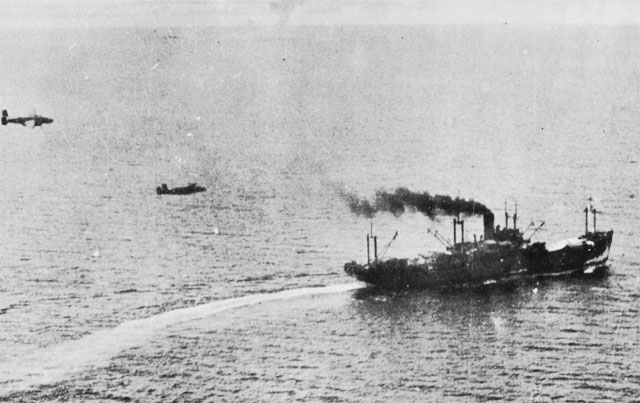
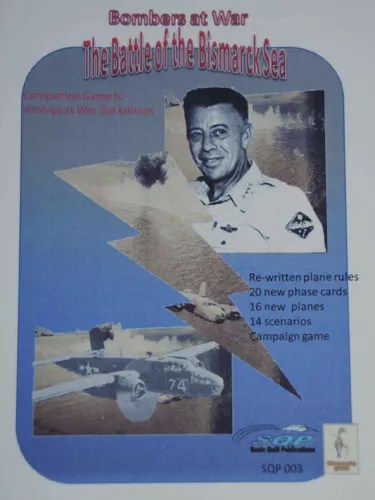
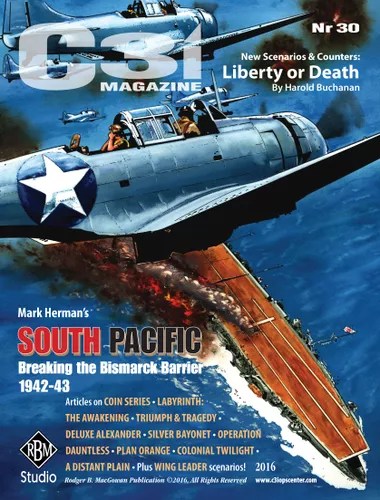
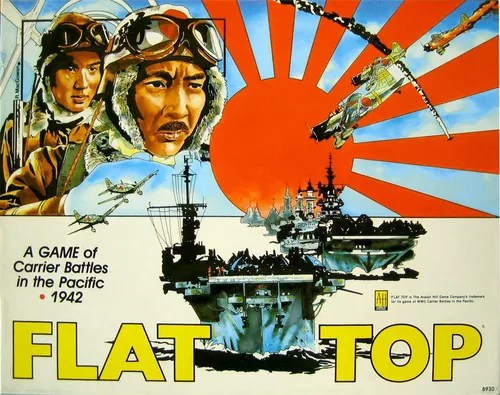
There are, understandably, not many games about this battle specifically. Bombers at War: the Battle of the Bismarck Sea is part of Airships at War, 3rd ed, and Battle of the Bismarck Sea is an expansion to Down In Flames!. However, there are several games that look at the larger sea and air war in southeast Asia, or can be used to create this scenario. If you want to focus on naval battles, then Task Force: Carrier Battles in the Pacific has a scenario “Battle of the Eastern Solomons”. If you want to fight the air war, Wing Leader: Supremacy 1943-1945 also has a related scenario in C3i #30, called “Here Comes the Beast: Rabaul, 11 November 1943”, and Flat Top focuses on carrier battles. If you want to game the larger operational context, you might look at 1943: Race to Rabaul. Coast Watchers offers a look at the intelligence side of the Pacific war.

My thanks to Dr. James Sterrett for some game recommendations and the link to this game theory article.
Thank you for visiting the Regiment of Strategy Gaming and riding with The Armchair Dragoons.
Rather than list a bunch of social media links, the easiest thing to do is to check out our LinkTree, which connects you to all of our various locales around the web.
You can also support The Armchair Dragoons through our Patreon, and find us at a variety of conventions and other events.
Feel free to talk back to us either in our discussion forum, or in the comments below.

