
 by
by MarcM, 12 March, 2026
Somewhere in that forest of cards are enemy tanks and anti-tank infantry. Find them before they find you in a fast-paced game of SCOPE Panzer from designer Juan A. Nácher and publisher Draco Ideas.

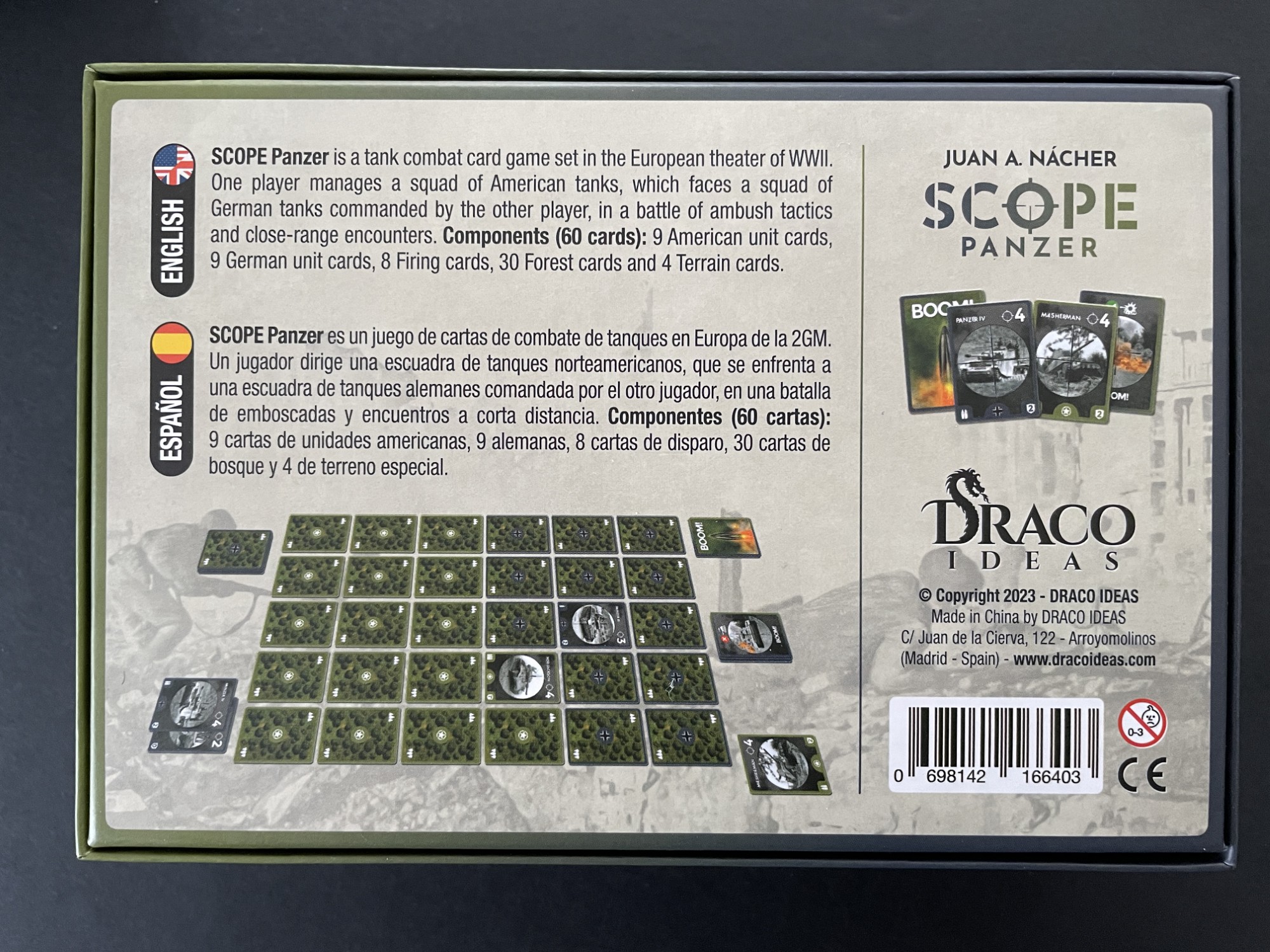
SCOPE Panzer offers a tank-on-tank card game in a small deck of cards.
click images to enlarge
SCOPE Panzer is a quick, simple, two-player card game in the SCOPE series, which includes SCOPE Stalingrad and SCOPE U-Boot (using the German spelling). While the other games feature snipers and sub hunts, SCOPE Panzer takes on tank combat.
I ran across SCOPE Stalingrad a couple of years ago, and while the snipers-in-Stalingrad theme caught my eye and the game was a great price, it was just too different from my standard fare. Also, I mainly play solo-friendly games. And I didn’t think SCOPE Stalingrad was that. I have a broader view now and was glad to receive a copy of SCOPE Panzer from Draco Ideas to try out.
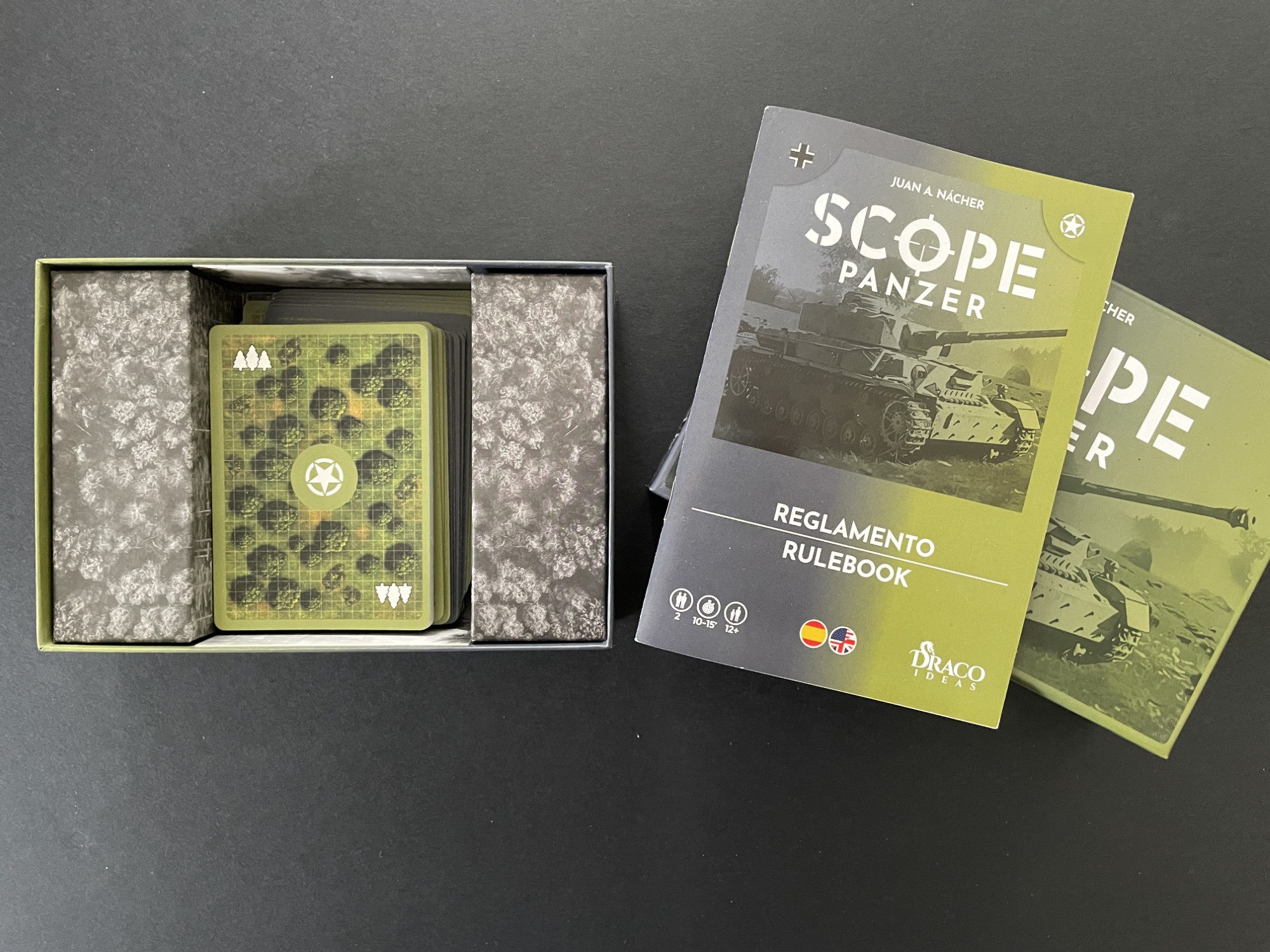
While it’s not really solo friendly either, I wish I’d gotten into the series sooner. There’s more to the system than I thought and the game is small enough, quick enough and simple enough that I’m pretty sure I can find an opponent…my son for starters.
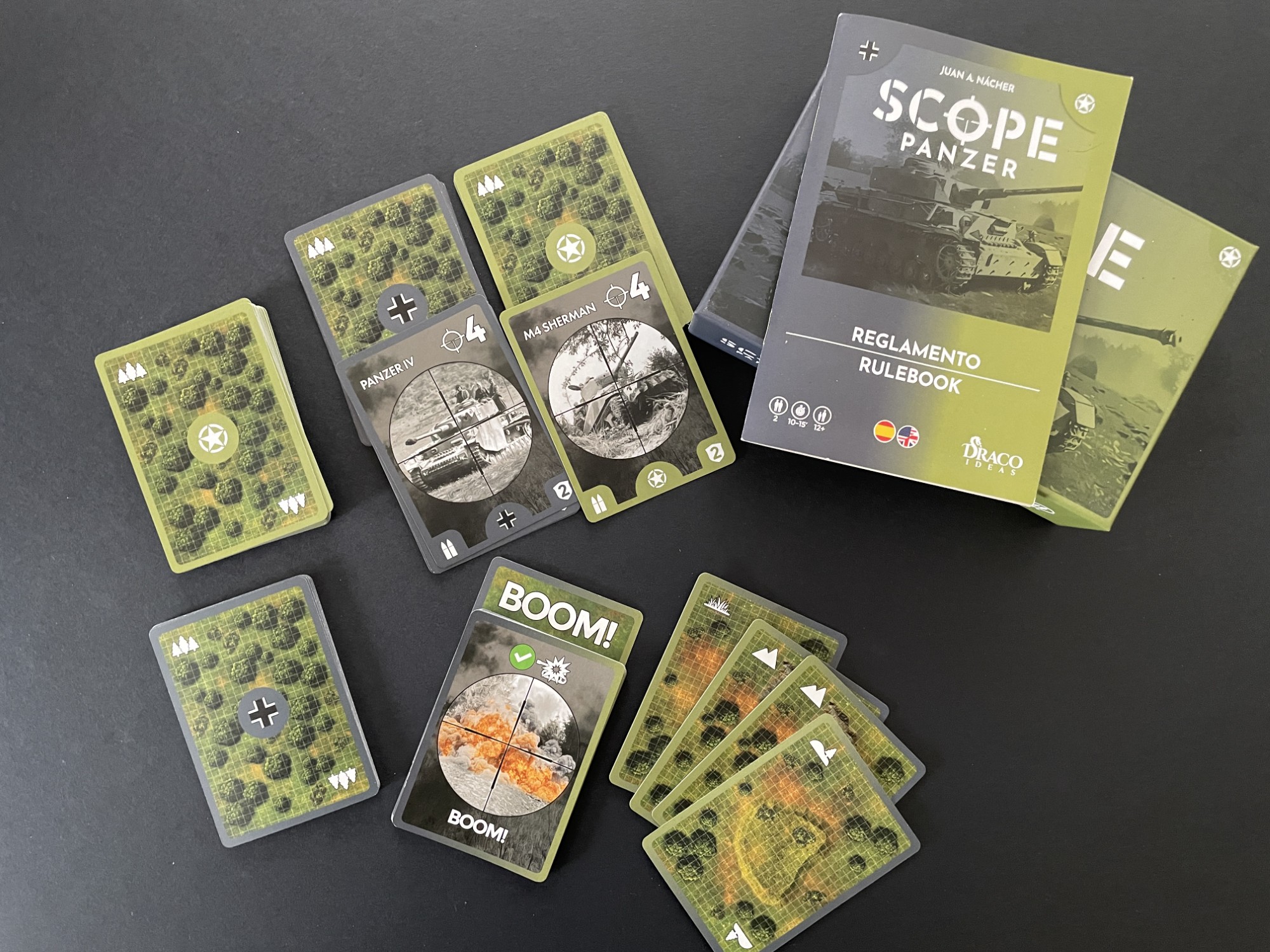
SCOPE Panzer Cards
This is a really small game. It’s a pack of 60 cards and an index-card-sized rulebook. Here’s how the cards break down.
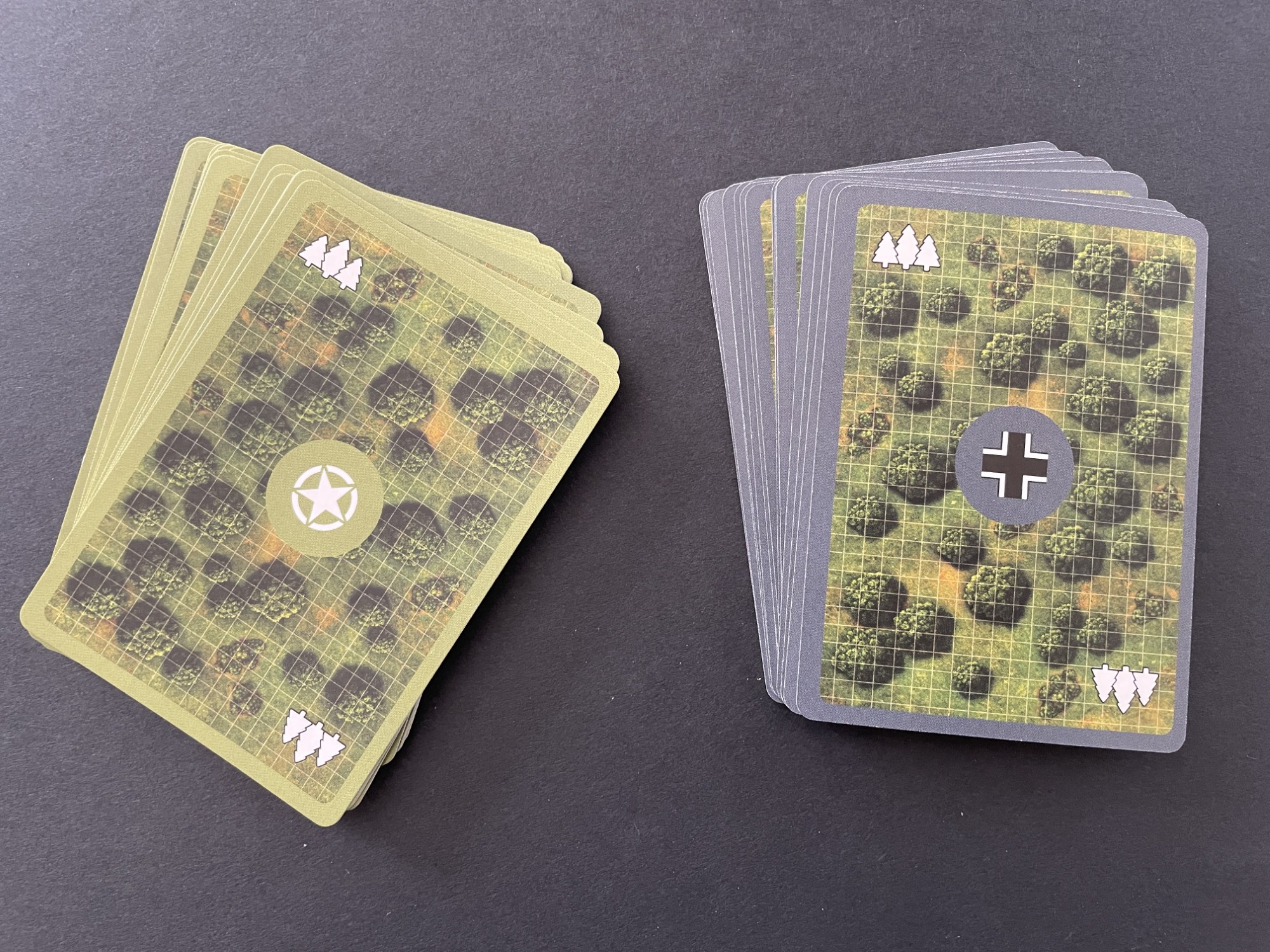
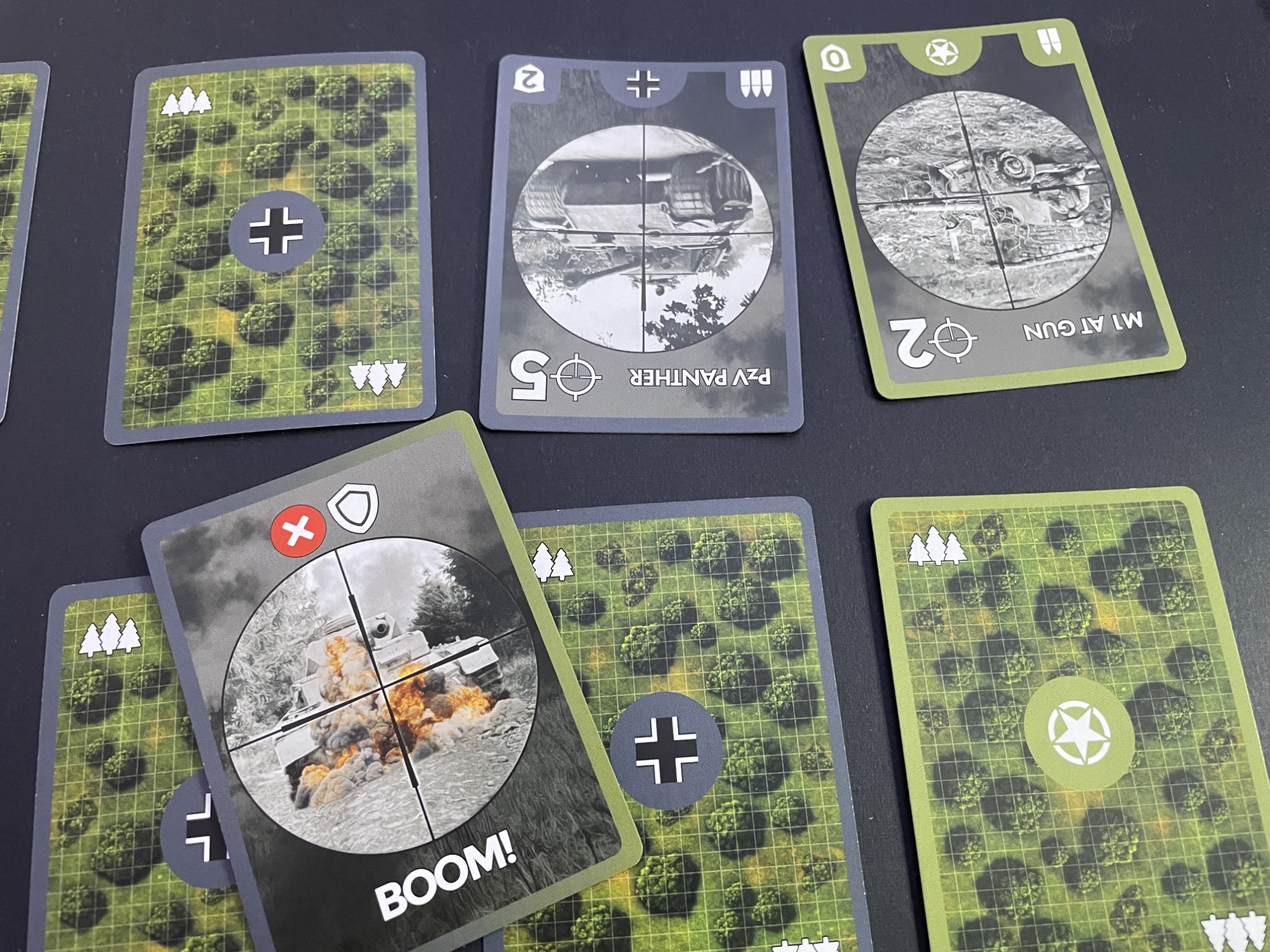
30 Forest cards make up the gameboard. An Allied insignia on one side or a German insignia on the other side indicates who controls the space.
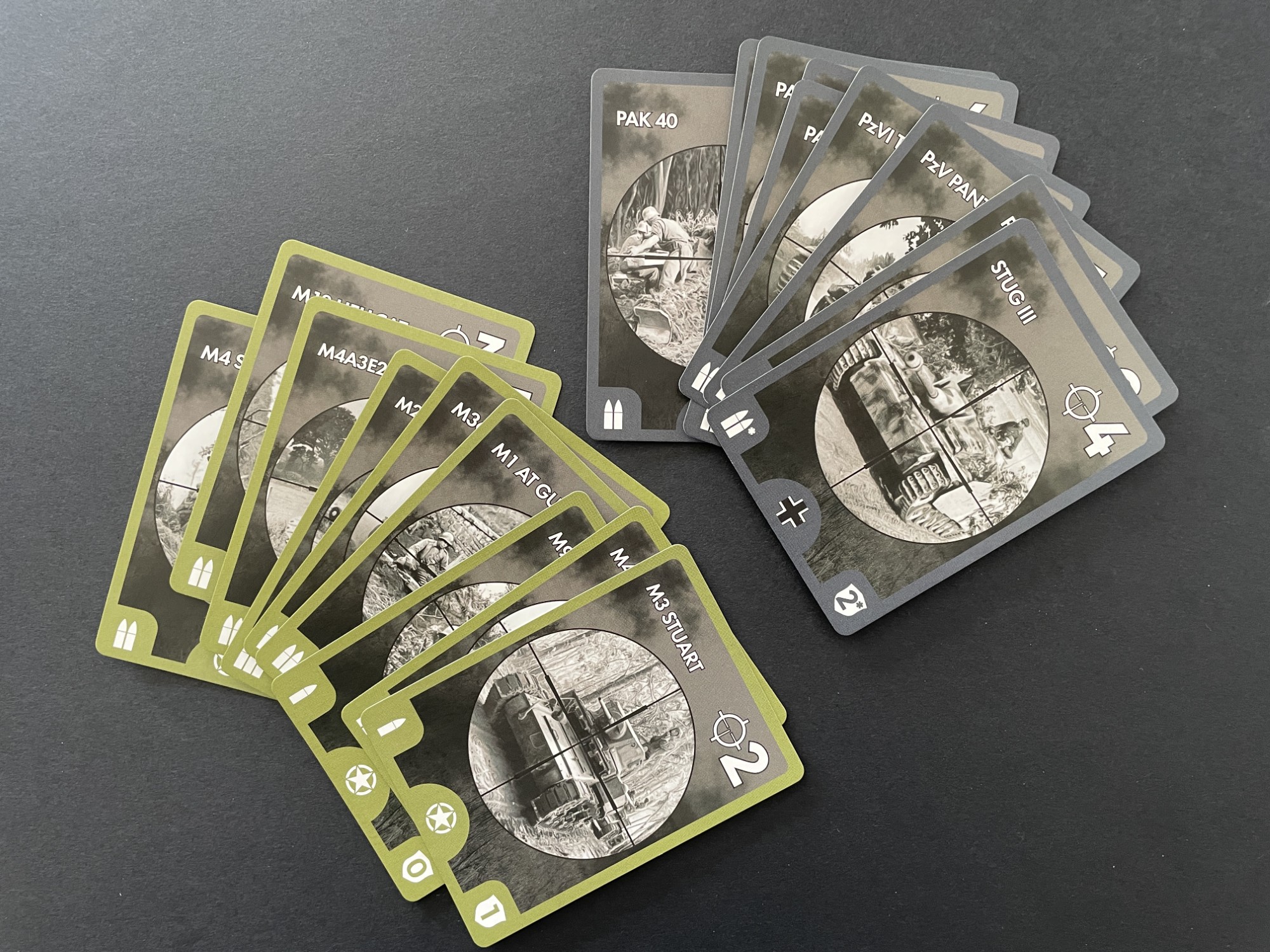
9 American and 9 German Unit cards represent tanks, tank killers, and anti-tank infantry.
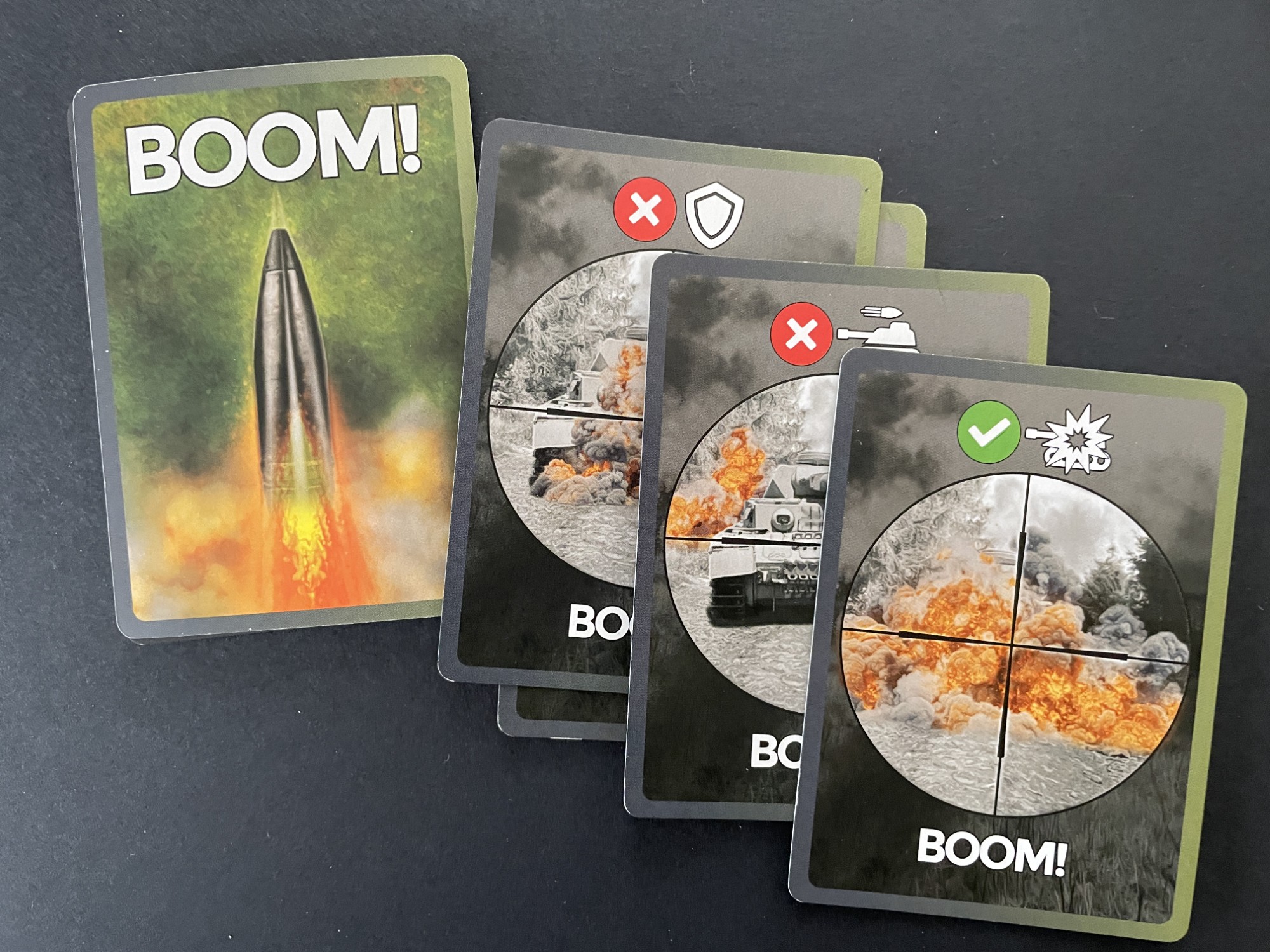
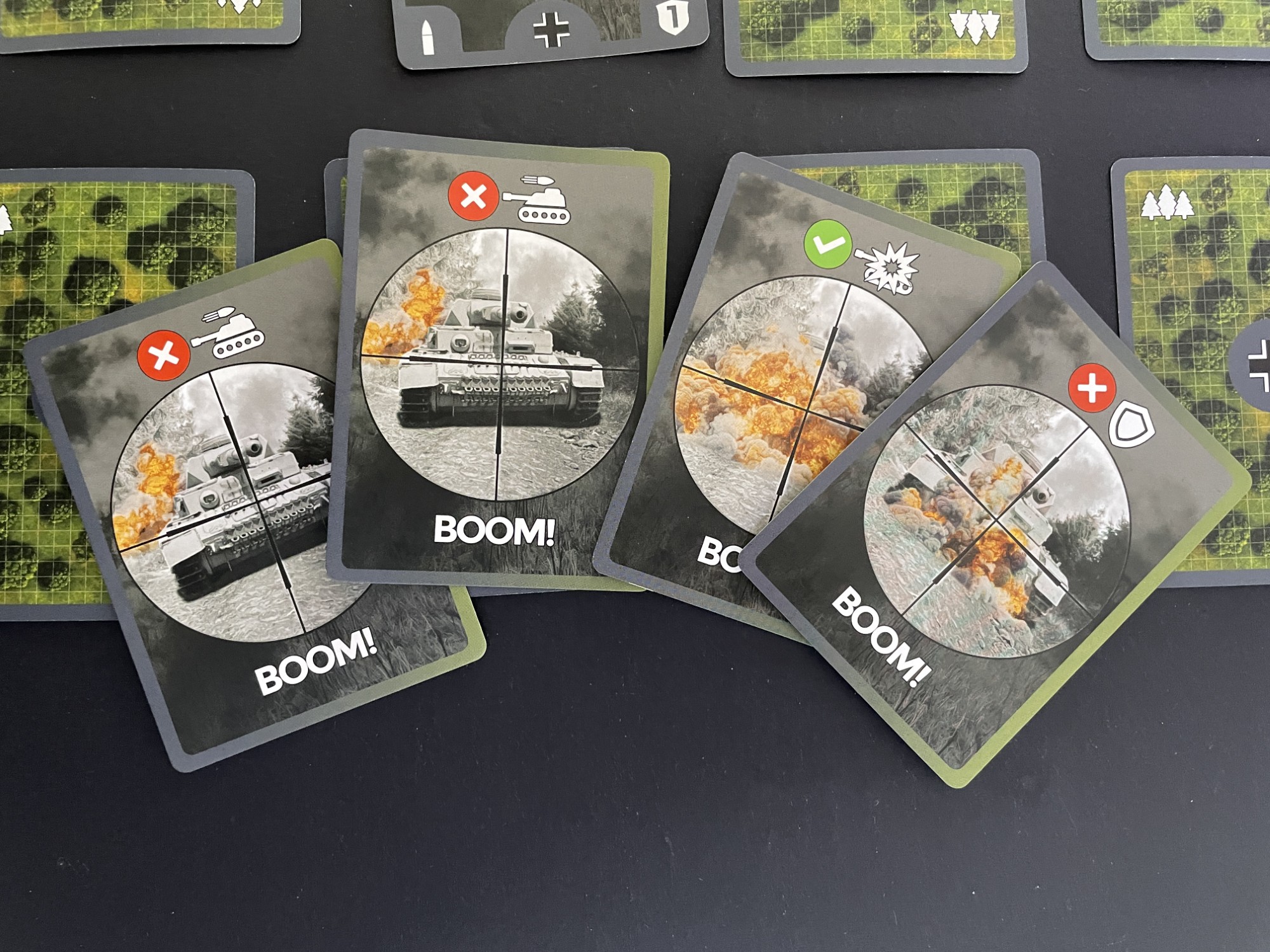
8 BOOM! Cards include HIT and MISS cards that create a firing hand for combat.
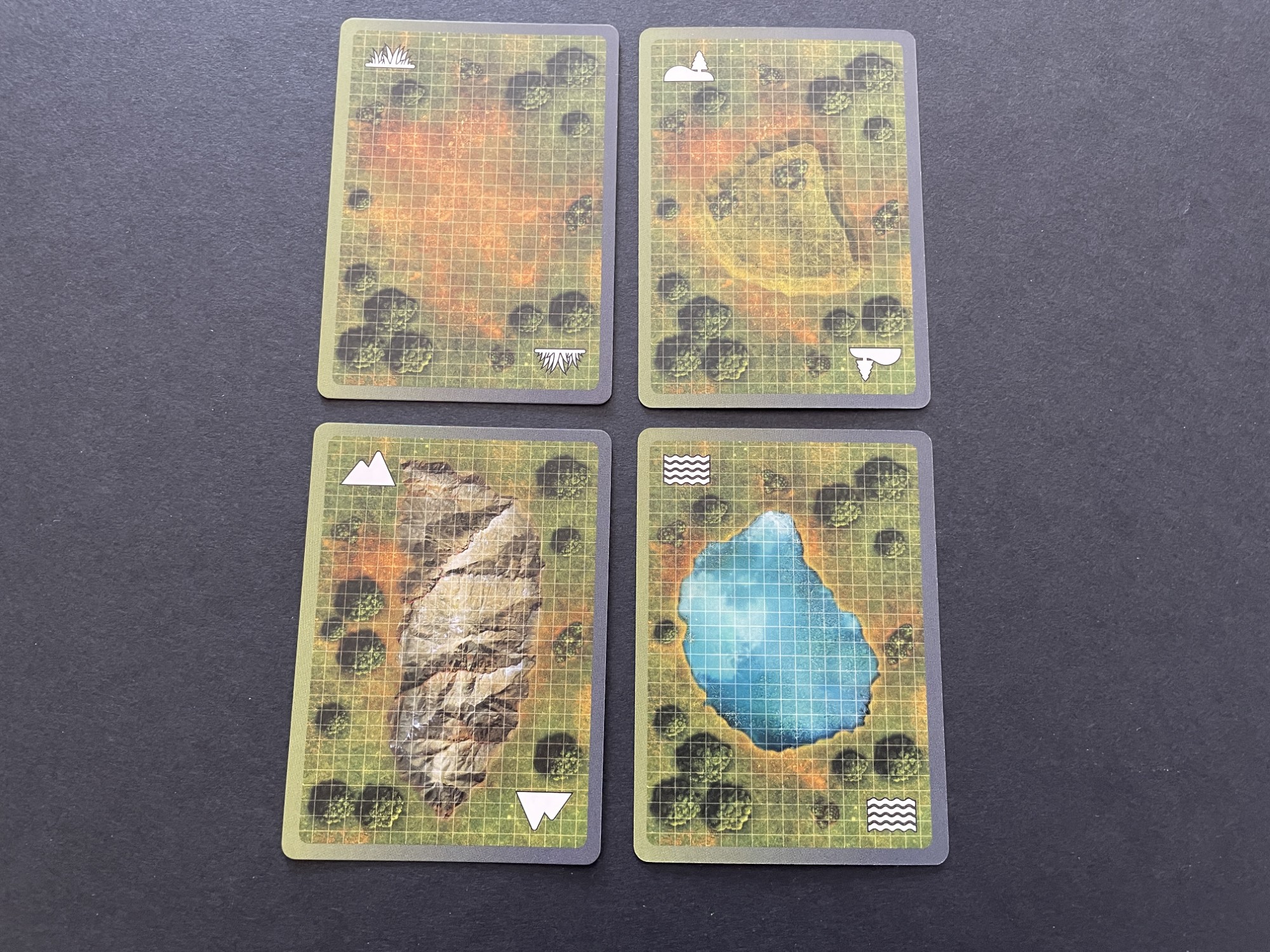
Terrain cards come into play with advanced rules that reflect line-of-sight and movement effects.
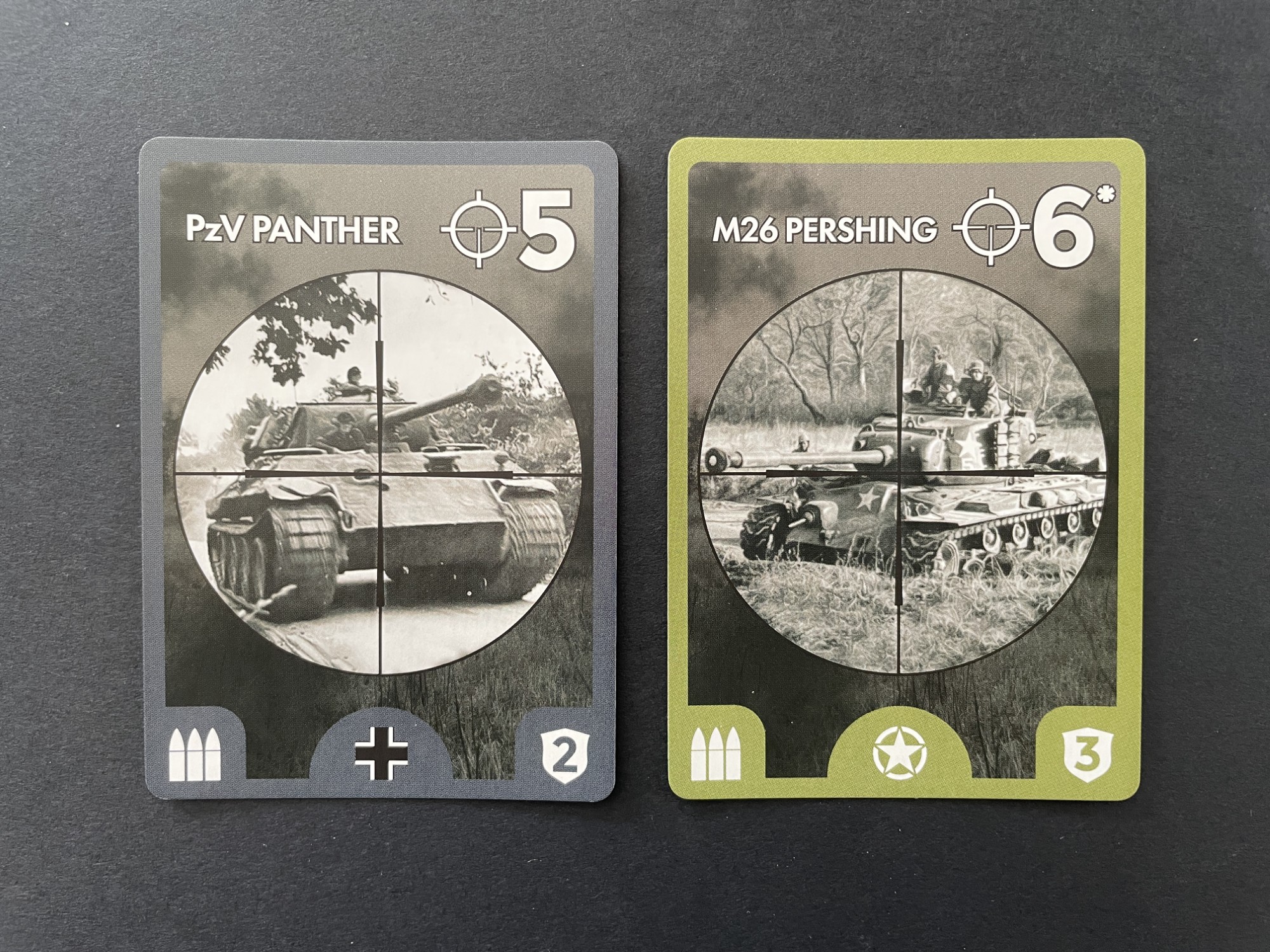
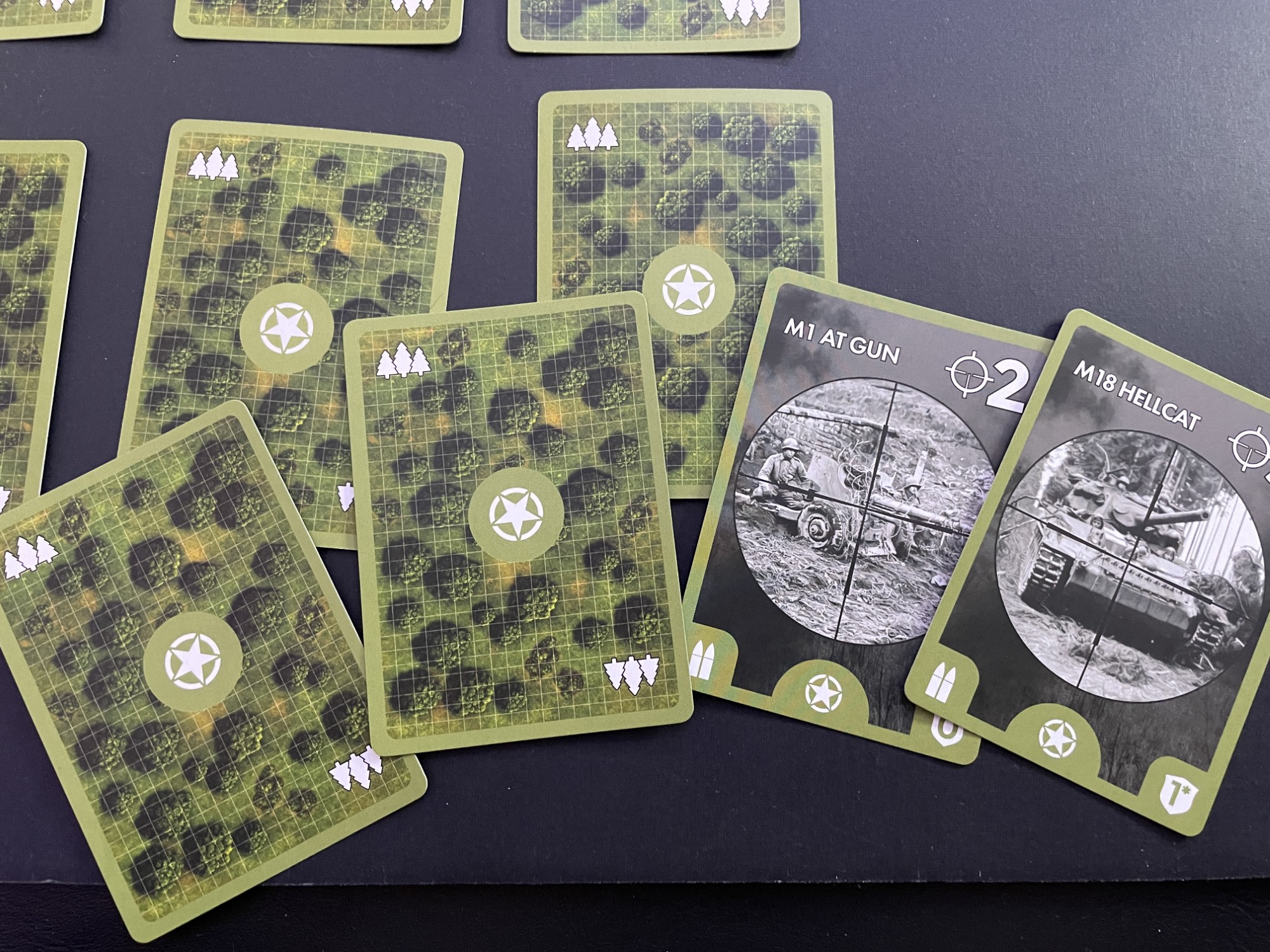
Unit cards have point values and combat factors. The point value on the top right is part of what determines which units you choose at the start. The firepower value on the bottom left determines how many HIT cards go into the firing hand you use for combat. The armor value on the bottom right accounts for some of the MISS cards that go into the hand. The back of the card looks just like a forest card with your insignia on it. Your units are hidden until they’re revealed through firing, being fired upon or through a search action.

Most of the information in SCOPE Panzer is hidden information. You can play it solo to learn the rules, but it’s a bit forced. The true, best game experience requires an opponent.
SCOPE Panzer Setup
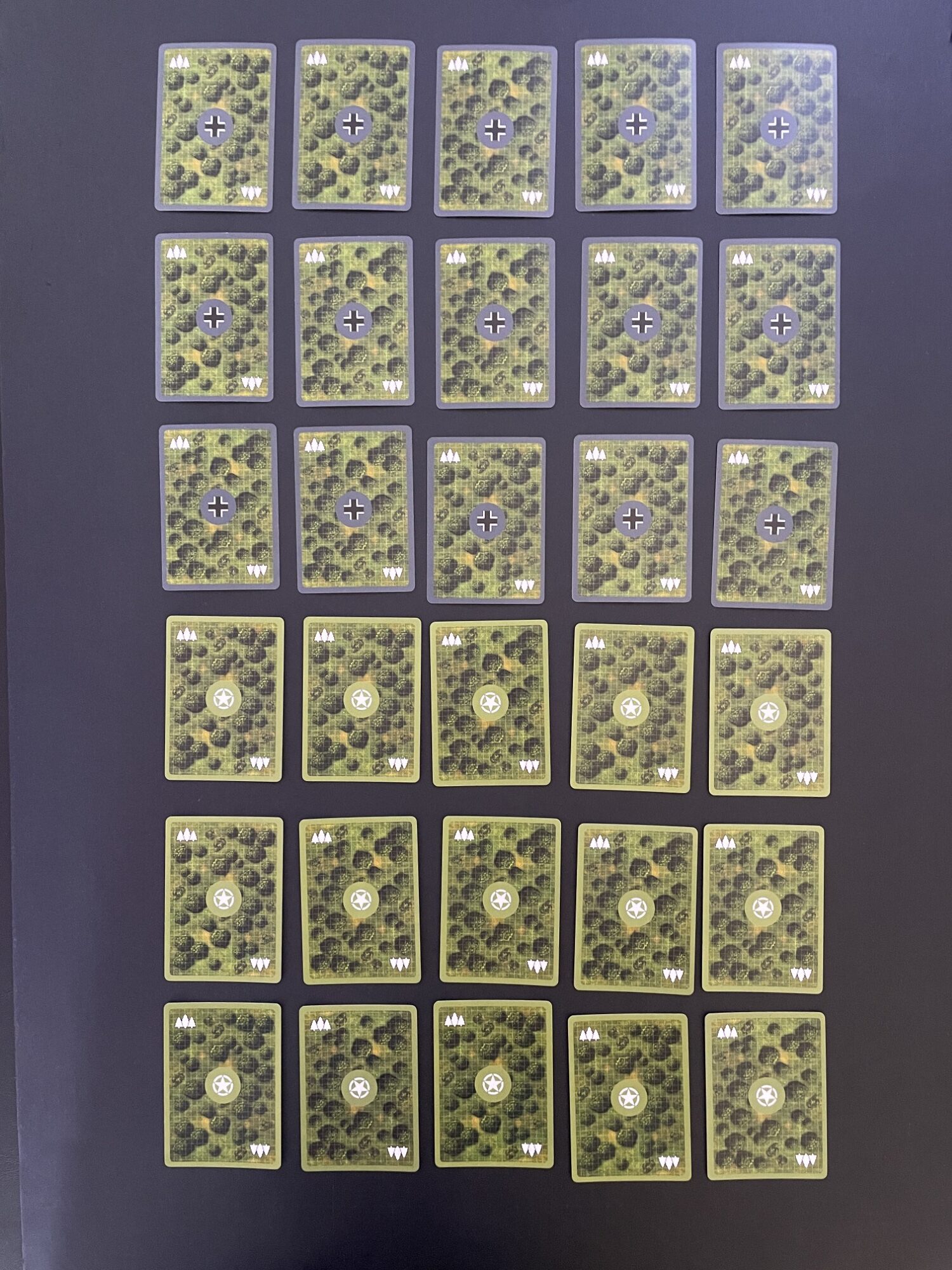
You set up SCOPE Panzer by laying out the forest cards based on three game sizes: Skirmish, Battle, or Great Battle. Each end of the board is a Deployment Area. Units set up here, so the board width determines the maximum number of units each side can have. Larger battles mean another unit or two. Game size also determines the power of your force based on unit point value. Larger games let you fight with more powerful units.
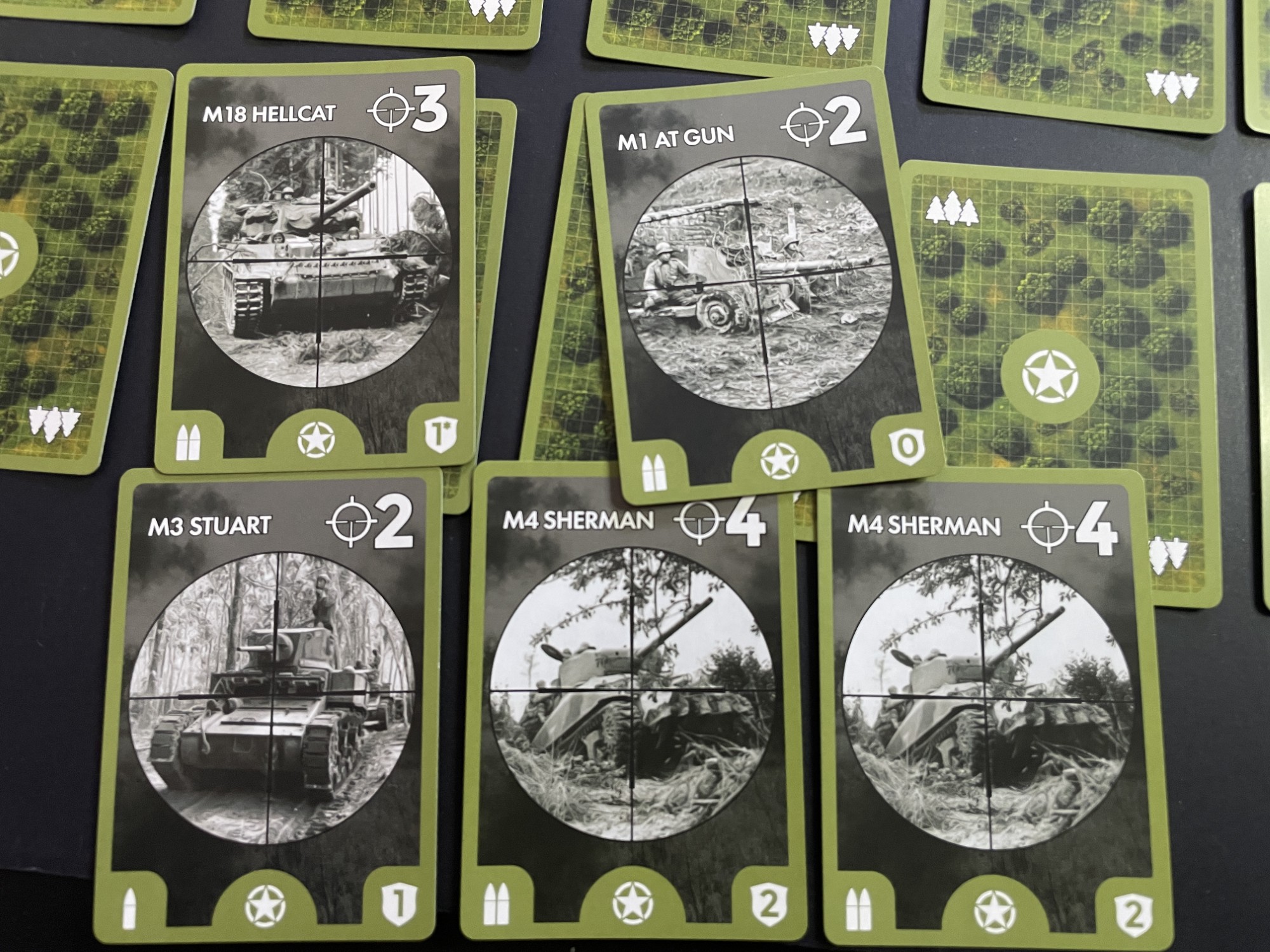
Choose your force from tanks, tank killers, and anti-tank infantry. There’s abstraction to be sure. In the basic game there’s no real difference between choosing one over the other, except, of course, the firepower and defensive values. The units are a mix of early and late. So, you might have some interesting engagements…for example, a Pershing (briefly) squaring off against a Panzer II.
Once you and your opponent have your Unit cards, you each secretly replace the first row of Forest cards with your forces and play begins. You can move, search (and maybe fire) or explore (and maybe take control of enemy ground).
Movement Actions
Movement lets you pick up a 2-by-2 quadrant of Forest cards and Unit cards you control. Rearrange the cards, keeping the forest side up. You can move units forward, side to side or just rearrange things and make it seem you moved. There can be a fair amount of bluffing. I wasn’t expecting that, but it’s pretty cool. You can move units to the other side of your territory while your opponent thinks they’re moving toward the front. That becomes important during the Search action.

Search Actions
During the search action, you can flip over an enemy forest card within two cards of one of yours. If there’s nothing there, it goes back to an enemy forest card. If it’s an enemy unit, it stays face up until it moves. If you have a unit within two cards, you can reveal it and attack. But you don’t have to. If the odds look bad, keep your unit hidden. Of course you need to remember what it is.
Combat Actions
If you decide to attack, it’s time for the BOOM! cards. Flip the attacker up and make a firing hand by taking MISS cards equal to the range and the armor of the target and HIT cards equal to your firepower. Swap the cards around and let your opponent pick one. A HIT destroys the target, and it’s replaced with a forest card.
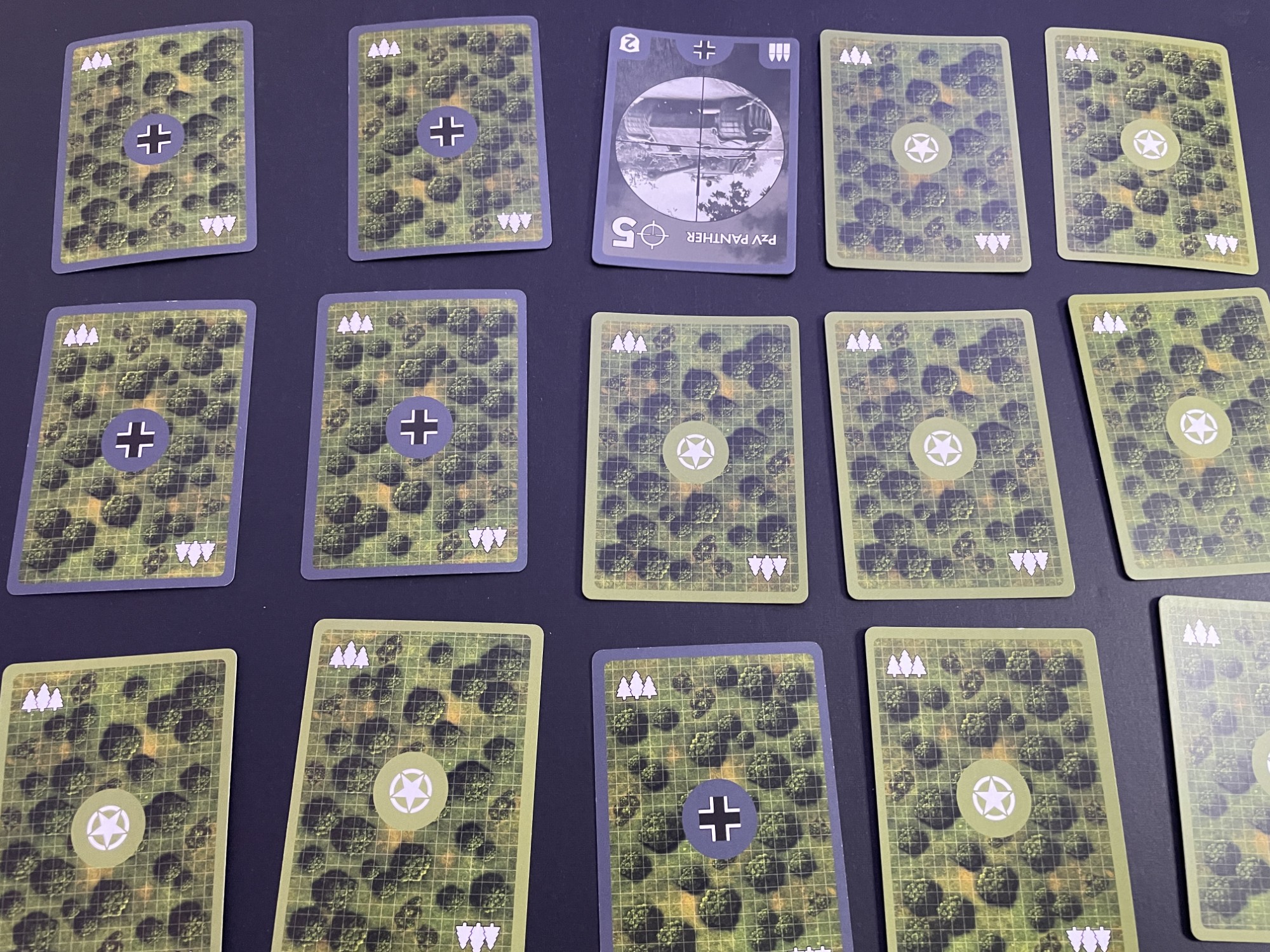
Exploration Actions
Exploration lets you choose a 2-by-2 mix of your forest cards or units and at least one card with the enemy insignia. Flip each enemy card over. If there’s a unit, put the card back with the opponent’s insignia up. If there’s no unit, take control of the space by replacing the Forest card with your insignia up.
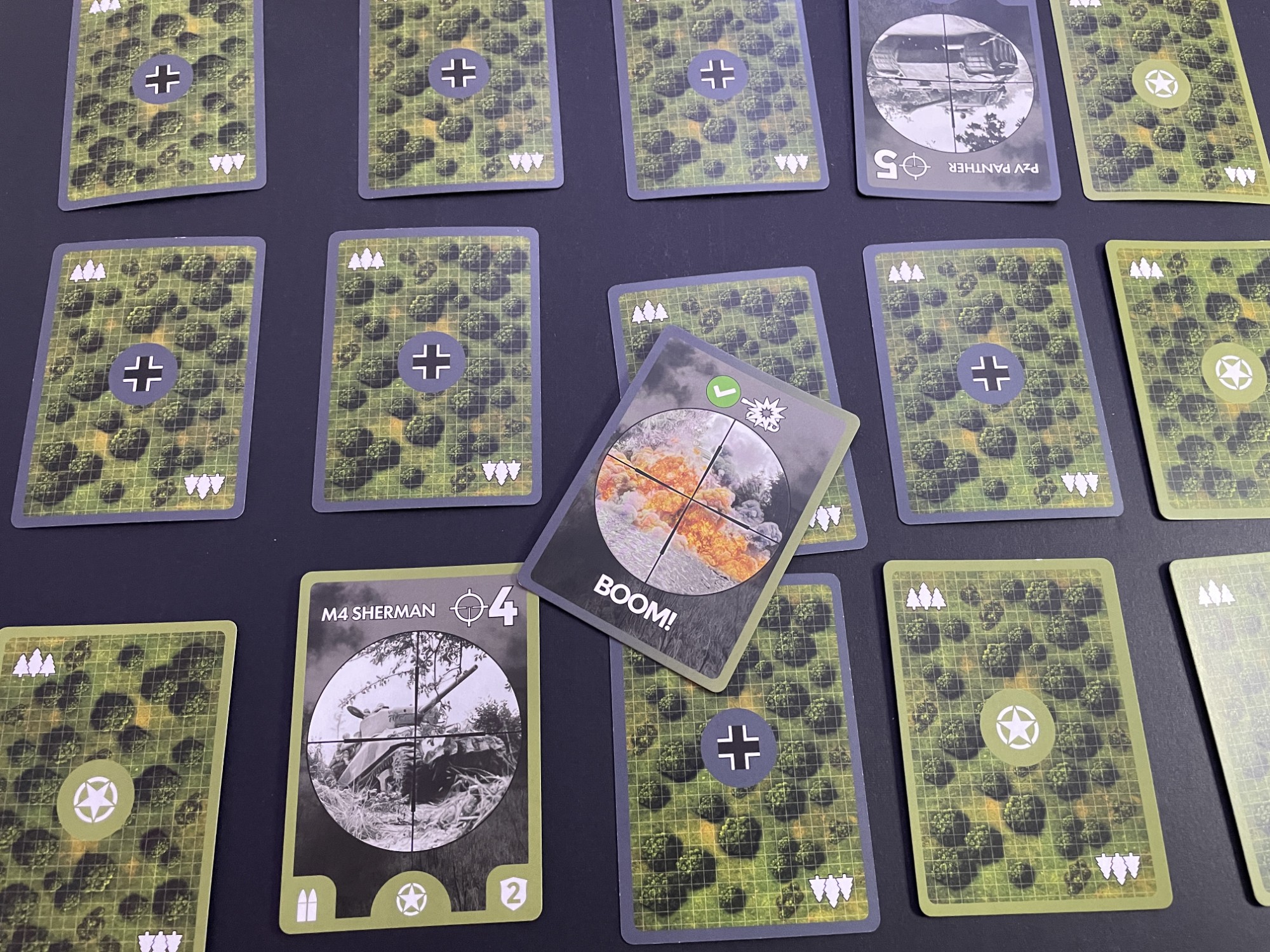
Putting It All Together
Move, search, attack and explore until either you’ve destroyed all the enemy units or control their Deployment row. If you want a bit of realism, add advance rules for fire correction, flank attacks, light and heavy tanks, reduced fields of fire, terrain rules, line of sight and more. And you can restrict use of late-model tanks.
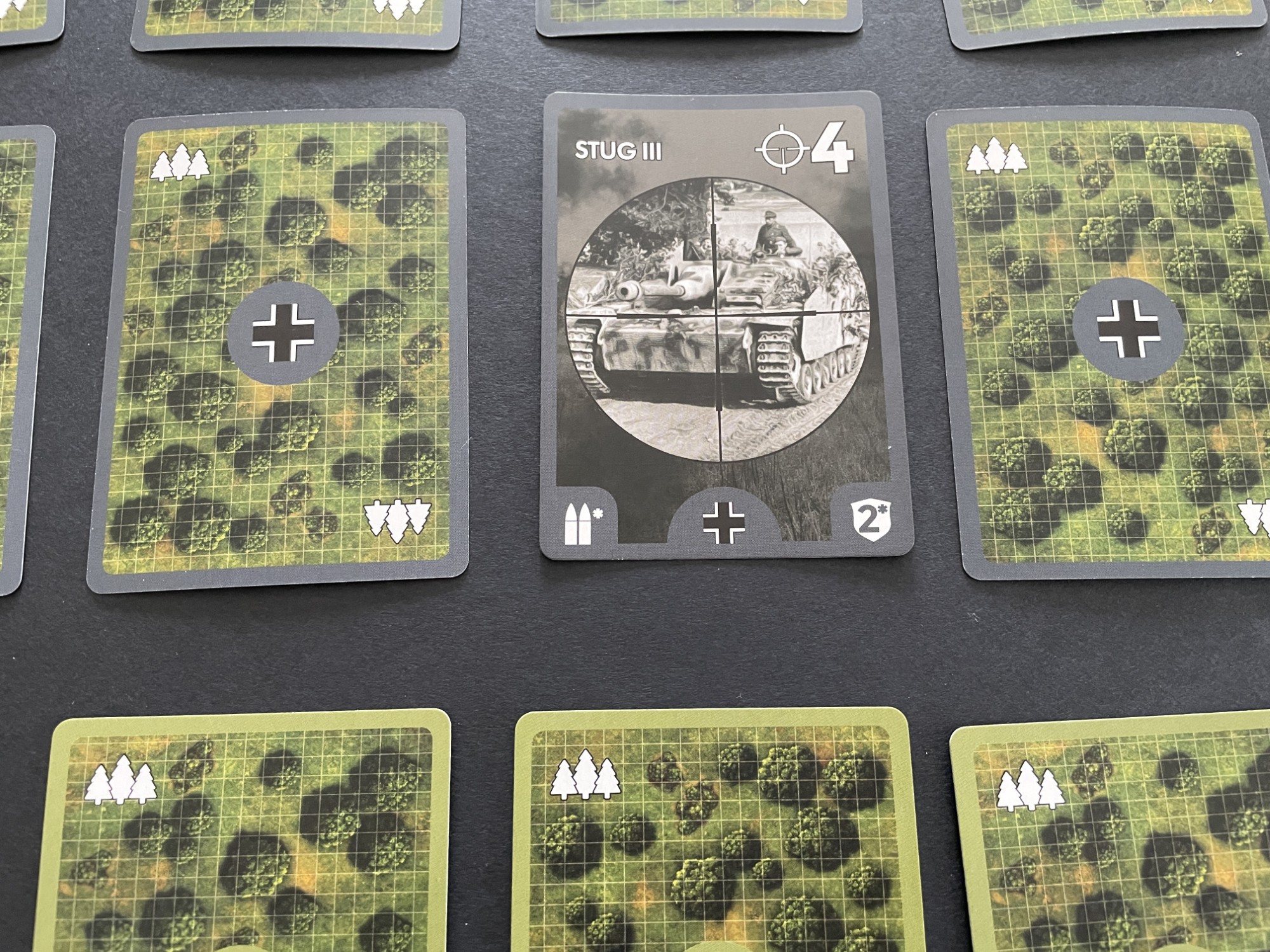
These rules don’t turn SCOPE Panzer into a combat simulation. But they give nods to realistic combat factors that can make the game more engaging for experienced wargamers while keeping gameplay approachable for everyone else.
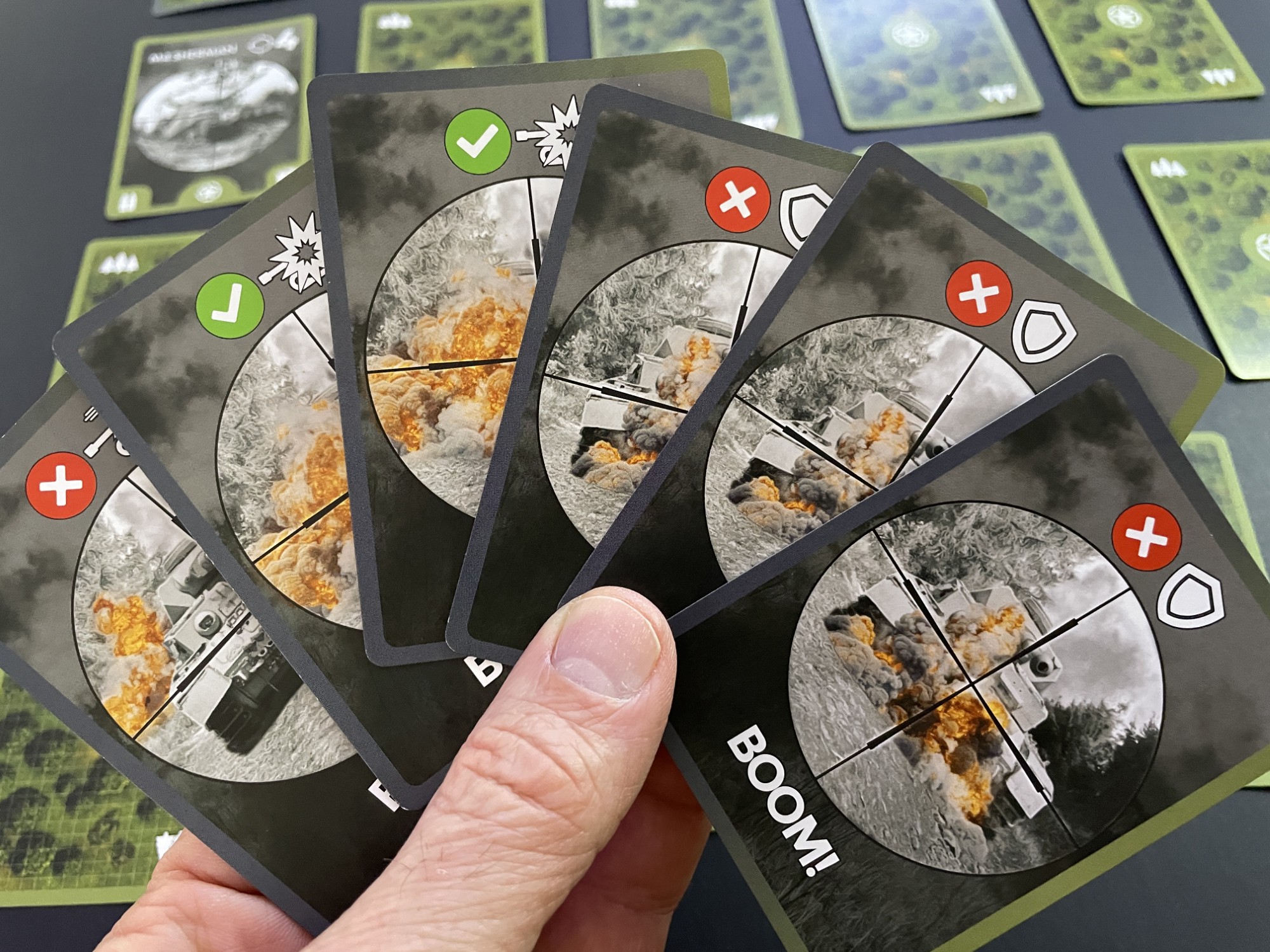
Summing Up SCOPE Panzer
The game is fun and relatively fast. I think the first couple of games I played with my son maybe took between 45 minutes and an hour, with me teaching him how to play. The rules are just five small pages (almost too small for my eyes, but not quite) of basic rules with illustrations. It doesn’t take long to pick up, even if you add the 10 pages that cover the optional rules.
The more we played, the more we realized the flexibility the rules gave us to bluff, to engage on one side of the play area while making a dash for the enemy supply line, to calculate how many enemy units were still lurking and to guess where they might be. The only major thing I wished for in the basic playthroughs was a bit more feeling that I was working with actual tank and anti-tank units. But that’s probably unfair. This is largely a conceptual game, and it does exactly what I think it’s meant to do, give you a fast-playing, military-themed strategic card game. Plus, the advanced rules add some additional flavor of realism so that’s all good.

The conceptual nature of the game didn’t detract from playing SCOPE Panzer. It’s easy to learn and a fun time. And this game has a small box and a small footprint, so it’s easy to take with you to a friend’s house or pack for a quick lunchtime game. Plus, the scalable rules give you a good opportunity to get friends and family interested in strategy gaming.

I liked it so much I dropped few hints and my son got me SCOPE Stalingrad. So, SCOPE Panzer gave me a second chance at a game I’d have otherwise missed.
You can chat about this game in the Modern World section of our discussion forums
Thank you for visiting the Regiment of Strategy Gaming and riding with The Armchair Dragoons.
Rather than list a bunch of social media links, the easiest thing to do is to check out our LinkTree, which connects you to all of our various locales around the web.
You can also support The Armchair Dragoons through our Patreon, and find us at a variety of conventions and other events.
Feel free to talk back to us either in our discussion forum, or in the comments below.


