
 by
by RockyMountainNavy, 14 December 2025
So maybe I should of wrote on this topic in October around Halloween and not the holiday season. Oh well. Somewhere in my recent social media feeds I saw a discussion of character death in roleplaying games (RPGs). It was a ‘spirited’ discussion that came down to one side basically saying, “Suck it up, buttercup,” and the other side endlessly bemoaning the loss of a character that they had invested hours and hours of time in creating through character generation, building a deep backstory, and (maybe) playing for more than one session. That discussion got me thinking about the many different RPG systems I play(ed) and how character death works using the Rules as Written (RAW) in each. After conducting a survey of many RPGs in my collection, my view is that those who suffer and express the most angst over the death of their character likely did not accept nor understand an important aspect of the social contract when playing RPGs; that is, understanding the rules not only mechanically but thematically.
Ed note: it doesn’t seem like we should need a trigger warning when the fact that we’re talking about death is right there in the title, but proceed at your own level of comfort.
My thoughts (not dark, really!) led me to conduct a survey of my tabletop RPG collection. In my survey I discovered the different rules for character death in my RPGs cover a broad spectrum of outcomes; from the hardcore “roll up a new character” to calling “Medic!” to the polite and simple “taken out of the scene”—even as far as a very pro-player agency extreme of “you’re only dead if YOU say so.” In what came as a bit of a surprise to me the survey seemingly reveals that it is actually very hard for a character to die in most RPGs.
Dead by the book
I arranged this survey of a cross-section of my roleplaying games below chronologically based on publication date then alphabetical by title for no other reason than it (might) show an evolution of how RPGs approach character death over time. [Spoiler alert…not really.]
Traveller: Science-Fiction Adventure in the Far Future – The Classic SF RPG Rules (Game Designers’ Workshop / Far Future Enterprises, 2022 (reprint from 1981)
“The classic science-fiction roleplaying game, faithfully reproduced from the original 1981 edition” (Front matter)
Traveller is famous for the “death in character generation” rule. Specifically, that rule is found under Survival in character generation:
Survival: Each term of service involves some danger; during your term, a character must successfully throw his service’s survival number to avoid death in the line of duty. Each service also has DMs which may apply. Failure to successfully achieve the survival throw results in death; a new character may be generated. (Book 1, Characters, Acquiring Skills and Expertise, p. 10)

[Interestingly, in the 1981 version of the Traveller rules (reproduced in the 2022 “White Facsimile Edition”) an Optional Rule immediately follows which allows players to convert a failed survival roll into an injury and leave the service after an abbreviated two-year term and recovery. That optional rule is NOT present in my 1977 Little Black Books edition but shows that even in the earliest days of Traveller the “death in chargen” rule was flexible.]
Even if one survives character generation in Traveller death through adventuring is a very deadly possibility:
When any one characteristic [Strength, Dexterity, or Endurance] is reduced to zero by wounds, the character is rendered unconscious. When two have been reduced to zero, the character has been seriously wounded. When all three have been reduced to zero, the character is dead. (Book 1, Combat, Combat Resolution, Wounding and Death, p. 34)
Wounding in Traveller is applied in a very interesting manner. “Each die rolled (for example, each of the two dice rolled in a result of 2D) is taken as a single wound or group of hits and must be applied to a single characteristic.” The first hit, however, is an exception: “The first wound is applied to one of the three physical characteristics (strength, dexterity, or endurance) determined randomly. As a result, first blood may immediately incapacitate or even kill.” Recovery is possible only for unconscious or seriously wounded characters (Book 1, Combat, Combat Resolution, Wounding and Death, p. 34).
All of which tells me that combat in Traveller is potentially very deadly. The best approach for player characters to take in play may be to find a…non-kinetic way of resolving the situation.
Behind Enemy Lines: World War II Role-Playing Game (FASA, 1982)
The wound rules in Behind Enemy Lines are somewhat blunt:
In combat, there is always the possibility of death or injury to the participants. In Behind Enemy Lines, the basic stat called STAMINA reflects the character’s overall health and well-being. When a character’s Stamina reaches 0, he is dead. (Book 1: Character Generation and Basic Rules, Wounding and Character’s Condition, p. 14)
When a character in Behind Enemy Lines is hit the player rolls 2d6 on the WOUND SEVERITY TABLE found on page 14. The table lists the following possible results:
- Die roll 2-3 – The character has been killed instantly
- Die roll 4-6 – Severe wound
- Die roll 7-10 – Moderate wound
- Die roll 11-12 – Light wound or scratch
As if the 8.33% chance of instant death is not enough, characters suffering a moderate or severe wound are also at risk of bleeding out which is a form of progressive damage that will kill if untreated by first aid.
Recovery from a wound in Behind Enemy Lines is a behind the scenes event. A character with a scratch returns to their unit immediately (never leaves). A light wound gets 1D-2 weeks light duty then returns to their unit. A character with a moderate wound must make a 2d6 die roll; a roll of 8- sees them return to their unit in 1D+2 weeks. A character with moderate wounds that rolls 9+ or a character with a severe wound are sent home as, “their recovery time will be so long that they are effectively out of the war” (Book 1: Character Generation and Basic Rules, Wounding and Character’s Condition, p. 14).

James Bond 007: Role Playing In Her Majesty’s Secret Service (Victory Games, 1983)
The object of combat is to damage, and hopefully put out of action, your enemy before he can do it to your character. Characters attack each other by using either their Fire or Hand-to-Hand Combat skill. The Quality Rating of a successful roll will determine how badly the target character is hurt. This damage is known as his Wound Level. (Chapter 4: Combat, Damage, p. 46)
The most severe Would Level possible in James Bond 007 is KL = Killed which is described as, “The character has suffered the ultimate incapacitation, bought the farm, kicked the bucket, gone West, made the supreme sacrifice, or whatever. He is removed from play” (p. 47). In keeping with the cinematic flavor of James Bond 007, however, the player can spend Hero Points [game metacurrency] to avoid a sad demise; “A player may use Hero Points (see chapter 9) to change the result of an NPC’s Quality Rating for combat, and thus lower any wound result” (p. 47).
While characters can certainly die in James Bond 007 (“No, Mr. Bond. I expect you to die”), if they die it is going to be with cinematic flair (and very likely at a poker table with a vokda martini; shaken, not stirred).

Star Trek: The Roleplaying Game (FASA, 1983)
The combat system in Star Trek is very much a skirmish-scale wargame. In wargames, figures are expected to die but in a RPG, well, dying is not such an imperative. The designers of Star Trek tried to address that issue indirectly using setting tone rather than strict rules:
NOTE: If you are used to playing many other fantasy or science fiction role-playing games, you may find the combat damage much more devastating than you are expecting. The weapons of the STAR TREK universe are rather deadly when used indiscriminately. Fortunately, weapons are never used indiscriminately by Federation Star Fleet personnel and are rarely used so by other space-faring races. (No one likes a diplomatic incident, note even a Klingon.)
Players and gamemasters are reminded — this is not a shooting gallery! Also, you will find when reading the rules on recovery and medical assistance that people don’t die easily when Dr. Leonard “Bones” McCoy and his fellow Star Fleet medical officers are around. There is very little one can do about disintegration, but many “dead” characters can yet be saved by the timely arrival of medical help, or a quick beam-up to the ship and a trip to sick bay and intensive care. (Combat and Tactical Movement, Damage, p. 52)
Dying in Star Trek is described as a mortal injury:
A character who is unfortunate enough to have the END [Endurance] score reduced to zero or below by wound damage is mortally injured. Unless medical help is speedily available, the character will die. Keep track of the number of points of END the character is reduced below zero as a negative number, as the extent of damage is important in determining if the character can be saved. (See Medical Aid and Recovery.) (Effects of Damage, p. 60)
Interestingly, in Star Trek when a character is mortally injured it is the start of a sub-game for Medical Aid and Recovery that has its own chapter in the rulebook. The very first rule in that chapter is the Emergency First Aid Saving Roll:
It is clear that time is of essence in saving the life of a mortally injured individual. Generally speaking, if transportation to sick bay would take more than 15 minutes, it is better to apply first aid on the spot, even if no equipment is available. Of course, only one person’s medical skill level can be used here, so it should be the highest available. There is no adjustment for having assistants during the first aid procedure.If the roll succeeds, the injured character is stabilized at an END of 1. Further healing will take place at the normal healing rate, unless specific drugs or procedures are used to hasten the process. If the roll fails, the patient remains at the current mortally wounded level of END. Another attempt may be made if equipment or more skilled assistance becomes available, but time continues to tick away. (Each attempt takes 5 minutes itself.) If at any time the adjusted roll needed drops to zero or less, the patient is irretrievably dead. (EMERGENCY FIRST AID SAVING ROLL, p. 62)
In keeping with the cinematic flavor of Star Trek, players can always fall back on their Luck which is a core characteristic:
One more note on unconsciousness and recovery. When a player character’s life is threatened or unconsciousness on his part would cause some especially bad occurrences (such as failure of an important mission), gamemasters are urged to give a LUC [Luck] save attempt. If the LUC save is successful, the player finds some inner reserve of strength and fights off unconsciousness. The LUC save is intended to give characters a last-ditch chance. Let Fate take a hand where necessary. (p. 61)
Using the rules as written, in the Star Trek RPG even Red Shirts should have LUC; apparently the ones in the original television series possessed very low ratings…

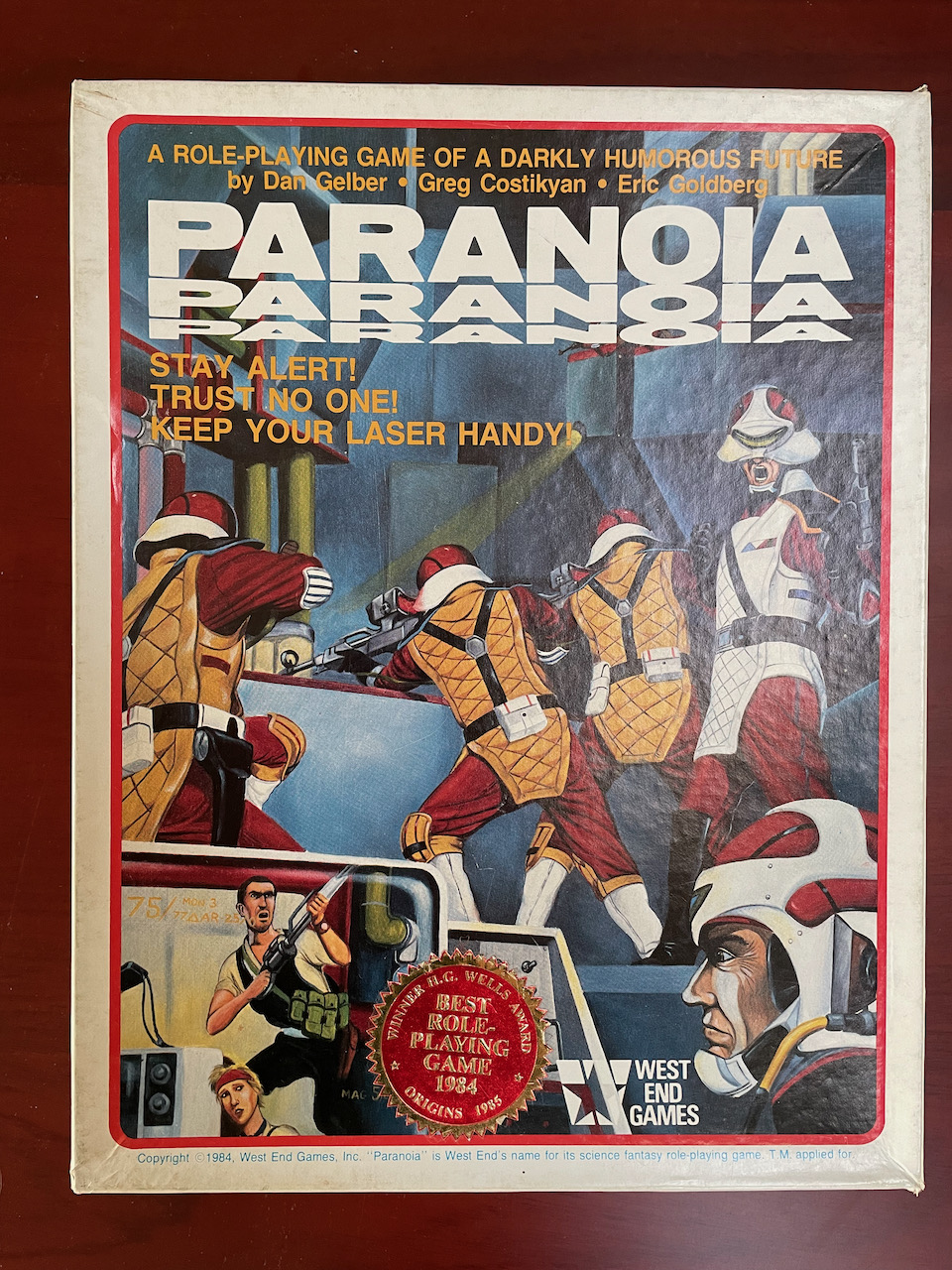
Paranoia (West End Games, 1984)
Security Clearance: ULTRAVIOLET

WARNING:

Knowledge or possession of the contents by any citizen of security clearance
VIOLET or lower constitutes treason, and is punishable by summary execution.
In Paranoia there are six different possible Damage Effects including character death in two forms:
Kill: A dead character is dead. Fini. Kaput. He kicks the bucket; he spends his time pushing up daisies; he has punched his last clock; he is gone to serve the Great Computer in the Sky. Dead is dead. However, see 13.8.4.
Vaporized: The character and his gear are completely destroyed. This is a truly distinguished end for a Paranoia character. You have really arrived when you have had a character vaporized. This is a dramatic achievement of epic proportions. The appropriate response is a brief but heart-felt round of applause from the players, gamemaster, and spectators. (13.4.2 Damage Effects)
But what is rule 13.8.4? The heartbeat of Paranoia, both figuratively and literally:
13.8.4 Killed: If there are any remaining members of the character’s clone family, The Computer will activate a replacement clone for the deceased member as quickly as possible (that is, as soon as the death is reported). If there are no remaining members of the deceased character’s clone family (i.e., all six members of the clone family have suffered the ultimate embarrassment of the world of Paranoia), then it is time for the player to roll up a new character. (p. 52)
Yes, character death in Paranoia is not only possible, it is expected—even encouraged— and hence you start with a clone family. Personally, I played in campaigns sessions where I went through more than one clone family…
Twilight: 2000 (Game Designers’ Workshop, 1984)
Designed by Frank Chadwick, a renowned wargame designer, Twilight: 2000 certainly has grognard blood in it’s design veins. Twilight: 2000 also uses a multi-book publishing model with a separate Play Manual for players and Referee’s Manual for the referee. Interestingly, the rules for combat damage are in the Play Manual; it is as if Chadwick is messaging players about how bloody dangerous combat is:
Critical Injuries: A critical injury to the head causes immediate death. Critical injuries to other body parts cause immediate loss of consciousness and require medical attention within 10 minutes or the character will die from loss of blood. Characters who lose consciousness due to a critical wound remain unconscious for 1D10 x 10 turns.
Death: In addition to critical head injuries, any character who suffers hits to his chest or abdomen in excess of four times its hit capacity is immediately killed. A character never dies (immediately, at least) as a result of hits to arms or legs. (Play Manual, Combat: Part One, Damage, p. 24)

Traveller: 2300 (Game Designers’ Workshop, 1986)
Traveller: 2300 was GDW’s first real foray into a “house design” game engine for a RPG. The title was also confusing enough that it was quickly rebranded as 2300AD. Like previous GDW role-playing games (Traveller and Twilight: 2000) the possibility of character death was present but the absolute dead condition in Traveller or recovery in Twilight: 2000 was replaced by resuscitation: “Kill: The character is dead. Head kills are absolute; torso hit kills may be eligible for resuscitation” (Referee’s Manual, Combat, Wound Effects, p. 12). The rule for resuscitation went on to explain:
Resuscitation: Head wounds cannot be reversed. Torso wound kills or death through shock points may be resuscitated.
Resuscitation must take place within 60 minutes of death or irreversible brain damage makes it impossible.
To resuscitate a dead person. Difficult. Medical and Automed. 30 seconds.
Referee: Requires surgical hospital and surgeon, or Automed and operator. (Referee’s Manual, Combat, Wounds and Recovery, Resuscitation, p. 17)
Character death is always on the table in a Traveller: 2300 game but, if going into combat, make sure you bring a good doc along too.

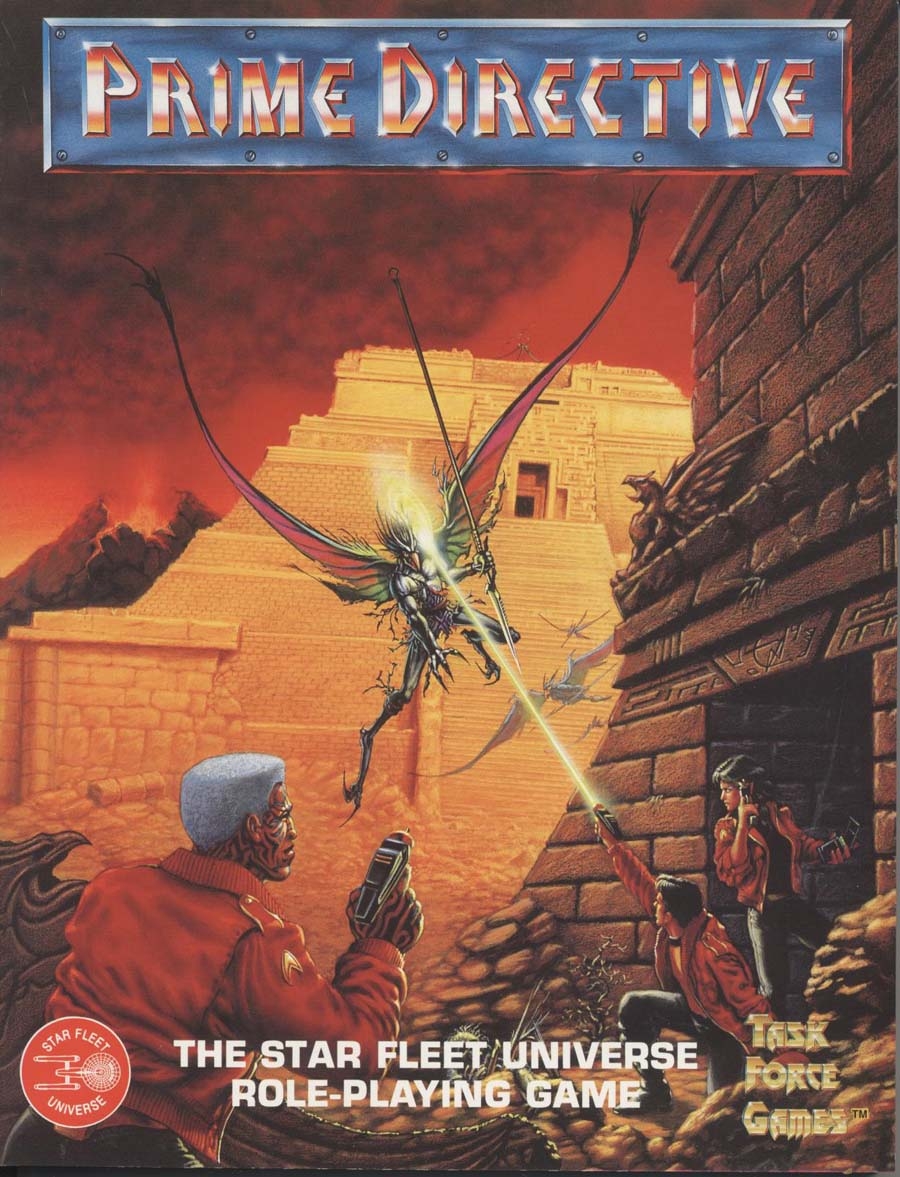
Prime Directive: The Star Fleet Universe Role-Playing Game (Task Force Games, 1993)
Task Force Games, then the holders of a perpetual Star Trek license from Paramount, delved into the RPG world with Prime Directive in 1993. It was not very successful. Reading the core rulebook, it is very hard to find a line that comes right out and says, “The character dies.” To find rules for character death you must read rule 6.3 SURGERY:
A character who has taken MORE points of Lethal Damage than his Lethal Capacity is dying. He will die in a number of minutes equal to his Lethal Capacity minus the number of points of Lethal Damage he has taken over his Lethal Capacity.
For example: A character with a Lethal Capacity of 8 has taken 10 points of Lethal Damage. If not attended to, he will die in 6 minutes (10 points is 2 points over his Lethal Capacity of 8; 8 minus 2, which is the amount he went over by, equals 6.). Note that, under this rule, a character that takes twice his Lethal Capacity in Lethal Damage is dead, dead. dead.
If First Aid, or other restorative methods can reduce the amount of Lethal Damage a character has taken to less than or equal to his Lethal Damage capacity, the character is no longer in immediate danger of dying. If, however, after all possible assistance has been rendered, the character STILL has Lethal Damage in excess of his Lethal Capacity, his only hope for survival is Surgery. (6.3 SURGERY, p. 95)
The SURGERY TABLE gives the range of possible Effects of Surgery. Of relevance to this conversation, with a Failure, “Character is still dying. Repeat Surgery task with standard mods and rules for Repeated Task Attempts, or character dies” (p. 95). Of course, on a task result of Botch, “Character dies” (p. 95).
Like FASA Star Trek, in Prime Directive every good Star Fleet officer needs a good doctor supporting them. Except for the Red Shirts, of course…
Marc Miller’s Traveller (Imperium Games, 1996)
Also referred to as Traveller 4, this is a revamp of the Traveller RPG with a different core game mechanism. In character generation the possibility of death was replaced with Injury:
Injury: The life of an interstellar traveller can be hazardous, especially for those in the military. During each term of service, a character must successfully roll his career’s injury number or less to avoid being injured in the line of duty. Each service has DMs that may apply.
Failure to successfully pass the injury roll results in an honorable discharge. Roll one die and divide it by two, rounded up. This reveals the number of years the character completed in the current four-year term. The character leaves the service (recovered from the injury) having served less than the full term. This term is not counted for the mustering out benefits explained on page 22. (Character Generation, Step 4: Pursing a Career, Injury, p. 21)
The rules do not provide any guidance on what the injury is, only that one is suffered. Hmmm…
Although the core game mechanism in Traveller 4 is different from Classic Traveller the system’s basic approach to wounding and death is the same; i.e. one characteristic at 0 is unconscious, two characteristics at 0 is seriously wounded, and three characteristics at 0 is dead. Unlike Classic Traveller, however, Traveller 4 has an escape clause or, as I like to call it, the “popsicle death option”:
Characters who have suffered sufficient damage to reduce all three characteristics to zero have been killed. However, assuming the brain is not destroyed, it can survive without damage for roughly five minutes after the heart has stopped. If the referee allows, the character may be saved if he is placed in a low passage berth within five minutes of having been killed. If the character makes a successful survival roll for the low passage, he may then be treated at a specialized medical facility on a world with tech level of at least 11, and with a successful test of the Medical skill at Staggering level of difficulty. If this test succeeds, the character heals one point to one characteristic each week until all characteristics return to half their original levels. After that, he recovers one point to one characteristic each day. The character must spend the entire recovery time in the hospital, however. If the Medical skill roll is failed, the character could not be saved. (Ground Combat, Resolving Wounds, Death, p. 58)

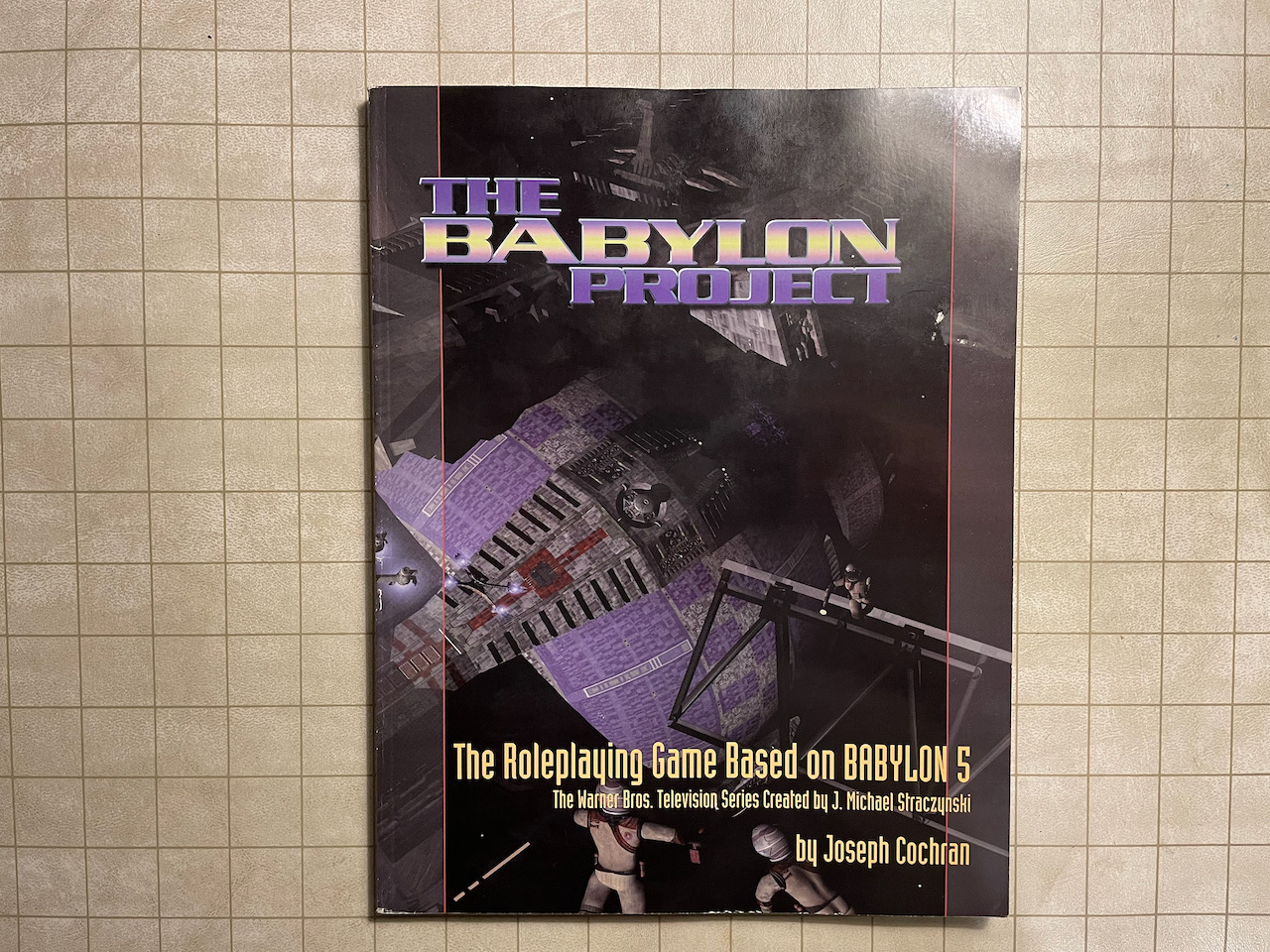
The Babylon Project: The Roleplaying Game Based on BABYLON 5 (Chameleon Eclectic, 1997)
Character death in The Babylon Project comes in two forms: Immediate Effects and Final Effects. In combat, players compare the damage to a hit location and, “If the indicated space is solid black, bad news: the wound or injury is instantly fatal, and the victim is dead” (Chapter 2: Game Mechanics, Combat, Wounds and Injuries: Immediate Effects, p. 108). Even if the character survives combat, what happens after combat is determined with Final Effects:
Once combat is over and the action has died down, it’s necessary to determine the longer-term, more detailed effects of injuries and wounds, including any life-threatening blood loss, secondary effects like broken bones, and the character’s longer term impairment. (Chapter 2: Game Mechanics, Combat, Wounds and Injuries: Immediate Effects, p. 108)
One possible Final Effect is bleeding. When called for, players calculate a, “Bleed Number, the number of minutes before the character will bleed to death if medical attention isn’t administered” (p. 110). At this point other Secondary Effects are determined. Some Secondary Effects have an “E” result meaning the character will eventually die; they get worse over time instead of better. That eventuality is measured in Decline time. In other cases the damage considered for Secondary Effect is just too much and the character gets an “M” result which indicates the maximum damage is exceeded. At this point, the rulebook for The Babylon Project actually goes silent and basically leaves the final part unspoken: “Finally, you may run into a blue bar with an “M” at the left end. If that’s the case, you’ve exceeded the maximum damage that can be sustained by that body zone” (p. 112).
All of which is to say that characters can die in The Babylon Project, eventually.
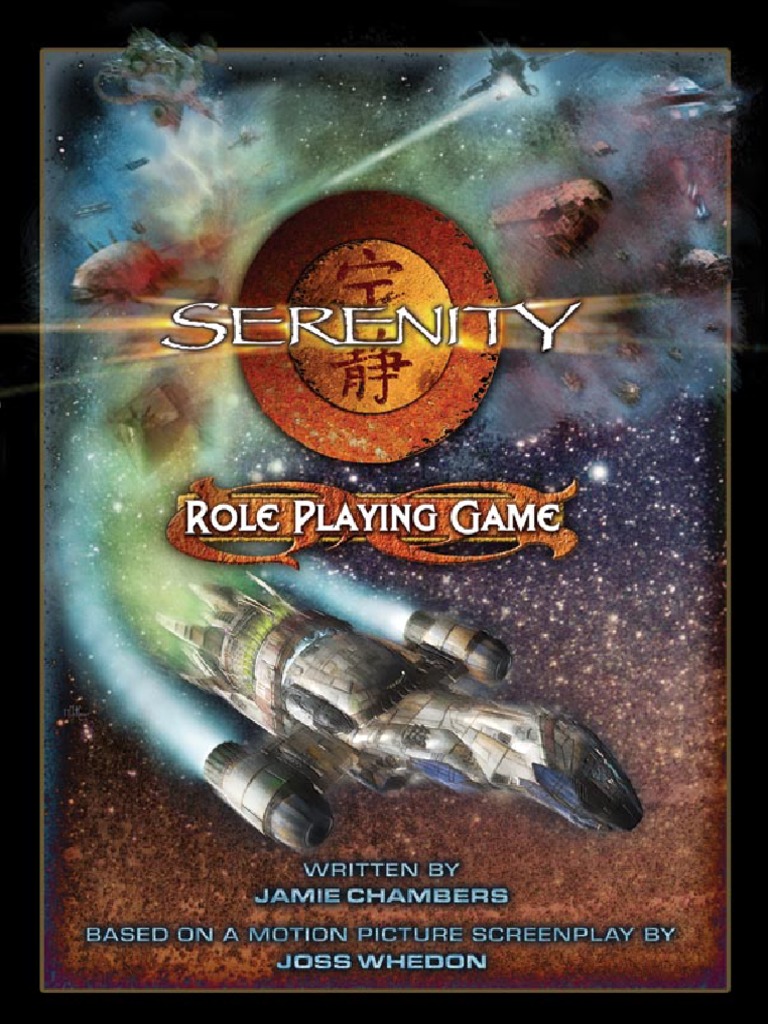
Serenity: Role Playing Game (Margaret Weis Productions, 2007)
Written by RPG designer Jamie Chambers, this book is considered one of the first in the Cortex game engine series and as such became known as Cortex Classic. In Cortex Classic the combat model uses Life Points which can be wounded to the point of death:
Dying: When your Wound damage equals or exceeds your total Life Points, you must make an Endurance check every minute or be dead. The good news is the check starts off Easy, but you must repeat it every minute with a cumulative +4 to the Difficulty—so first aid is definitely advised. If your total Wounds ever equal a number that is double your total Life Points, you are dead in a most brutal fashion with no chance of salvation (at least the worldly variety). Time to work on that new character. (Chapter 5: Keep Flying, Taking Damage, 3. Fallout, Dying, p. 157)
The same Dying rules are used in another Cortex Classic title, Battlestar Galactica: Role Playing Game (Margaret Weis Productions, 2007) appearing on page 95.

Mouse Guard Roleplaying Game (Archaia Studios Press, 2008)
Mouse Guard, based on the comic books of David Petersen, uses The Burning Wheel game engine designed by Luke Crane. This was my first, and only, foray into The Burning Wheel game engine which is a highly narrative approach to roleplaying games. Death in Mouse Guard is an accepted reality but the stakes must be announced beforehand:
DEATH AND KILLING
Your mouseguard character could be killed in the line of duty. It’s a real risk. And your guardmouse character might be forced to take another life while in service to the Guard. It’s a tragic fact.
Death cannot be the result of a single independent or versus test. A character or his opponent may only be killed as part of a goal of a conflict. You’ve got to tell your opponent outright that you’re trying to kill him. (Resolution, Death and Killing, p. 130)

Savage Worlds: Explorer’s Edition (Pinnacle Entertainment Group, 2008)
Savage Worlds bills itself as, “Fast! Furious! Fun!” As such, the rules certainly skew towards more cinematic—even pulp-like—action. In more than a few ways the combat rules in Savage Worlds are akin to a miniatures skirmish wargame.
Exactly how many wounds the character takes is irrelevant—anything over 3 wounds means Incapacitation.
Incapacitated characters are too beaten, battered, or bruised, to do anything useful…See the Incapacitated Heroes chart on the previous page for what happens next. (Chapter Three: Game Rules, Damage Effects, Incapacitation, p. 76)
The Incapacitation table calls for an immediate Vigor [Trait] roll. Only in the event of a Critical Failure (double-1s on Trait and Wild Die) does the character die (p. 75). This very-hard-to-die set of rules is well in keeping with the highly cinematic flavor of Savage Worlds.

Thousand Suns (Rogue Games, 2008)
This first edition of Thousand Suns ran on the 12º game engine which I commonly refer to as the “2d12 Game Engine.” A key character attribute in Thousand Suns is Vitality the status of which is directly tied to character damage and possible death:
When your character is reduced to 0 or less Vitality, he is unconscious and will die in a number of Rounds equal to his Body Rank unless he receives medical attention. A successful Medical Sciences test is sufficient to stabilize a wounded character for one hour and prevent his immediate death. However, if he does not receive such attention another Medical Sciences Test must be made each hour thereafter. Failure results in death. (Chapter 4: Action, Personal Combat, Damage, p. 118)

Traveller: Pocket Rulebook (Mongoose Publishing, 2008) aka Mongoose Traveller 1st Editon (MgT1e)
In MgT1e, death in chargen was…dead. What started as an optional rule in early Traveller was now standard procedure:
Survival: Each career has a survival roll. If you fail this roll, roll on the mishap table. This mishap is always enough to force you to leave the service. You lose the benefit roll of the current term only. A natural 2 is always a failure. (Core Rulebook Pocket Edition, Character Creation, Careers, Career Format, Survival, p. 8)
While death in character generation was gone, adventuring in MgT1e was basically still the same deadliness of the earlier version:
Damage is applied initially to the target’s Endurance. If a target is reduced to Endurance 0, then further damage is subtracted from the Target’s Strength or Dexterity (target’s choice, but all the damage from a single attack must be subtracted from a single characteristic). If either Strength or Dexterity is reduced to 0, the character is unconscious and any further damage is subtracted from the remaining physical characteristic. If all three physical characteristics are reduced to 0, the character is killed. (Core Rulebook Pocket Edition, Combat, Damage, p. 65)
First Aid can be rendered to any character even if they are dead provided it is within five minutes for double the Effect [amount of roll in excess of needed] in restored Characteristic points or one hour for restored points equal to Effect (Medical Treatment, First Aid, p. 75). Surgery can only be used to help seriously wounded characters, meaning a dead character needs a successful First Aid check to become eligible for Surgery (p. 75).
It is interesting to me that MgT1e lets characters continue acting even if Endurance is 0; a character is not unconscious until Strength or Dexterity is 0. That actually makes it a bit less-lethal a combat model than classic Traveller.

Smallville: Roleplaying Game (Margaret Weis Productions, 2010)
While Smallville still technically uses the Cortex game engine the arrival of Cam Banks as the new lead designer meant the core game mechanisms took off in a different direction. Smallville is recognized as a Cortex+ game design. Cortex+ emphasizes narrative play and characters no longer have Life Points. Instead, damage was accounted for by Stressing Out (p. 56) and a conflict could end with Giving In:
When you Give In, you must comply with your opposition’s most recently telegraphed action. If she was demanding information, you must describe your character spilling the beans. If she was throwing a punch, you must describe your character taking the hit…Don’t soft-pedal this—when you Give In, it’s your job to sell the opposition’s victory. It costs you nothing to make her look awesome, and the more awesome at the table, the more fun everybody will have. (Rolling Dice, Contests, Scenes, Giving In, p. 56)
So, if a character Gives In and must accept the consequences, what is to stop a player from killing the other? Does the dying player have to accept death? The rules in Smallville at this point devolve into a discussion:
PLAY ADVICE: I Kill You
In all the chaos of a developing episode, character’s usually have more immediate goals than offing each other. Most reasonable people aren’t going to default to lethal force. Sometimes, however, a Lead or Feature may come to the chilling realization that extreme measures are necessary. When things get that serious, “I Kill You” is a perfectly legal telegraphed intention. You can start a contest with that. Remember, though, that your winning the Contest does not mean your target is dead. The only way to kill another character in a Contest is if that character’s player Gives In and accepts the death penalty. So good luck with that. (p. 60)
Doctor Who: Adventures in Time and Space (11th Doctor) (Cubicle 7 Entertainment, 2012)
Doctor Who is a pacifist roleplaying game. That’s not my opinion but a bold claim from the writers:
PACIFISM
This is certainly an area where Doctor Who: Adventures in Time and Space is different from other roleplaying games. Many games thrive on combat and violence – faced with an invading species? Blast ’em out of the sky, charge in with your guns blazing and send ’em packing! Well, that may be the way the 51st Century Church works, but it’s not the way the Doctor does things! (The Player’s Manual, Chapter 4: “I’ll Be a Story in Your Head…”, Recurring Themes, Pacifism, p. 94)
All of which makes it seemingly incongruent that the rules of Doctor Who specify that death is a possible outcome from losing a conflict, especially a physical one. Certain weapons (well, just one weapon—Lasers—in the Player’s Manual) inflict Lethal (‘L’) damage…unless it is a character hit:
On an ordinary Success or Failure, the character escapes instant death and the ‘L’ should be treated as a number, albeit a high and suitably dangerous one (which is usually given), otherwise Story Points are your only chance for survival. If you haven’t any of these it may be that your character’s number is up. The Gamemaster will discuss this with you though it may be worth taking a look at ‘Dying or Leaving the TARDIS’ on pg. 78. (Player’s Manual, Chapter 3: Geronimo!, Losing a Physical Conflict, Levels of Injury, Lethal, p. 69)
The rules guidelines in ‘Dying or Leaving the TARDIS’ make it even more difficult for a character to die:
Without Story Points to save you, taking too much damage can be fatal and a single unlicky hit from a ‘Lethal’ class weapon will put an end to the character’s adventures. If that seems harsh, you can just have the character be knocked unconscious and captured, or you can allow another character to spend Story Points on their behalf, pushing them out of harm’s way. [My emphasis] (Player’s Manual, Chapter 3: Geronimo!, Healing, Multiple Injuries and Reduced Attributes, Dying or Leaving the TARDIS, p. 78)
Marvel: Heroic Roleplaying (Margaret Weis Productions, 2012)
Marvel: Heroic Roleplaying is another Cam Banks/Cortex game engine design. In Marvel, a “Stressing Out” game mechanism similar to that seen in Smallville appears, but here it is mixed with Trauma—emotional, physical, or mental—measured in step dice (d4, d6, d8, d10, d12) which can grow given enough Stress:
If you’re already stressed out in a Scene and take more stress, it translates directly to trauma. If the new stress is larger than the existing trauma of that type, replace the existing trauma with that rating. If it’s equal to or smaller, step up the trauma by 1. You can spend a PP [Plot Point, the game’s metacurrency] to shift the stress to a different type, as usual, which may keep your trauma from getting worse. If any kind of trauma is stepped up beyond D12, your hero is dead, in a vegetative state, or otherwise out of the game. This isn’t necessarily the end for him, of course. People in the Marvel Universe have come back from far worse! (Effects: Assets, Stress, and Complications, Stress, Stressing Out and Taking Trauma, p. OM24)
Characters in Marvel: Heroic Roleplaying reduce trauma slowly. “In game terms, trauma steps back by one at the start of every new Act” (p. OM27). This is handled by a recovery action (see pp. OM26-27). If your superhero has a D12 trauma die and wants to get back in the action next Act, well, they can but the risk of carrying that D10 trauma die also means they are likely to be out of action first. Perhaps it is a good time to find that fortress of solitude and rest up instead. [Whoops, wrong comic universe!]
A Song of Ice and Fire: Roleplaying A Game of Thrones Edition (Green Ronin, 2012)
A Song of Ice and Fire uses Green Ronin’s Adventure Game Engine (AGE). In keeping with the grim aspects of A Game of Thrones setting, character death is a very strong possibility:
If at any time your Health drops to 0 or lower, you are defeated and removed from the combat. The opponent that defeated you decides what happens to you. Common choices include any of the following. Remember, defeat by a Vicious weapon always results in death. (Chapter 9: Combat, Defeat & Consequences, p. 165)
The five choices in defeat given are:
- “Death – This outcome is the most common when defeated.”
- “Maimed“
- “Ransom“
- “Take the Black – …join the rangers on the Wall. For many, this is a fate worse than death… .”
- “Unconscious – …This fate is often the same as death.” (Chapter 9: Combat, Defeat & Consequences, p. 165)
Players in fear of defeat can Yield and choose the outcome rather than having it imposed on them; that is, if the Narrator allows it (Yielding, p. 165). Players also can use a Destiny Point [game metacurrency] to change the outcome the opponent chooses (Destiny & Defeat, p. 165).
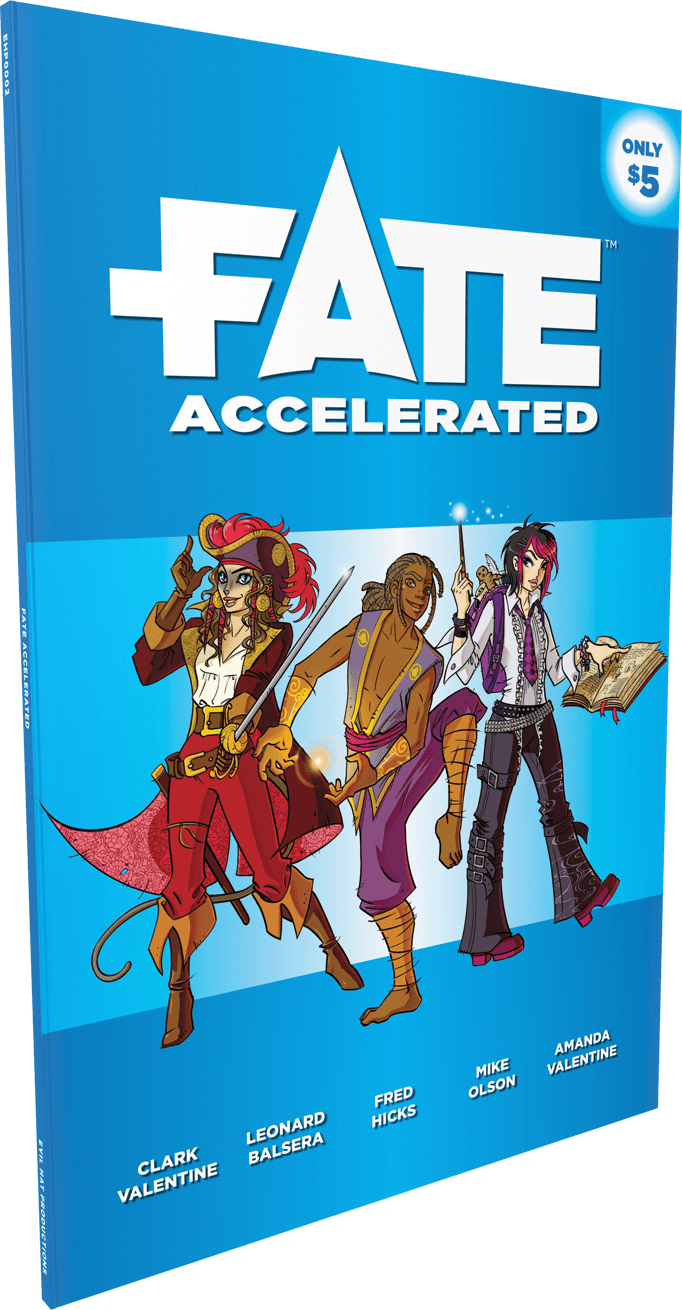
FATE Accelerated (Evil Hat Productions, 2013)
FATE Accelerated (FAE) is very much a storytelling RPG system that, frankly, avoids the whole character death issue.
If you are unable to absorb all of a hit’s shifts—by checking a stress box, taking consequences, or both—you’re taken out.
WHAT HAPPENS WHEN I GET TAKEN OUT?
If you get taken out, you can no longer act in the scene. Whoever takes you out narrates what happens to you. It should make sense based on how you got taken out—maybe you run from the room in shame, or maybe you get knocked unconscious. (Ouch! Damage, Stress, and Consequences, What Happens When I Get Taken Out, p. 23)
Run. From the room. In shame. [Sigh] I guess this makes FATE Accelerated the ‘Scooby Do’ of RPGs, eh?
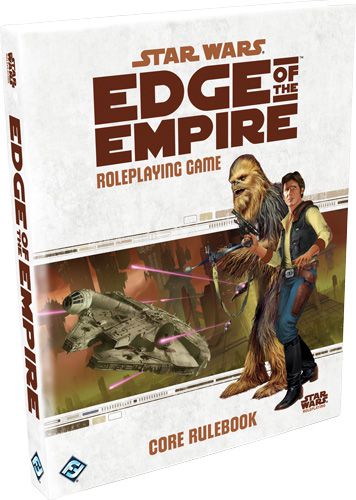
Star Wars: Edge of the Empire Roleplaying Game (Fantasy Flight Games, 2013)
Edge of the Empire was the first in a family of RPGs using Fantasy Flight Games’ then-new GENESYS game engine. In Edge of the Empire, “character health is tracked using two separate yet similar systems: strain and wounds” (Chapter VI: Conflict and Combat, Wounds: Strain, and States of Health, p. 215). In the course of play, damage inflicts wounds which are applied against the characters’s wound threshold:
EXCEEDING WOUND THRESHOLD
When a PC suffers wounds greater than his wound threshold, he is knocked out and incapacitated until his wounds are reduced so that they no longer exceed his wound threshold (likely through healing). He also immediately suffers one Critical Injury. In some rare and dire circumstances, this could result in PC death. (Chapter VI: Conflict and Combat, Wounds: Strain, and States of Health, p. 215)
A look at TABLE 6-10: CRITICAL INJURY RESULT on page 217 shows three results that are potentially fatal. If the d100 roll is 131-140 (i.e. a very high d100 roll plus many modifiers) the result is “Bleeding Out” where the target suffers one additional wound and one additional strain every turn; for every five wounds beyond wound threshold an additional Critical Injury is suffered. If the modified Critical Injury roll is 141-150, then “The End is Nigh” and the character, “will die after the last Initiative slot during the next round.” Finally, if the modified Critical Injury roll is 151+, then the character is immediately, “Dead: Complete, obliterated death.”
Traveller5: Science-Fiction Adventures in the Far Future (Far Future Enterprises, 2013)
See Traveller5 v5.10 (2019).
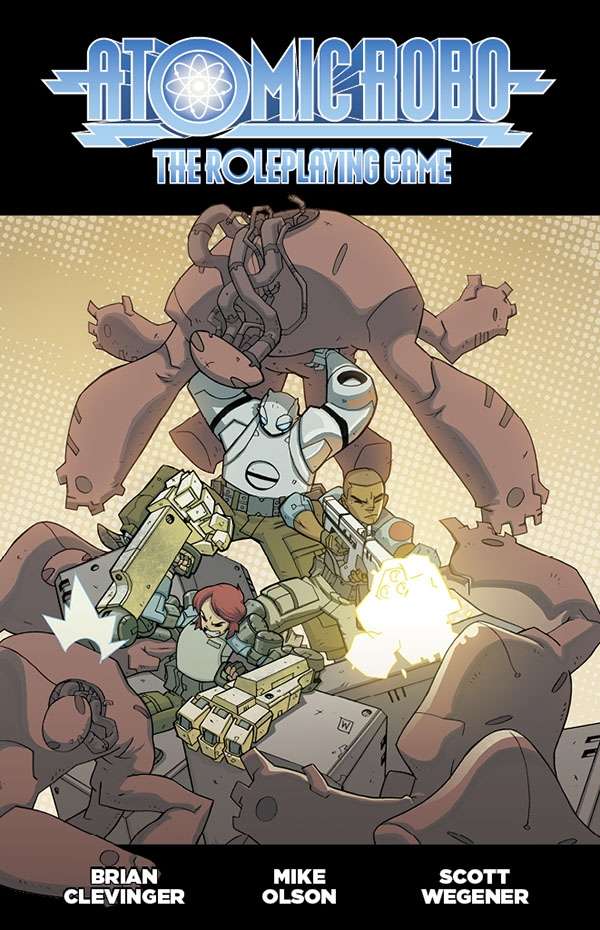
Atomic Robo: The Roleplaying Game (Evil Hat Productions, 2014)
Atomic Robo leverages the Fate Core System. As such, is uses the same “Taken Out” game mechanism as seen in FATE Accelerated above. When it comes to character death, however, there is no rule but (an extended) discussion.
CHARACTER DEATH
So, if you think about it, there’s not a whole lot keeping someone from saying, after taking you out, that your character dies. If you’re talking about a physical conflict where people are using nasty sharp weapons, it certainly seems reasonable that one possible outcome of defeat is your character getting killed.
In practice, though, this assumption might be pretty controversial depending on what kind of group you’re in. Some people think that character death should always be on the table, if the rules allow for it—if that’s how the dice fall, then so be it.
Others are more circumspect, and consider it very damaging to their fun to lose a character in whom they’ve invested hours and hours of gameplay, just because someone spent a lot of fate points or their die rolls were particularly unlucky.
However, consider this: most of the time, sudden character death is a pretty boring outcome when compared to putting that same character through hell instead. All the story threads that character was connected to just kind of stall with no resolution, and you have to expend a bunch of effort and time figuring out how to get a new character into play mid-stride.
That doesn’t mean there’s no room for character death in a game, however. Just save that possiblity for conflicts that are extremely pivotal, dramatic, and meaningful for that character—in other words, conflicts in which that character would knowingly and willfully risk dying in order to win. Players and GMs, if you’ve got the feeling you’re in that kind of conflict, talk it out when you’re setting the scene and see how people feel.
At the very least, even if you’re in a hardcore group that invites the potential for character death on any taken out result, make sure that you telegraph the opponent’s lethal intent. GM, this is especially important for you, so the players will know which NPCs really mean business and can concede to keep their characters alive if need be. You can hint at it—”The Murderbot invokes its aspect of Merciless Killing Machine!”—or you can outright tell the players what they’re up against. “It looks like this guy will stop at nothing to kill you” may not be subtle, but it gets the point across. (Chapter Seven: Challenges, Contests, and Conflicts, Conflicts, Getting Taken Out, p. 124)
Firefly: Role-Playing Game (Margaret Weis Productions, 2014)
Apparently finding success with the Cortex+ game engine, designer Cam Banks overhauled Serenity (2007) using the Cortex+ System and and released Firefly in 2014. Characters in Firefly do not have Life Points but earn Complications in conflict. Similar in some ways to how character death was addressed in Smallville, the topic is found in a text call-out box of advice.
DEATH AND DYING IN FIREFLY
The Firefly RPG is all about Crews getting out of trouble by the skin of their teeth—especially when trouble comes their way. That’s why in most sessions a D12+ Complication won’t kill a character, but it certainly will put that Crewmember in the medbay for some time. To manage life-threatening injuries in your game, talk with your players beforehand. Decide what being Taken Out implies and what’ll happen to them if they get a D12+ Complication. If they decide that death is on the table, be prepared for a thrillin’ adventure! (p. 268)

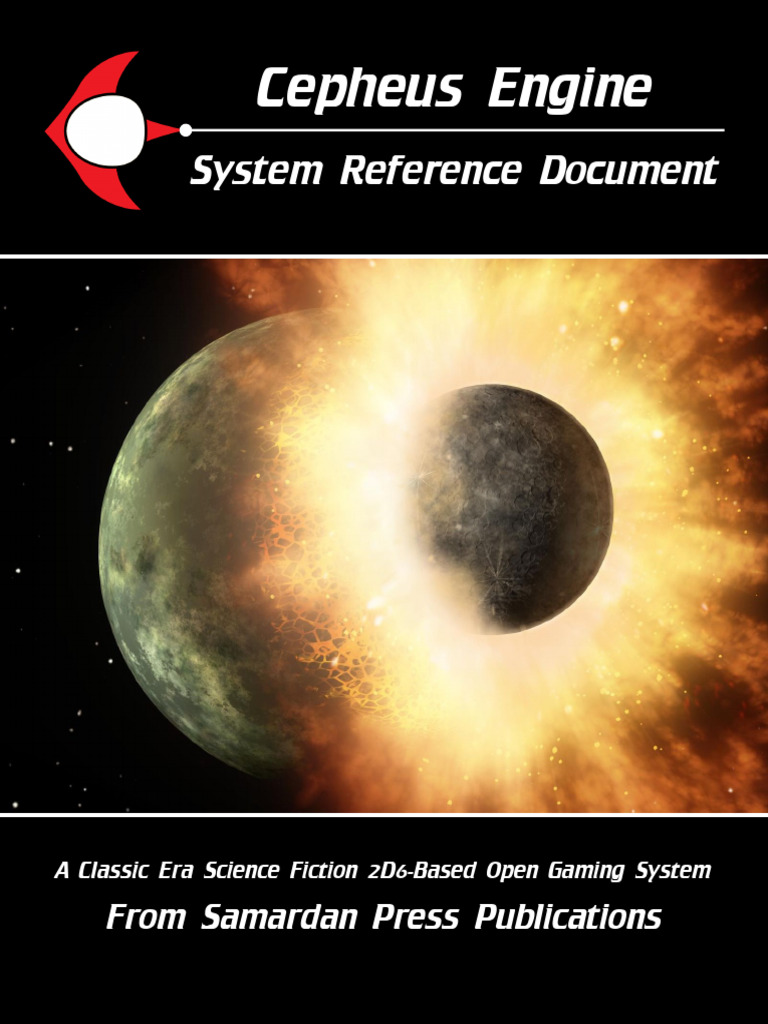
Cepheus Engine System Reference Document: A Classic Era Science-Fiction 2d6-Based Open Game System (Samardan Press Publications, 2016)
Long before Lizards Wizards of the Coast tried to end the Open Game License, the Traveller RPG community faced a similar crisis. It was 2016 and Mongoose Publishing released Mongoose Traveller 2nd Edition but with a new licensing agreement (or disagreement, if you prefer). In response to the legal actions of Mongoose, Jason “Flynn” Kemp of Samardan Press released the Cepheus Engine System Reference Document derived from the Traveller System Reference Document and other Open Gaming License content.
Cepheus Engine is, essentially, the rules of Traveller stripped of any Third Imperium or Charted Space setting material. As such, it is in many ways both an updated version and spiritual successor to 1981 GDW Traveller and 2008 Mongoose Traveller 1st Edition. Death in character generation is a mix of both the previous rules sets:
Survival
Each career has a survival roll. If you fail this roll, your character is dead, and you must create a new one. A natural 2 is always a failure
Optional Rule: With the Referee’s approval, you can keep the character that fails a survival roll and roll on the Survival Mishaps table instead. This mishap is always enough to force you to leave the service after half a term, or two years of service. You lose the benefit roll for the current term only. (Book One: Characters, Chapter 1: Character Creation, Careers, Survival, p. 28)
Character death in Cepheus Engine in combat is similar to previous Traveller games. One characteristic damaged (reduced but >0) = wounded, all three characteristics damaged = seriously wounded, two characteristics at 0 = unconscious, and three characteristics at 0 = DEAD. First Aid, Surgery, and Medical Care all speed up the healing process and can treat serious wounds. (Book One: Characters, Chapter 5: Personal Combat, Damage and Injury and Recovery, p. 98)
The Cepheus Engine System Reference Document is the core game engine running several alternate settings or expanded game engine rules including:
- Clement Sector: An Alternate Cepheus Engine Universe (Independence Games , formerly GypsyKnights Games, 2016 thru present)
- HOSTILE (Zozer Games, 2021 thru present)
- Cepheus Deluxe: Science Fiction Role-Playing Game (Stellagama Publishing, 2021)
- Scavengers: Caches and Prizes (Joel Kriessman, 2025)
- Orbital 2100 Third Edition (Zozer Games, 2025) – Technically uses the Cepheus Universal rules which is an evolved version of Cepheus Engine.
In each of these settings character death—or injury—during character generation or in combat operates in accordance with the Cepheus Engine System Reference Document.
The Expanse Roleplaying Game (Green Ronin, 2019)
The Expanse leverages Green Ronin’s Adventure Game Engine (AGE) similar to that used in A Song of Ice and Fire from 2012 and discussed above. Similar, but not the same. In The Expanse, once attack damage is determined the player subtracts Toughness (including armor) and may spend Fortune [game metacurrency] to reduce the damage. If damage remains, the target player must take an injured or wounded condition that further reduces the remaining damage. If any damage remains after taking a condition, the character is Taken Out which imposes yet another condition:
TAKEN OUT
If damage remains after applying Toughness, Fortune, and taking an injury or wound, then the target is taken out of the encounter. The attacker may choose to impose any one condition from the list in CHAPTER 1 that is reasonable for the type of attack which takes out the target. So, for example, an attacker may choose to take out a target with a gunshot and leave them dying, wounded, or even just unconscious, if the GM agrees that’s reasonable and that the shot may have just stunned the target due to armor or the like. Similarly, a target taken out by a roundhouse punch or kick might be unconscious or even dying, or merely exhausted. The key point is that the attacker decides on the target’s condition. (Chapter 5: Game Play, Applying Damage, Taken Out, p. 89)
Conditions appear in a CONDITION LIST in Chapter 1: The Basics starting on page 20. Twelve Conditions are listed (unhelpfully) in alphabetical order vice severity. The Expanse leaves it up to players and the GM to decide which conditions are appropriate to injury or wound and which are more appropriate to use when Taken Out.
“Dying” is one of the Conditions listed on page 20:
DYING. The character is in danger of perishing. A dying character loses 1 point of Constitution score each round of the start of the character’s turn. When the character’s Constitution score reaches -3, the character dies. Successful first aid applied to a dying character stabilizes their condition, making them helpless, unconscious, and wounded instead. They must recover from these conditions normally (see Interludes in Chapter 5). (Chapter 1: The Basics, Condition List, p. 20)

Mörk Borg (Free League Publishing, 2019)
“Mörk Borg is Swedish for DARK FORT and is pronounced MURK BORG” – Frontpages, p. 5
If you have never picked up Mörk Borg or any other -Borg series RPG you have really missed out on a unique RPG experience. As the publisher’s blurb states:
A DOOM METAL ALBUM OF A GAME. Rules light. Art heavy. MÖRK BORG is blackened artpunk/OSR about ill-fated bastards seeking redemption, forgiveness or just the last remaining riches of a world that is plunging ever faster to its inevitable ruin. An art book you can play. A spiked flail to the face. (via BGG)
Don’t look for a “combat” chapter in the rules for Mörk Borg; instead, go straight to the rules for “Violence.” The damage rules are explained in one simple graphic:

Negative Hit Points and your character is D-E-A-D dead. Move along…
Traveller5: Science-Fiction Adventures in the Far Future v5.10 (Far Future Enterprises, 2019)
Traveller5 was first released in 2013 in one large book. That format was very hard to read and in 2019 a new v5.1 was released in a three-book format harkening back to the early days of Traveller and the Little Black Books (LBB). While T5 visually looks like LBB Traveller, the game engine was given a complete overhaul by designer Marc Miller and is very, very different.
T5 is, at the end of the day, more of a toolkit than an actual roleplaying game with a setting. I personally consider T5 in the same game space as the Cortex Prime Game Handbook (Fandom Tabletop, 2019) or GENESYS Core Rulebook (Fantasy Flight Games, 2017) or the Cepheus Engine System Reference Document (Samardan Press, 2016), all of which provide game engines that settings can be built upon. One of the best examples out there is The Clement Sector setting by Independence Games built on Cepheus Engine.
There are many people out there who intensely dislike T5, especially the nD or multiple-d6 task resolution system where the number of dice thrown is related to the difficulty of the task and a requirement to roll-under a target number. The simple Classic Traveller skill roll of 2d6 ≥ 8 with a positive DM from a characteristic and/or skill instead becomes:
- Average Task: 2D ≤ Characteristic + Skill + Mods1 + Mods2. Roll Low: The Task succeeds if the Die Roll is equal to or less than the total of all Assets. (Book 1, The Task Cycle, p. 120)
T5 also uses a concept called Flux where one d6 is subtracted from another d6 to produce a result from between -5 to +5.
All that background is important to understand the different approach T5 uses for death in character generation and in combat. In T5 the survival roll in a career term is replaced by Risk which goes hand-in-hand with the chance of a Reward.
Risk and Reward
Risk and Reward uses a standard sequence.
Select the CC Controlling Characteristic: Note the Series of Characteristics Available. The player picks one of these Characteristics (any one in the sequence ) and it becomes the CC Controlling Characteristic: it governs Risk and Reward for the current Term. This Controlling Characteristic cannot be used again until all of the others in the sequence have been used.
Once Per Term. Risk and Reward is rolled once per term and reflects all of the activity within the term.
Caution, Bravery, or No Mod. Before rolling Risk, the Character may (but is not required to) select any Cautious Mod +1 through +9 or any Bravery Mod -1 to -9. This Mod is applied with an opposite sign to the Reward Roll.
The Armed Forces (Soldier, Spacer, Marine) Careers require Mods for Branch and Operations: these Mods are negative toward the Risk Roll and Positive against the Reward Roll.
A positive Mod increases the chance of succeeding at Risk and failing at Reward; a negative Mod increases the chance of failing at Risk and succeeding at Reward. [“No risk, no reward!”]
The character rolls for Risk (2D ≤ Characteristic + Mods) and determines the outcome. He rolls again for Reward (2D ≤ Characteristic – Mods) and determines the consequences.
If The Risk Roll Fails
The character may be injured (or worse). Reduce the Controlling Characteristic by all negative Mods; ignore any positive Mods. Finally, roll Flux (which may compensate for the injury, or exaggerate it) and apply.
Unchanged. If the Controlling Characteristic is at or above its original value, retain the original value. The Character is unharmed.
Reduced. If the Controlling Characteristic is reduced, the Character has been wounded and receives a Wound Badge. The Characteristic is permanently reduced.
Disabled. If the Controlling Characteristic is reduced by 4 points or more, the Character is disabled and must Muster Out at the end of the Term (and is allowed Double Benefits).
Dead. If the Controlling Characteristic is reduced to zero or less, the Character is dead. (Core Book 1: Characters, Character Generation, D – Selecting and Resolving a Career, The Process, Risk and Reward, p. 65)
As deadly a setting Traveller can be, the rules in T5 actually make it hard to die from combat. The difficulty of dying in combat is in part because the rules call for immediate character death in only a few exceptional cases:
- Aging – The second time that Aging Rolls reduce the three physical characteristics to zero the character is dead (Book 1, p. 89)
- Quick Kill (QK) – If an overwhelming attack—a single hit scoring damage greater than the sum of the three physical characteristics—hits an aware and unarmored target, the target instantly dies (Book 1, p. 200)
- Behind the Scenes Damage (BTSD) – A modified roll of -7 or greater on BTSD results in death (Core Book 1, p. 232)
In the combat sequence, wound and death is determined after combat. During combat, a character can continue acting and only falls unconscious once a single physical characteristic is reduced to 0. [Or is it two? A combat example on page 224 says unconscious after a single characteristic at zero but Out of Action (OOA) on Combat Chart C2 (p. 211) states, “A being with Two Characteristics at Zero is OOA.”] After the battle, players must roll for a Damage Location, Damage Severity, and Diagnosis Severity for each hit (not damage points but group of damage). For each injury, Immediate Action (i.e. first aid) can be applied to reduce the severity of the injury/wound to Easy 1D. At that point, a process of Diagnosis/Treatment begins where the wound/injury must first be diagnosed and then treated. Failure to properly Diagnose results in increasing severity. Failure to properly Treat results in increasing severity. The Diagnosis/Treatment loop continues until a successful Treatment which starts the Healing process. The rules, however, never come right out and say at what point that process is hopeless. One can infer from the Damage Severity table that once the severity exceeds Beyond [Impossible] 8D and shows “Destroyed” that the character has finally died—but it is never explicitly stated (Core Book 1: Characters and Combat, Fighting, Personal Combat, pp. 200-223).

ALIEN: The Roleplaying Game (Free League Publishing, 2020)
ALIEN uses the “d6 fork” of the Year Zero Engine Standard Reference Document (YZE SRD) where characters possess a Health score. If a character’s Health score drops to zero they are Broken:
BROKEN
If you drop to zero Health, you are Broken—in effect, taken out of the action. Immediately roll for a critical injury. If you’re not dead, you can crawl and mumble through the pain—you can’t perform any other actions and you can’t roll for any skills. You can’t go below zero Health, but each further attack that causes damage will give you another critical injury. (Chapter 5: Combat & Panic, Damage, Broken, p. 98)
Critical Injuries are found on the CRITICAL INJURIES table on page 100. To determine a Critical Injury the player makes an unmodified d66 roll. Of the 36 possible results, 15 are listed as “Fatal.” Of those 15 “Fatal” results, however, only four are “Instant Death” or alternatively “Your story ends here,” “You die immediately,” or “Your heart beats for the last time” (p. 100). For non-Fatal Critical Injuries one moves to the Death rule on page 99:
DEATH
If you suffer a critical injury listed as fatal, you must make a Death Roll when the listed time runs out. A Death Roll is a roll for STAMINA, but you cannot push the roll and you are not allowed to roll any Stress Dice. If the Death Roll fails you die. If you succeed you linger on but you must make another Death Roll when the listed amount of time has passed again.
Saving Your Life: To save your life when you have suffered a fatal critical injury, someone must give you first aid before you fail a Death Roll. (Chapter 5: Combat & Damage, Death, p. 99)
ALIEN also adds a touch of…morality in the face of death with a “Coup de Grâce” rule:
COUP DE GRÂCE
A broken character is defenseless. If it’s a human being and you want to kill your target outright, you must fail an EMPATHY roll (roll for the attribute only, without Stress Dice). Whether or not you succeed in killing your target, you increase your STRESS LEVEL by one—killing in cold blood is not that easy. If you have the Merciless talent, you can kill defenseless enemies without this negative effect. (Chapter 5: Combat & Damage, Coup de Grâce, p. 99)

Those Dark Places: Industrial Science Fiction Roleplaying (Osprey Games, 2020)
A wonderful example of a game having a great theme but poor luck in release timing, Those Dark Places ended up directly competing with ALIEN: The Roleplaying Game released in the same year:
This game has been designed with the science fiction horror genre in mind, films such as Alien, Aliens and Event Horizon, even films with the atmosphere of Blade Runner or Outland. It is also influenced by survival horror games like Dead Space. (Publisher’s blurb)
One game element Those Dark Places takes pride in is quick character generation rules. That quick chargen directly relates to character death, the subject of a special text box on page 28 that in just a few short sentences presciently addresses social media’s largest haters of character death:
CHARACTER DEATH
It’s a sobering thought – you’ve done your very best, but the character simply couldn’t make it through the horrors and has succumbed to the dark. It’s never a nice moment, and it can be quite upsetting, annoying, and downright inconvenient when a carefully crafted character meets a sorry end.
What does the player do now that their character has met their demise? Do they just sit the rest of the game out? Not necessarily.
The nature of character creation means that a player can create another PC quite quickly. All that remains is getting the new character into the action.
…
Character death doesn’t mean that the player has to lose out on the evening’s session, and a new character could introduce an entirely different dynamic to the group. (Character Death, p. 28)

The One Ring: Roleplaying in the World of The Lord of the Rings (Free League Publishing, 2021)
Unlike most other Free League Publishing RPGs that use the Year Zero Engine Standard Reference Document (YZE SRD), The One Ring uses a custom game engine. Character death in combat may come from accumulated wounds:
When Player-heroes are Wounded for the first time they immediately check the Wounded box on their character sheet, and then proceed to roll on the Wound Severity table below using a [d12] Feat die, to determine the extent of their injury (Chapter 6: Adventuring Phases, Combat, Wounds, p. 101)
One possible results on the Wound Severity table is “Grievous injury” where, ” You are knocked unconscious with zero Endurance and are now Dying (as if Wounded twice)” (p. 101).
DYING HEROES
Heroes are considered to be Dying if they are Wounded twice, or if they roll a [Eye of Sauron – 11] on their Wound severity roll (or as the result of some sources of injury — see page 133).
Dying heroes must receive a successful HEALING roll within approximately 1 hour or they will die.
If the roll is successful their life has been saved and they come back to their senses in about 1 hour, at 1 Endurance. If wounded, heroes must add 10 days to the time required for their injury to mend (minus the days removed by the HEALING roll).
Finally, their injury leaves a permanent mark (the details are up to the player — a scar, a limp, a missing finger). (Chapter 6: Adventuring Phases, Combat, Wounds, Dying Heroes, p. 101)

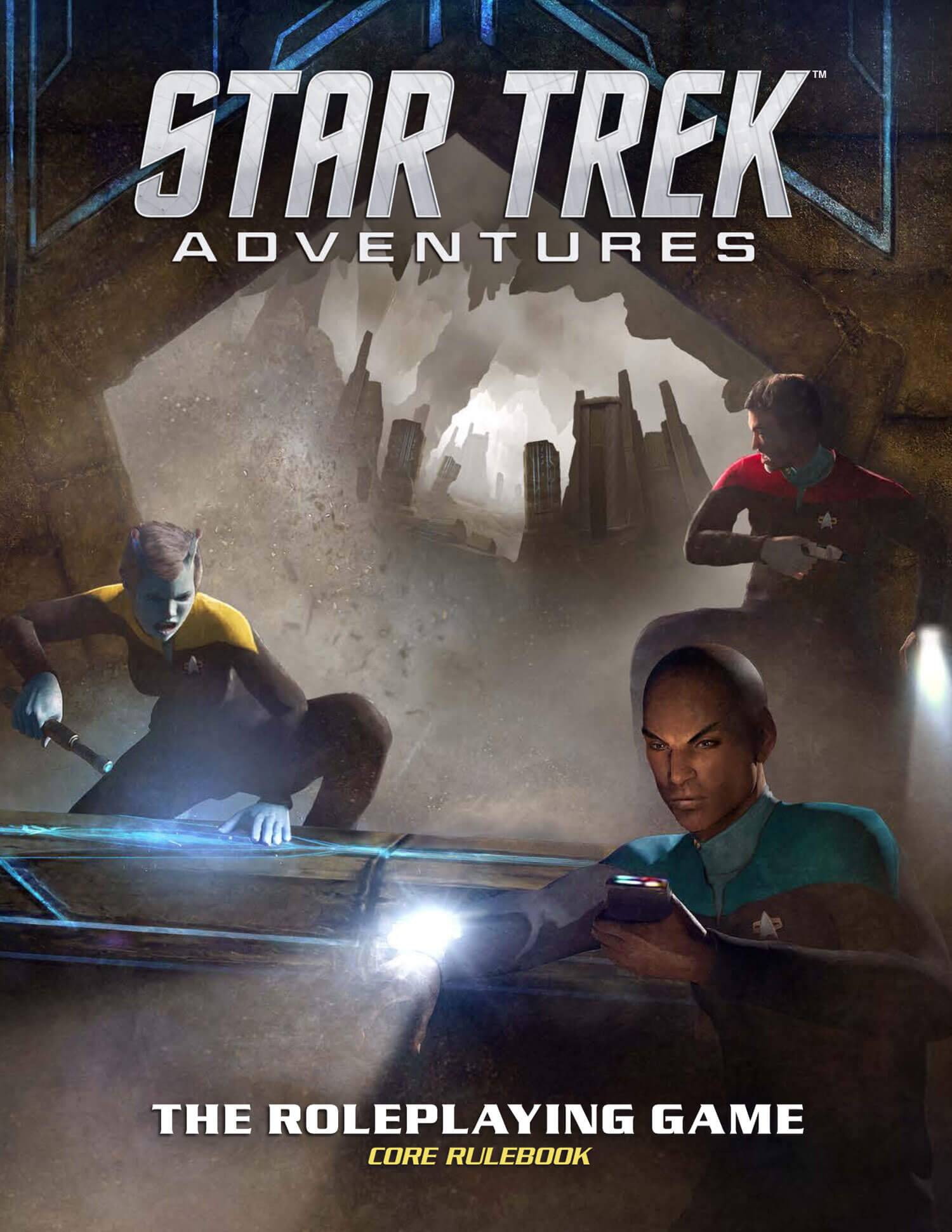
Star Trek Adventures (Mōdiphiüs Entertainment, 2021)
Star Trek Adventures uses a version of the Mōdipiüs 2D20 game engine. The key characteristic related to character death is Stress. Stress is a derived characteristic and is equal to a character’s Fitness + Security ratings. In combat, damage is expressed in terms of Stress. There are three conditions where accumulating Stress turns into injuries:
- “You suffer 5 or more Stress from a single attack or hazard, after reduction from Resistance.”
- “Your Stress track is filled by that attack or hazard.”
- “If your Stress track was full before the attack or hazard, and the attack or hazard inflicts any stress.” (Conflict, p. 162).
Each of the above conditions creates an Injury. Suffering an Injury makes a character become Incapacitated (p. 162). If injured by a Non-Lethal attack, another injury of any kind becomes a Lethal Injury. Suffering two Lethal Injuries, “will kill the character instantly. At the Gamemaster’s discretion, a dead character may be disintegrated entirely” (p. 162). If not disintegrated, the rules for Injury and Healing in Star Trek Adventures provide two ways to possibly avoid character death:
- “A character may spend a point of Determination to ignore the effects of an Injury for the remainder of a scene…It is also risky: the character is still Injured, but they’re giving up the ‘protection’ of being incapacitated (i.e., enemies no longer need to spend Threat to target the Injured character), so another Lethal Injury will be fatal” (p. 163).
- “Another character may provide First Aid, performing the First Aid task on a single Injured character within Reach. This is a Daring + Medicine Task with a Difficulty of 1; if successful, the Injured character is stabilized, and will not die at the end of the scene” (p. 163).
Twilight: 2000 – Roleplaying in the World War III That Never Was (Free League Publishing, 2021)
While sharing the same basic post-major combat World War III setting of GDW’s Twilight: 2000 from 1983, the new Free League fourth edition of Twilight: 2000 (aka T2k4e) uses the “d6 fork” variant of the Year Zero Engine Standard Reference Document (YZE SRD) to power adventure. The implementation of the YZE SRD used in T2k4e is potentially very, very deadly.
INCAPACITATED BY DAMAGE
When you have suffered damage equal to or in excess of your hit capacity, you become incapacitated. You’re knocked senseless or collapse from exhaustion, and you can only crawl or mumble through the pain. You can’t perform any other actions and you can’t roll for any skills. (Player’s Manual, Chapter 04: Combat & Damage, Damage, Incapacitated by Damage, p. 73)
In T2k4e, “normal damage points represent fatigue, bruises, and flesh wounds – painful, to be sure, but not fatal. Critical injuries represent a much more dangerous form of injury – these an maim or kill you” (Critical Injuries, p. 74). The rule goes on to explain:
DEATH
If you suffer a critical injury listed as lethal, you must make a death save when the listed time has passed – one round, stretch, or shift (page 19)… .
A death save is a roll for STAMINA. You may roll even if incapacitated, but then you cannot push the roll. If you’re not incapacitated, you can push the roll normally. If a death save roll fails, you die. If you succeed, you liger on but must make another death save when the listed amount of time has passed. (Player’s Manual, Chapter 04: Combat & Damage, Damage, Critical Injuries, Death, p. 74)
Some critical injuries are also “Instant Kill” where, “your character leaves this brutal world forever. Time to create a new character” (p. 74). Critical injuries that are not Instant Kill can be treated using the rules for Stabilizing Crits (p. 74) or Healing Crits (pp. 74-75).
Similar to ALIEN from a year before, T2k4e has a rule for a “Killing Blow” which is a bit of a refinement over ALIEN’s: “Coup de Grâce”:
KILLING BLOW
A person who is incapacitated by damage is defenseless. If it’s a human being and you want to kill them outright you must fail and EMP [Empathy] roll (roll one base die only). If the roll succeeds, you simply cannot force yourself to commit the deed. Even if the roll fails and you do kill the victim, you suffer 1 point of stress – killing in cold blood is not easy. If you have the Killer specialty (page 49) you can kill defenseless enemies without these negative effects. (Player’s Manual, Chapter 04: Combat & Damage, Damage, Killing Blow, p. 73)

Blade Runner: Roleplaying Game (Free League Publishing, 2022)
Blade Runner uses the “step die fork” of the Year Zero Engine Standard Reference Document (YZE SRD). While the dice may be different, the rules for character death in conflict are essentially the same as that used in ALIEN: The Roleplaying Game. Character death in Blade Runner is, however, the subject of a small call-out box of advice on page 72 titled “Handling Death” (a very similar call-out box appears in ALIEN from 2020):
HANDLING DEATH
The death of a PC can be traumatic, but try not to see it as a failure. Instead, consider it a dramatic peak in your story and a moment to remember. A Blade Runner laying down their life in the line of duty. Or making the ultimate sacrifice to do the right thing. (Chapter 4: Combat & Chases, Damage, Death, Handling Death, p. 72)

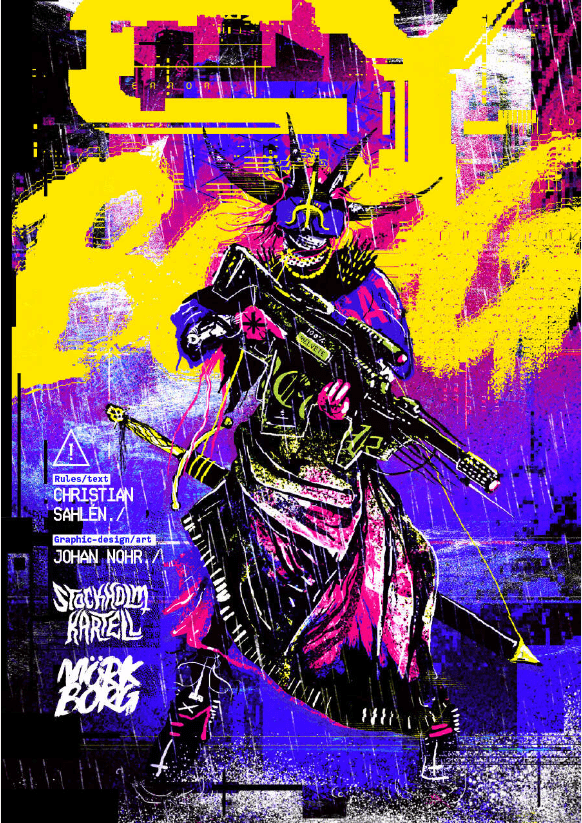
CY_BORG (Free League Publishing, 2022)
CY-BORG uses the same core game engine found in Mörk Borg. Like in Mörk Borg, when a character in CY-BORG reaches zero Hit Points (HP) they die. That is, unless they can pay:
NEGATIVE HP
Dead*
*Unless you can pay:
If you have a personal bank account with a least 1k[credits], there is a 50% chance for an Emergency Response Team to reach you in time to save your Life if you are at 0 or -1 HP. Add an additional zero to the bill for each negative HP thereafter.
For each negative HP, you will spend d6 days in intensive care afterwards, but you will be alive. (02 SYSTEM, Hit Points, Dead, p. 80)
Far be it from me to call CY_BORG the “friendlier Mörk Borg” but there you have it…
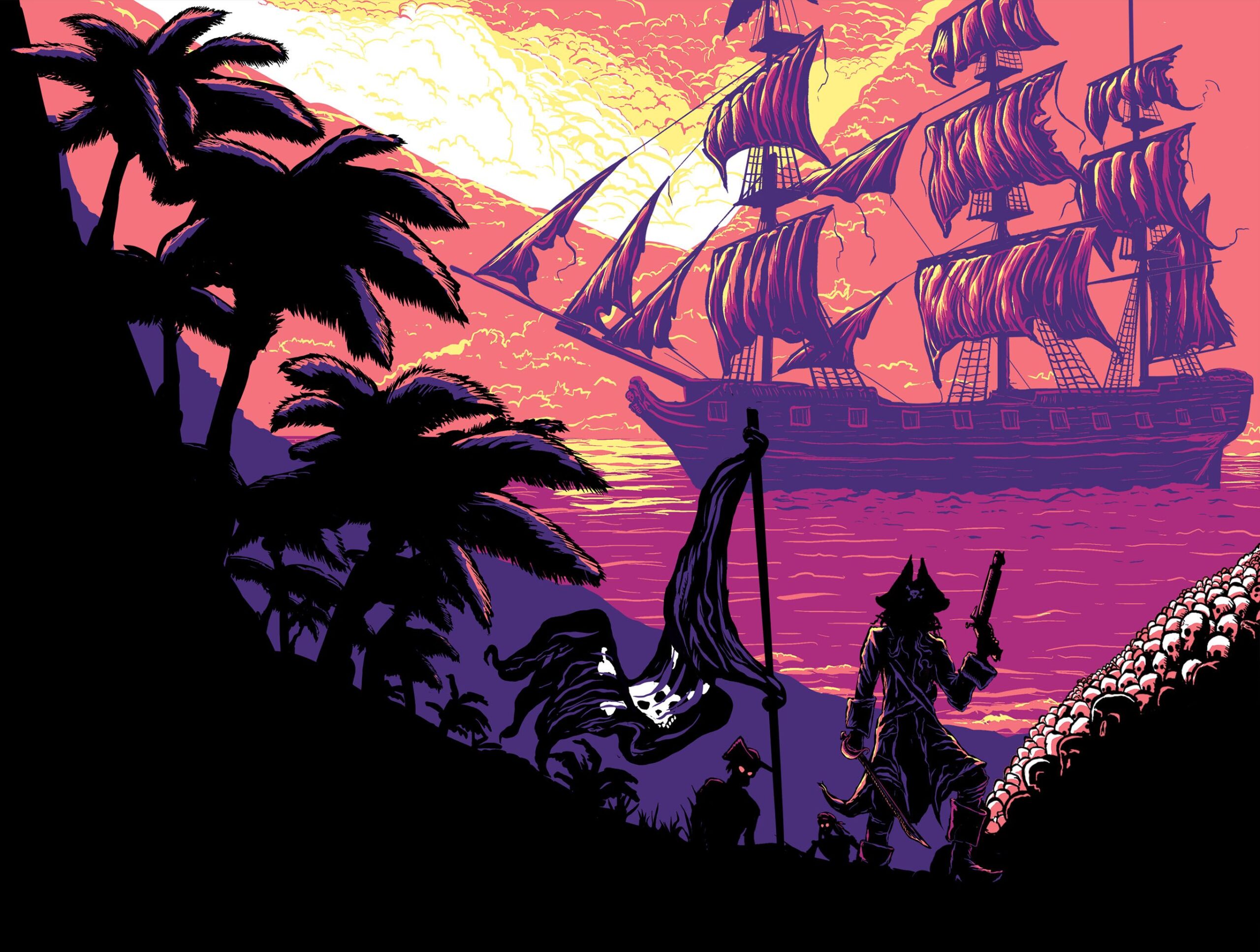
Pirate Borg (Free League Publishing, 2022)
Another -Borg series RPG using the Mörk Borg game engine, Pirate Borg uses the same “Negative Hit Points and your character is DEAD* approach, but with an optional out:
*Optional: GM may allow dead PCs to return to life as an Haunted Soul, pg. 46. (The Rules, Hit Points, Death, Negative HP, p. 32)
Return as a Haunted Soul. Those are Ghosts, a Conduit, Eldritch Mind, Zombie, Vampire, or Skeleton (Optional Class: Haunted Soul, pp. 46-47).
It’s a living…of a sort.
War Stories: A World War II RPG (Flintlock Games, 2022)
War Stories uses a variant of the “d6 fork” of the Year Zero Engine Standard Reference Document (YZE SRD) from Free League Publishing. Given that fact, some might be tempted to assume that War Stories is simply a World War II version of Twilight: 2000 4th Edition from above. While both RPGs certainly share a common core game engine, War Stories adds a few highly thematic wrinkles that help set it apart from its predecessor.
In War Stories, like T2k4e, when a character’s Endurance drops to 0 or less they are Incapacitated. Like T2k4e and ALIEN before it, War Stories has a version of the Coup De Grâce rule. Determining Critical Hits, however, is done a bit differently in War Stories:
If a single Hit from a physical attack (i.e. not Stress or Fatigue damage) results in 3 or more points of damage the victim has suffered a Critical Hit. Unlike normal damage, a Critical Hit needs to identify the specific location impacted. Roll 1d10 and refer to the Hit Location table and apply any applicable Armor or Cover Protection saves. If the victim still suffers 3 Damage after the Protection save, determine the severity of the Critical by rolling 1d10 and referring to the Critical Hit table for the Hit Location.
If the attack inflicted more than 3 points of Damage the attacker may re-roll the result of the Critical again (not location), for every point of damage over 3, and choose their preferred outcome (there is still only one Critical Injury). (Damage and Healing, Taking Damage, Critical Hit, p. 103)
Each of the Character Critical Hit Charts (alas, War Stories often changes names of tables between text and table titles) has ten possible results and in each area (Head, Torso, Arm, Leg) there is a “Dead” outcome (Damage and Healing, Taking Damage, Character Critical Hits Charts, pp. 104-105). Given that the players who roll multiple hits on these tables get to choose their “preferred outcome” it seems unlikely that they would choose character death.
At this point, War Stories puts forth two Advanced Optional Rules for consideration. The first, Infections, introduces the possibility that an untreated or unclean wound may progressively worsen (Damage and Healing, Taking Damage, Infections (Advanced Optional Rule), p. 106). The second option, Permanent Injuries, give the Gamemaster some power over the outcome of a Critical Injury:
If a character who suffers a Critical Injury still possesses a FUBAR [game metacurrency; the opposite of a Lucky Strike!], the GM may spend it to create the chance of a Permanent Injury. After successfully healing, the player must successfully pass an appropriate Skill in order to avoid suffering a permanent -1 die penalty to tests using a specific Skill. The Skill tested and the skill affected are determined by the nature of the injury and the judgement of the GM. (Damage and Healing, Taking Damage, Permanent Injuries (Advanced Optional Rule), p. 106)
While the possibility of death in War Stories certainly exists, the game grants agency to players to decide their own fate. On the flip side, the GM still has power to impose a Permanent Injury that ideally makes the game narrative that much more interesting.

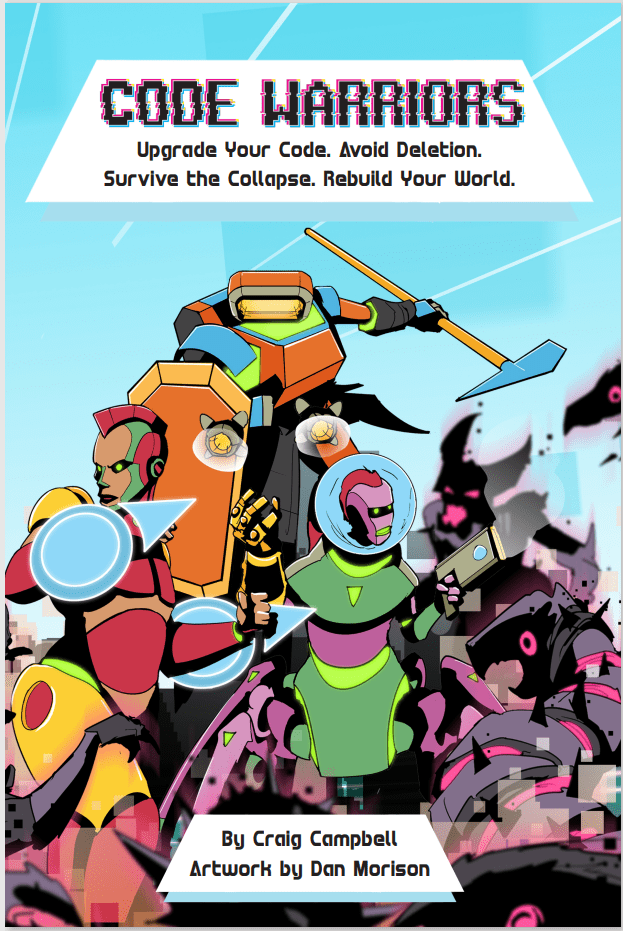
Code Warriors (NerdBurger Games, 2023)
In Code Warriors the player-characters are programs inside a computer that just hit that blue screen of death. Living at the speed of light, Code Warriors playfully explores that happens in those final, flickering nanoseconds. Character Programs have both a mental and physical Condition. Marking a Condition shows how many dice are lost in a Trait Check. The rules specify what happens when you reach the end of your Conditions Tracks:
If you filled the “Deleted” checkbox on your character’s physical Condition Track, your character dies and derezes (disappears) within a minute or so.
If you fill the “Shut Down” checkbox on your character’s stress Condition Track, your character falls unconscious, completely psychologically detached from reality.
Optional Rule: Limb Loss
When a Player fills the “Deleted” check box on their physical Condition Track, instead of dying, the character loses a limb. They also lose all Juice they currently have, as it bleeds away from the injury that resulted from the limb’s loss. (Chapter 2: Rules, Conditions, p. 26)
“Juice” in Code Warriors is the metacurrency of the game. On a character sheet the Juice Track, “Represents your character’s inner reserves of effort and determination combined with raw energy drawn from the world you character inhabits” (Chapter 2: Rules, The Three Tracks, Track Summaries, Juice Track, p. 16). Death and Juice also work together:
Death and Juice
A nasty side effect of permanent program death during the Collapse is that the remains of the System—which previously controlled all Juice distribution—continues to function. When a program dies, their body is drained of all Juice almost instantaneously as in bleeds out into the system to be analyzed and stored.
Anyone can draw 1 Juice out of a dead program’s body in the round immediately after that program’s death by spending an Action and marking one Overload to do so. After that, it’s all gone, drained into the System. (Chapter 6: Gear, Juice and Gear, Death and Juice, p. 65)
I’m never going to able to look at all those…vampire devices in my house the same way ever again.
Cowboy Bebop Roleplaying Game (Mana Project Studio, 2023)
I will be the first to admit that I have a very hard time to grok the game engine used in the Cowboy Bebop Roleplaying Game. As I wrote before, Cowboy Bebop uses its own game language that I have a hard time connecting to.
In Cowboy Bebop the story is advanced through Tests which need a goal and consequence (p. 15). Each Test produces hits for the Bounty Hunter to use to, “achieve or get closer to an objective” or shocks which the Big Shot uses, “to make things more interesting—to make actions harder, or bring threats closer” (p. 16).
From what I can tell, the only way for a character to die in Cowboy Bebop is for a player to narrate it into happening.

Black Powder and Brimstone (Free League Publishing, 2024)
Another RPG using the Mörk Borg game engine, Black Powder and Brimstone keeps to the negative-Hit Points-equals-death standard. That is, unless you want to make a deal with…the Devil:
When you find yourself dead in a ditch, especially after a particularly ignominious end, you may find yourself before two figures. One holds a staff and a scale, the other holds a ledger and quill. These figures will offer you another chance at life, for a cost.
The cost may be something you do not expect, not just earthly goods, but something you will miss.
It could be your memories, your future, a task that will bring you or those you care about to ruin, a devilish mutation, or a time of service to a dark entity.
Nevertheless the cost will be great and at the worst time possible. But what is truly the price of a second chance? (Devil’s Luck, A Devil’s Bargain, p. 43)
The Electric State Roleplaying Game (Free League Publishing, 2024)
Although The Electric State is published by Free League this RPG does not use the Year Zero Engine Standard Reference Document (YZE SRD) game engine. Instead, The Electric State uses a custom game engine where characters have Health; losing too much Health may lead to death.
INCAPACITATED
When you reach zero Health, you’re incapacitated and collapse to the ground. You can mumble and crawl slowly (one move per turn) but not roll for any attributes or use any talents.
Death Rolls. When Incapacitated, you need to roll four dice on every turn. This is called a death roll. It cannot be pushed. Mark down the number of [6] you roll. Once you have a total of three [6], you’re stabilized and stop making death rolls. If you fail three death rolls before this happens, you’re dead – time to make a new Traveler. (Chapter Four: Combat & Neuronics, Damage, Incapacitated, p. 82)
Assuming successful Death Rolls, an Incapacitated character will survive but are seriously injured since they, “have been knocking on death’s door and that can come with consequences” (p. 84). Seriously injured characters must make a d66 roll on the Serious Injury table found on page 84 to determine the exact serious injury. Of note, all of the serious injuries can be healed or resolved using Surgery; none lead to automatic player death (p. 84).

ALIEN: The Roleplaying Game – Evolved Edition (Free League Publishing, 2025)
While the rules for Broken in the latest ALIEN Evolved Edition are essentially the same as the original 2020 version, a new rule is added that changes how Broken and Critical Injuries work. In the 2020 version of ALIEN, a Broken character could be treated with First Aid or automatically recover one point of Health after a Stretch of time using the “On Your Own” rule (Chapter 5: Combat & Panic, Damage, Broken, p. 98). In the ALIEN Evolved Edition a new Broken recovery action, Rally, allows another character in the same zone to rally the Broken—and even critically injured—character using a COMMAND roll. Success restores one Health ends the Broken status. An example Character Death sidebox explains how it works:
EXAMPLE – CHARACTER DEATH
The Xenomorph, ignoring Nat, strikes Hayes again. This time, he fails to defend himself and goes to zero Health, broken. He rolls for a critical injury and gets 62 – a massive hemorrhage!
Nat tries to give Hayes first aid to stop the bleeding with a MEDICAL AID roll but fails. Desperate, she then uses her quick action for a COMMAND roll to rally Hayes. This succeeds, and Hayes joins the fight again.
On his next turn, Hayes fights valiantly against the beast, shouting at Nat to get out to save herself. Then make a Death Roll. Sadly, the STAMINA roll fails, and Nat can only watch in horror as Hayes collapses on the floor, dead (Chapter 4: Stealth & Combat, Damage, Example- Character Death, p. 67).

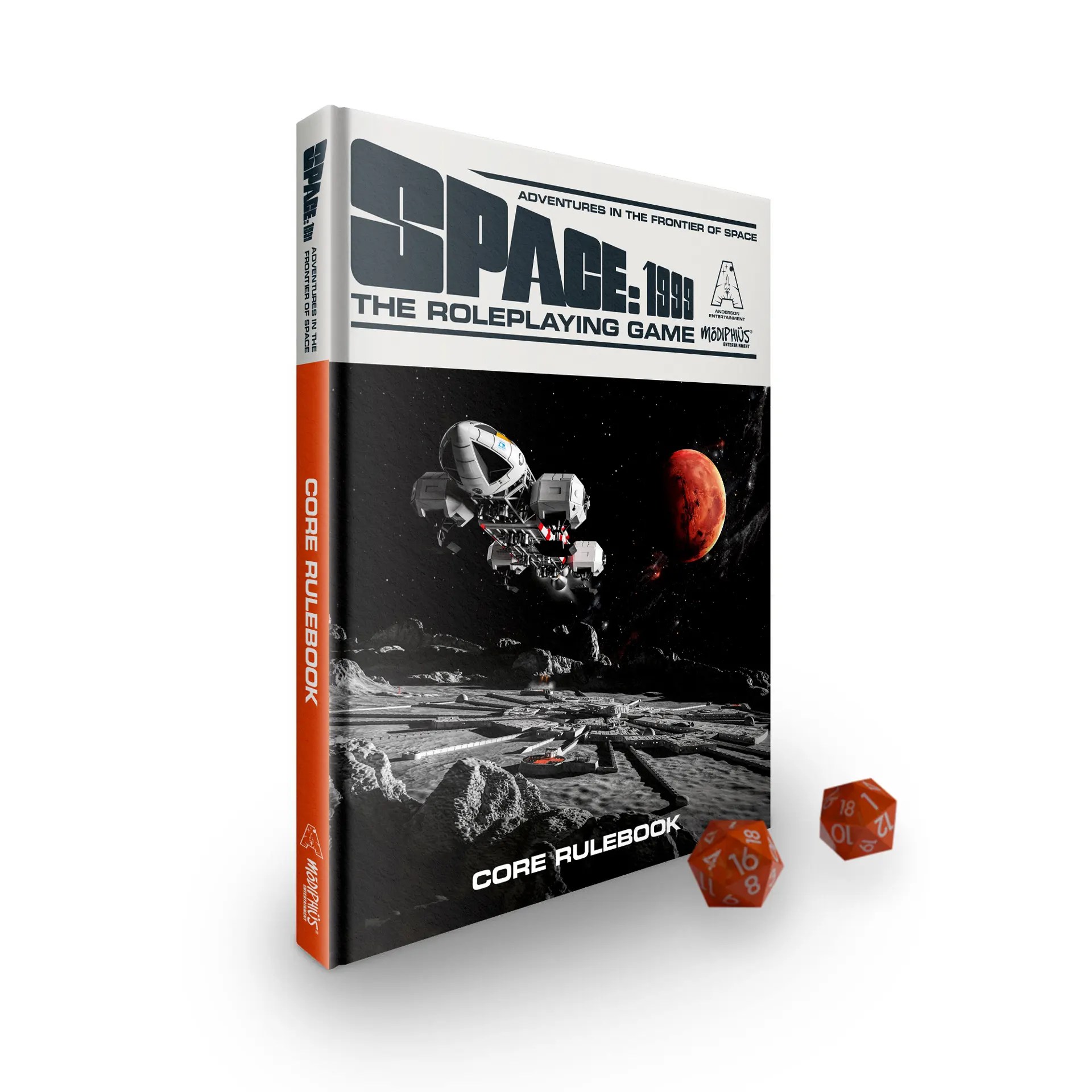
Space: 1999 – The Roleplaying Game (Mōdiphiüs Entertainment, 2025)
Space: 1999 uses a highly narrative version of the Mōdiphiüs 2D20 game engine. When it comes to combat the game actually goes out of its way to encourage players not to shoot first (see “You Don’t Always Need to Shoot It!” on page 173). The rules also comment on carrying personal weapons in this manner:
Non-security staff carrying a weapon is rare to unheard of, unless the base is in a state of emergency, so anyone without a purple sleeve walking around with any form of weapon, no matter how passive they appear, will be commented on. Someone will report the action and, if the user of said weapon doesn’t have a good reason, it will be cause for disciplinary action from their department head. “I just feel safer having a gun to hand” or “I got nervous so I thought I’d be careful” are not valid excuses either. The protocol is simple; if anyone thinks there is a danger, they should inform the command staff, who will determine the necessary action. (Chapter 1: Moonbase Alpha, Weapons, Personal Weapons, p. 49)
The weapons in Space: 1999 reflect this…pacifist approach with mostly stun weapons (for the Asset Traits/Keywords of the four main types of weapons see Chapter 1: Moonbase Alpha, Weapons, Personal Weapons, pages 50-51).
Combat, as it is, is a test. “If the test is a success, the target is defeated, suffering consequences as already defined in the acting character’s objective” (Chapter 3: Rules and Conflict, Combat Sequence, p. 163). When defeated, players can spend one Spirit (a derived characteristic “measuring willpower, drive and dedication” (p. 115)) to ignore the defeat or not spend a Spirit and accept the defeat. The rules note that, “A character who is on 0 Spirit and is defeated, is also exhausted” (p. 166). Further, “A character’s Spirit can drop to 0, but it can never become a negative number” (Exhaustion, p. 154). “An exhausted character has become too injured, stressed, or tired to do anything but give up” (p. 154). To recover exhaustion requires Bed Rest as compared to simply taking a Breather or a Break (see Recovering Spirit, pp. 153-154).
While character death is possible in Space: 1999—if a declared objective in combat—the pacifist undertones of the setting strongly discourage it.
Dying character or dying player?
As mentioned far above, the original social media post asked players for their view of different RPG rules for character death. From a player perspective, the most common response seems to be that many players do not like character death because it threatens the investment they made in generating a character. More specifically, it seemed the ones who speak out the most against character death are the ones who spend the most time building a backstory for their character. Those players in turn seem to be the ones calling out the loudest to “change the rules” to prevent avoid character death.
My survey of character death in RPGs indicates to me that the chance of character death—using rules as written—is certainly a possibility but often with a probability that is lower than players likely imagine. In my survey, roughly only 20% of the games had rules for character death with no other way out. On the other hand, roughly 60% of the RPGs surveyed included character death but with rules creating situations where even a fatal wound can be countered with healing or a similar treatment; that is, if it even reaches that point. In roughly 20% of my RPGs surveyed the only way to reach character death is if the players make it happen; player—not Referee or rules—fiat if you will. To help you with your maths—and to restate the conclusion in a slightly different way—in my survey of RPGs an overwhelming majority (~80%) the rules provide methods to avoid character death.
While more than a few RPG use a common core game engine (like FATE(s), Cortex-whatever, GENESYS, Cepheus Engine, Year Zero Engine, Mörk Borg, and even those that power Dungeons & Dragons that I did not cover) the real chances of character death is almost always more closely tied to the setting theme than the rules. That is, the setting tone drives the possibility of character death and the rules in turn are a reflection of those setting assumptions. See for example the approach to death in Mörk Borg (absolute) versus CY_BORG (buy your way out) or Pirate Borg (haunt your soul) to Black Powder and Brimstone (sell your soul)—same basic game mechanism but wildly different potentials. At the same time, the rules for character generation may influence the outcome of character death, especially in a very self-aware design like Paranoia (clones!), Those Dark Places (easy chargen), or War Stories (promote an NPC) that either give you a built-in replacement character or make creating a new one quick and easy.
So why do so many people complain when their character dies? I personally feel that those character deaths are most often the result of a mismatch between player and setting. When playing a RPG, my understanding is that an implied social agreement exists wherein the group agrees to play by the rules of the setting. It is a form of social contract between the Referee, players, and the RPG writer/designer/publisher. All too often I sense that players who are unhappy playing a RPG are not necessarily unhappy with the Referee or their fellow players but are unhappy playing by the “rules” of the setting.

This unhappiness at character death is often exasperated by RPGs that encourage only the Referee to understand the rules. That “behind the screen” approach often leaves it up to the players to discover the “physics” of the setting through play. Too often I see players that simply want to do something acting in ignorance of how the game system will punish them for that unknowingly poor choice. The most traumatic of those “bad choices” can lead to character death. Over something the players did not expect because they do not understand the rules of the game.
How do YOU treat character death in YOUR RPGs? Leave a comment below…
Thank you for visiting the Regiment of Strategy Gaming and riding with The Armchair Dragoons.
Rather than list a bunch of social media links, the easiest thing to do is to check out our LinkTree, which connects you to all of our various locales around the web.
You can also support The Armchair Dragoons through our Patreon, and find us at a variety of conventions and other events.
Feel free to talk back to us either in our discussion forum, or in the comments below.


Mega article! Very well written. – Peter R.
Amazing post! Was a pleasure to read, thank you.
Great points. While your character is an alter-ego, fundamentally, RPGs are adventure stories. And good adventures have the heroes get close to death. If there’s no risk, there’s no reward. Of course, I’ve been with the same Traveller 5.10 group for quite a while, and we have yet to engage in actual combat.
It also comes across as insulting my sense of fair play to complain about losing a character from your own actions.
Character death in Heart the City Beneath is interesting in that you get to decide when and how your character’s story ends. Your most powerful abilities signal the end. That doesn’t always mean dead, but still the end.